
Wood-Drenching Is the New Color-Drenching — Here’s How to Get the Look
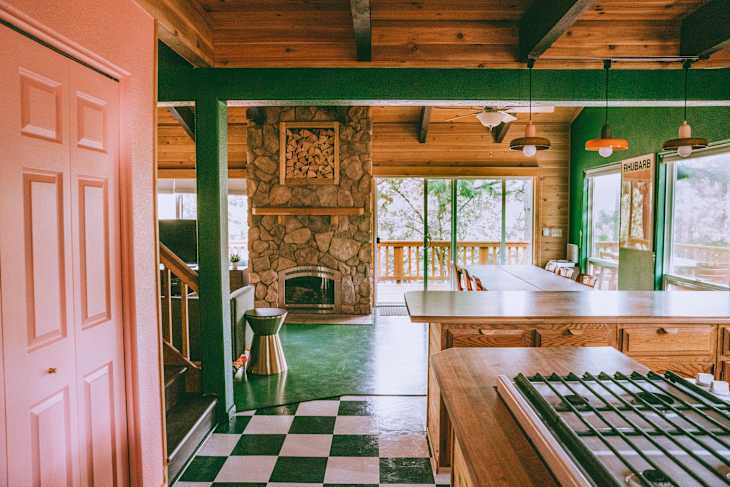
If you’re a fan of Apartment Therapy’s Before & After series — or if you’re a serial room redoer yourself — you’ve surely heard of color-drenching. That’s where you paint a room’s trim, ceiling, floorboards, doorframe, and walls all in one color. Many designers predicted that color-drenching will dominate in 2025, but I’m also excited about another “drenching” technique that’s ripe for DIY projects: wood-drenching.
Maybe it’s because there’s something kind of retro and summer-campish about it, or maybe it’s because it feels a bit escapist — but in any case, I think wood-drenching is going to gain some major traction in the latter half of 2025.
“Wood has always been a comforting, grounding material for me,” Heather Davis, Urban Outfitters’ director of print, pattern, and textiles, says. “Its warmth and texture not only soften surfaces visually, but also add a sense of depth and character. I’m especially drawn to pieces that showcase prominent wood grain; there’s something mesmerizing about the imperfect, organic patterns.”

Davis adds that wood-drenching can be a nice reprieve for city dwellers, especially. “Having grown up surrounded by nature but now living in the city, incorporating wood accents into my home helps maintain that connection to the natural world,” she says.
The 2025 U.S. Houzz Emerging Trends Summer Report identified wood drenching as a trend, with searches for wood details in living rooms and kitchens way up from January to March 2025 versus January to March 2024. I spoke to some homeowners and DIYers for some inspiration and advice for pulling off wood-drenching your own home.
The most dramatic wood-drenching features wood on the walls, ceiling, floors, and more.
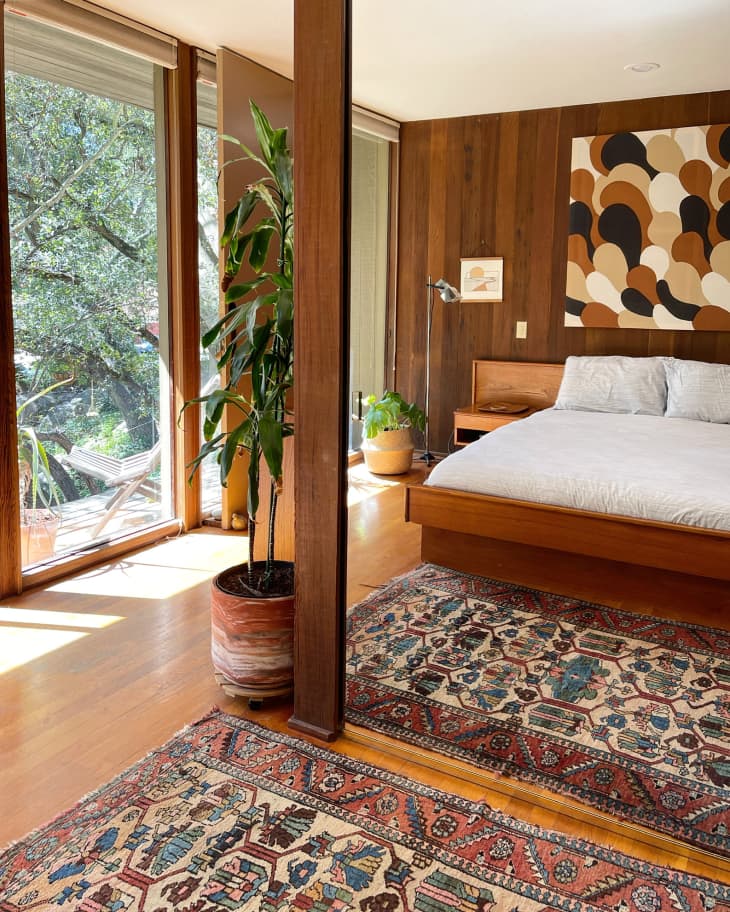
“Our house was built in the ’80s and looked very different when we bought it,” DIYer and homeowner Anne Tu Quoc (@ourhouseofdisco) says. When she moved in, for example, the bedroom above had beige walls and carpeted floors. “We redesigned the whole interior and decided to use maritime pine plywood over a large surface. It gives our bedroom a very cozy, cocoon-type, calm atmosphere.” (She also bought a lamp with a similar tone and pattern!)
Tu Quoc says she particularly likes the striking grain of her Mediterranean pine, and she also used it in her kitchen, too, on the cabinets, ceiling, floors, and walls.
Keep it natural.
“We also didn’t varnish the wood; we just oiled it to make it look as natural as possible,” Tu Quoc says. “I think our choice of wood radiates warmth but still looks modern.”
For a cohesive look, stick to just one type of wood. “I’m not a big fan of mixing different woods,” Tu Quoc says. “I like it when everything looks uniform. Of course there are exceptions, but they are carefully considered.” (More on that later.)
Wood-drenching can save you major money on a reno.
Airbnb designer Jo Hanson (@theworksbnb) adds that sometimes, embracing massive wood surfaces in your home via wood-drenching is the most budget-friendly decor option (in addition to being just a fun design trend).
She says that’s one of the main reasons that she decided to keep the wood panels in this groovy basement she designed. “Besides the fact that they look awesome, [removing them] would have meant spending probably $70,000 to $100,000 on renovating the property to bring it up to ‘today’s’ standard,” she says. “So why rip something out that was perfectly great?”
If you’re going to mix wood, think about warm and cool tones.
Laura Olden’s 1970s house in California (@savagehouse1970) also leans a little more retro; it’s full of redwood that came with the house when she moved in. “The walls and floors are original to our home and have been working together for over 50 years,” she says.
“Teak was a popular wood for furniture at the time our home was built, so our teak pieces fit right in,” she adds, but she says mixing woods was a little scarier. “In our bedroom and living room, we have redwood walls, oak floors, and teak furniture. They all have a warm undertone, so all complement each other well.”
Her advice? “Look to match the undertone (cool, warm, neutral), and the different woods should work together well,” she says. “You can also look for examples online to give you a boost of confidence that yes, what you plan to do will indeed work.”
Add in other non-wood accessories.
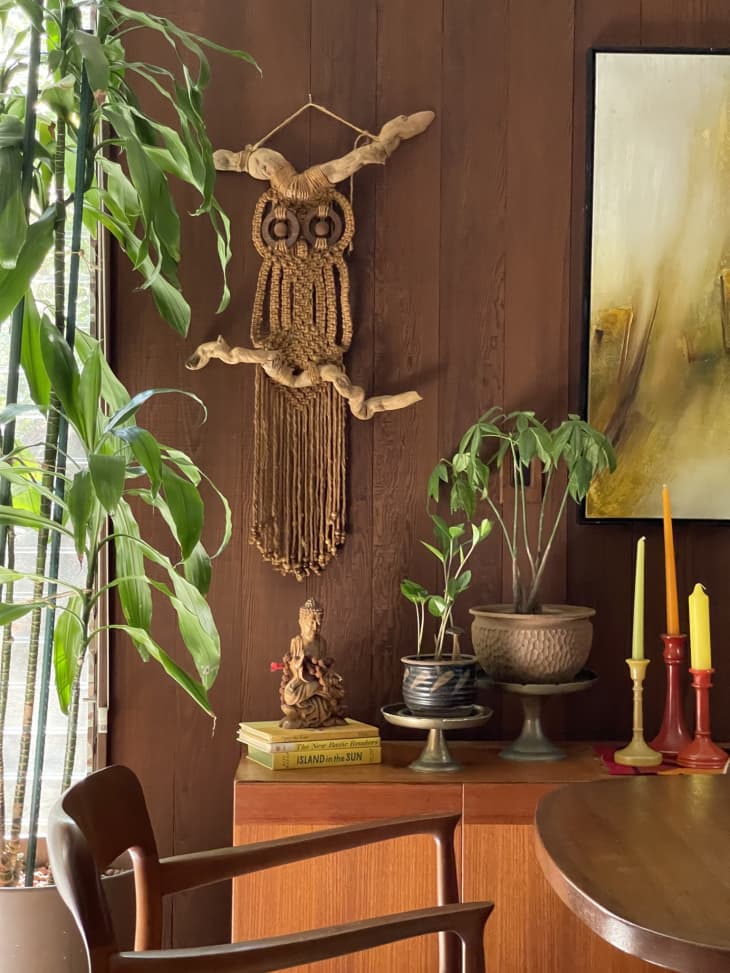
Olden also recommends adding non-wood pieces to make everything feel balanced, especially if you’re working with darker wood. “Our redwood walls are quite dark-toned,” she says. “I remember being worried after just moving in that our home felt too dark. To break up the darkness, I added lots of plants and a variety of lighting types. I also added pops of color in furniture, accessories, and art that helped to make the things feel brighter and cozy.”
And Hanson leaned into retro vibes when she accessorized her wood-clad basement project. “Think: Taylor Swift’s Midnights photoshoot,” she says. In addition to all that wood, she added carpeted doors, a pull-down lamp, a disco ball, and a mod orange sofa. “It’s retro, not in a cheesy way,” she says.

If your home doesn’t have wood floors or walls, wood accessories can be your go-to.
If you don’t inherit wood walls or floors when you move into your home (or add them à la Tu Quoc), you can go heavy on wood furniture and warm wood tones. (Davis’s home, above, does have cool wood walls and floors in many parts, but it’s also a masterclass in mixing in wood furniture.)
Wood-drenching can be all about layering warm, natural textures through movable pieces. Wooden accent chairs, stools, or side tables that showcase beautiful grain. Wicker or wood-based lamps add both texture and a soft, ambient glow, while wooden bowls, trays, picture or mirror frames are easy ways to bring in warmth. I love to look for vintage wooden objects — pieces that with age have formed a beautiful patina to them.
Want to try a little wood-drenching in your own home without pulling out any tools? Try a carved or slatted wooden room divider to mimic textured walls before laying out matching wood accessories, or opt for wood furniture in matching wood tones — like a wood accent chair and a media cabinet, for example. Then add a sculptural wood art piece, or frame your photos in wood frames that all have the same stain. Bring in some wood candlesticks. Wrap an unexpected surface in wood contact paper. To create the coziest living space, let the wood lead the way!