
Using My 1944 Manual Typewriter Is Noisy and Impractical — But I’m Having More Fun Writing Than Ever
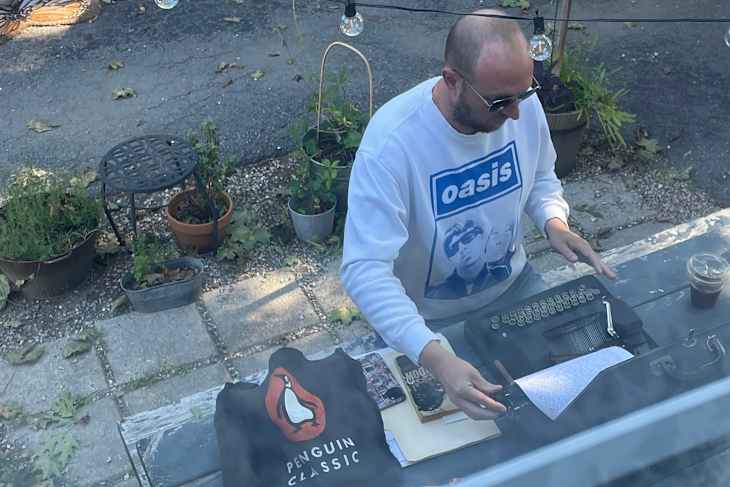
In late 2019, my wife and I purchased a 1944 Smith-Corona Standard typewriter from a thrift shop in Portland, Maine. My wife, who is a poet and playwright, enjoys composing on typewriters, although she has always preferred electric typewriters rather than the manual and noisier vintage models. As a writer myself, I do most of my work on a laptop instead. When the COVID-19 lockdowns began in 2020, this black typewriter was relegated to our garage, where it would be incapable of making so much noise as to wake up our daughter, who, at the time, was only 2 years old. In short, neither of us used it at all when it was purchased, and if I did any writing outside of a laptop it was only to jot down notes hastily in a small notebook.
But in 2026, the typewriter found its way back inside our home. I was struggling with fears about AI, and how it could write mindless articles for me, so I sought refuge in esoteric, nearly forgotten lost media — specifically in the form of the pulp novel series about “The Shadow,” written by former magician Walter B. Gibson, using the pen name Maxwell Grant. From 1931 to 1949, Gibson wrote 282 Shadow novels, and he did it all on a Corona typewriter. In fact, he was the literal poster boy for Smith-Corona, which ran an ad in the 1930s that proclaimed: “1,440,000 words were written by Maxwell Grant in less than 10 months on a Corona typewriter.” Suddenly, upon learning all these facts, I became obsessed with seeing if I could become a writer again. Not the kind who creates content, but feels the physical, real work of putting words onto paper. So I started writing from the manual typewriter instead, and it changed everything.

How a Manual Typewriter Helped Me Fall Back in Love with My Life’s Work
Writing, like glassblowing, pottery, or carpentry, was once upon a time closer to a trade — a kind of work you trained for, and learned, and then implemented in the real world. This isn’t to say writing was once blue-collar and became white-collar, and yet, it’s hard to deny that a typewriter feels closer to real-world labor than a laptop. I have to think harder about the words I’m writing, worry more about spelling, or realize that when I go back to look at these pages later, white-out or corrective tape might be required to make it truly readable. Even alignment and indentation feel more artful in this process, because everything I do on a typewriter is more deliberate.
On my phone or laptop, writing is a passive activity. With a typewriter, I’m fully engaged in the activity, and when I get into a typing flow it can feel like a runner’s high. In a strange twist of fate, my typewriter helped me fall back in love with my life’s work, but more importantly, helped me unplug from a sea of digital distractions and addictions.

Screens Were Bumming Me Out, but Writing Is My Life
My recent rediscovery of this manual typewriter has helped fix a growing problem with my addled brain. Like many, I’m fatigued with the screens. But as a professional writer, journalist, and editor covering the entertainment industry, being online is a crucial part of my livelihood. I have to be plugged into all the cyberspace worlds and tools to do my job well.
Paradoxically, I love analog things by nature — old magazines, vinyl records, CDs, DVDs, comics, books — and have long beat the drum that it’s important to maintain physical collections of the work you love. The one place that tendency had not extended was in my own writing outside of my job, because, professionally, I’ve found analog writing methods to be impractical and ultimately inefficient. My three published books were composed on Microsoft Word, and my daily output as a writer is dashed off on Google Docs, or, sometimes, directly into whatever content management system my employer requires. Writing as a professional today is as much, if not more, about formatting as it is about composing thoughts, and anyone who writes for the internet will tell you this is true. It’s a bummer, and it can and has dangerously messed with my love of reading and writing. When I see writing as a formula in order to succeed at my job, it’s hard to shake that whenever I turn toward something more creative.

How My Typewriter Is a Weapon Against Digital Deluge
Typewriters are loud. After all, the Thompson semi-automatic rifles or Tommy guns that gangsters used were referred to as the Chicago Typewriters. The rat-tat-tat sound of keys striking, combined with the typewriter’s carriage advancing, is somewhat hilariously punctuated with a cheerful ding.
Typewriters might be loud and even alarming-sounding, but over the past five months I’ve learned that using a typewriter is one of the most therapeutic activities for the screen-addicted. And a vintage typewriter is also, visually, a beautiful object that is practically begging me to unplug. The result of writing on my Smith-Corona, I found, was astonishing. Not only was I able to write several chapters of a pulp-style novel, complete with tough-talking gangsters and shadowy heroes and heroines, but I also felt physically different while I was doing it. Whether I brought the typewriter to my picnic table or kept it inside, using it cleared my head and made me feel more relaxed — like a focused but utterly adventurous guided meditation.
The Spirit of the Past Isn’t Just Nostalgia — It’s About Survival
Working with the typewriter hasn’t just been an exercise in nostalgia; it’s been about looking for ideas in a different way. My in-progress pulp novel may have a practical outcome; I’ve published books before, so the idea that this could result in a professional project, rather than a digital detox hobby, isn’t out of the question. I’ve noticed that on the typewriter I’ve been able to be more spontaneous with imagery, which has, in turn, made my day-to-day professional writing better. The typewriter has helped me feel like writing can and does exist in the real world, not just on my phone.
I’m not advocating that every editor at every major publication all require their writers and editors to churn out copy on a manual typewriter. I’m not suggesting the internet revert to newspapers, and that everyone give up reading Apple News on their phones. But I am saying that we should at least remember that what we read every day is still, for the most part, created by human movements, and those movements, whether on a typewriter or on a keyboard or a phone, are still the most powerful tools in the world.