
These 5 Bedroom Hacks Break Design Rules in the Best Way, According to Designers
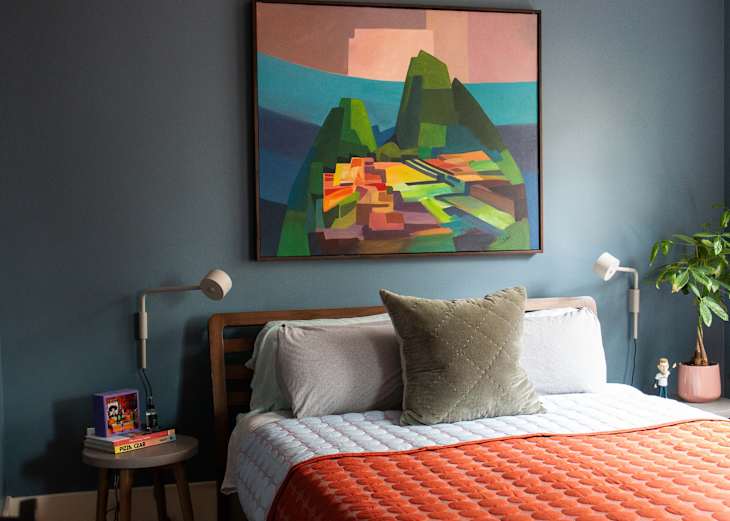
The truth is that design rules are often meant to be broken, and many pros aren’t shy about thinking a bit outside the box when it comes to bedroom layout ideas in particular. Placing a bed against windows, for example? Hey, why not?
Here, five designers share their favorite bedroom hacks that break conventional design rules without sacrificing style. You shouldn’t be afraid to try any one of these in your own space. The rooms here prove that a little bit of rule breaking can still lead to a serene sleep space.
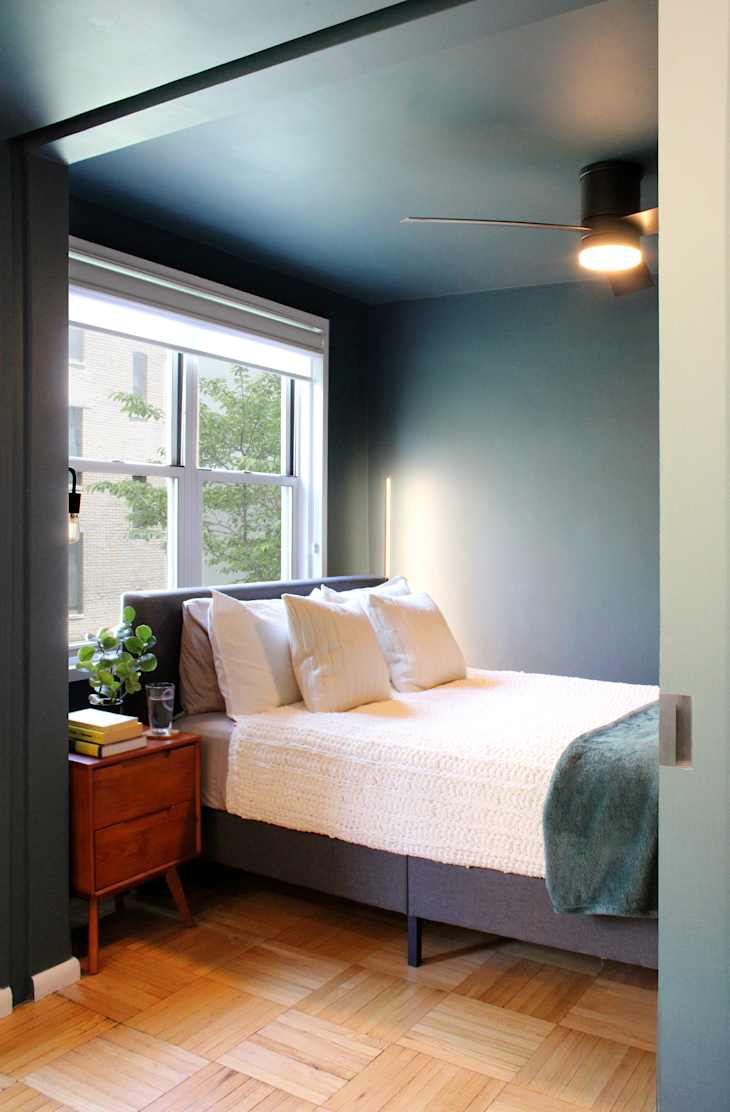
Placing a Bed Against Windows
Wondering just exactly how you’ll lay out a bedroom that features a wall of windows? Take a cue from designer Samantha Voges, and don’t be afraid to place your bed right up against those casements. This setup might not be ideal, but it makes a lot of sense in many rooms.
Whether your windows are floor-to-ceiling or not, Voges explains, a slew of benefits will follow from this rule-breaking. “Utilizing the windows in this way may seem unconventional, but it allows for plenty of natural light and frees up the solid walls for functional storage cabinets or accents such as artwork,” she says. “Orienting the bed toward the entry to the room is always going to feel better than approaching it from the side, so I wouldn’t shy away from using this trick — even in traditional homes where the windows are not floor-to-ceiling.”
Designer Courtney Batten, the founder of Paige Studio, is also a proponent of placing a bed in front of a set of windows and often does so in her projects. “It can look beautiful when done intentionally, especially when the draperies frame the bed and create a strong focal point,” she says. “When doing this, I always use a low-profile headboard so it doesn’t block the light, and I try to find one that’s finished on the back so it looks intentional from outside the home, too.”

Pushing the Bed into a Corner
When designing sleep spaces for solely one person, like a teenager, pushing the bed into the corner is more than OK, notes designer Mia Johnson. “It can make the layout more functional by freeing up the floor for play, movement, or additional storage,” she says. “It’s a smart way to maximize every inch without making the room feel crowded.”
A bonus? You’ll only need to purchase one bedside table as a result. This can also be a great strategy in a very small bedroom or a tiny studio.
Using Mismatched Nightstands
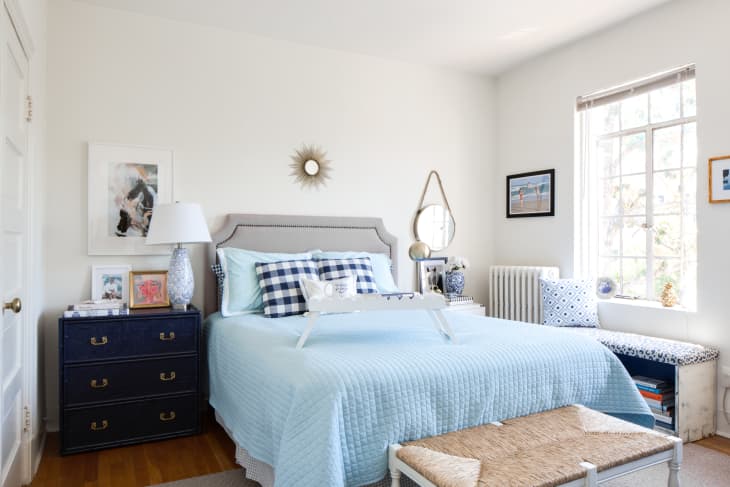
Who says you have to purchase a matching set of nightstands? Designers are all for incorporating two different pieces “especially when they vary in size and height,” explains Lisa Simopoulos, the founder of Simopoulos Designs.
In a current primary bedroom project (not pictured), the designer is using a chest on one side of the bed and a nightstand on the other. “They are unified by a shared distressed black finish — not identical, but the black visually brings them together to make sense,” she says. Another strategy for visual cohesion? Using identical bedside lamps. “While it takes a bit more effort to get right than matching pieces, the result is a more collected, personality-filled space,” Simopoulos says. “It’s a great way to add charm and character and still feel polished.”
Don’t sleep on this designer tip. I’ve personally done this many times in my own apartments, including in my Georgetown, D.C., space, where I placed a traditional smaller nightstand on the right side of my bed and used a more sizable storage chest on the left. You can see that setup above.
Skipping the Headboard
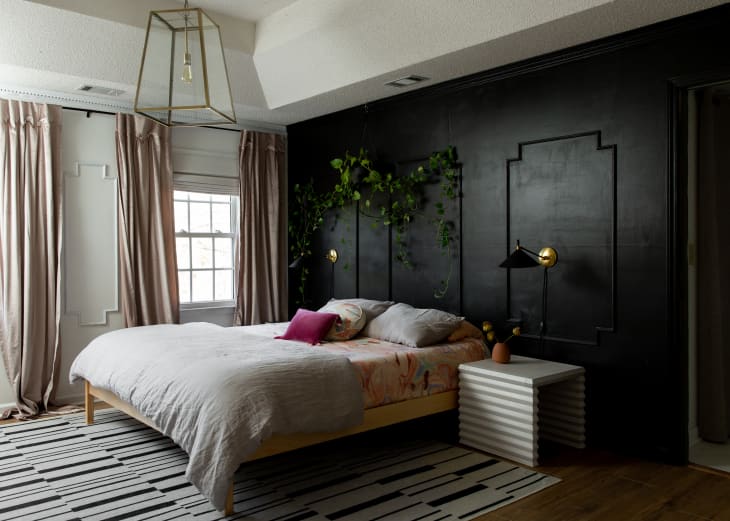
No headboard? No problem at all, according to Batten. Whether you’re looking to save some money or are just cramped space-wise, you can skip the headboard and not feel bad about it.
“In tight spaces, every inch counts, and forgoing a headboard can save valuable room,” Batten says. Her favorite alternative approach is to design an accent wall of some sort to go behind the bed, as shown with the picture frame molding in this Georgia home. “You can use paint, board and batten, or wallpaper for this,” she says. “It’s functional, and it lets you be creative.”

Oversized Bedding
Bedding doesn’t have to be ultra-tailored or flourish-free. It’s more than OK to opt for a comforter or duvet cover that sweeps the floor to create an airy, artistic look.
Designer Ayten Nadeau, the founder of i-Ten Designs, went a little exaggerated with the bed linens in a sunlit, mid-century modern-style bedroom that she designed recently. “The added length softened the look, concealed the side rails, and replaced the dust ruffle with some vintage design drama,” she says of the comforter she selected.
Don’t create a tripping hazard for yourself or anyone else. But an extra inch or two of covers never hurt anyone and can look super-cozy and chic.
Design Defined
Never miss the style inspo and recommendations you crave with Design Defined. Follow along each week as our Home Director Danielle shares the best style advice, latest trends, and popular decor finds you just can't miss.