
Move Over, Mid-Century — Designers Are Embracing This Older Furniture Style That’s Just as Cool
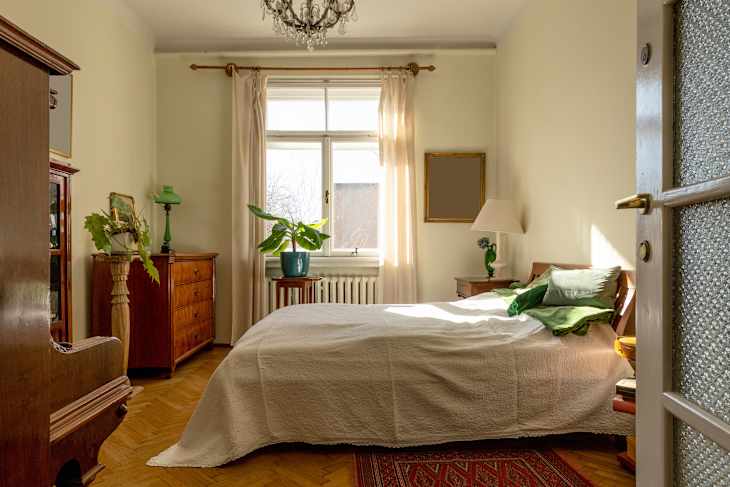
We’ve scoured markets and feeds to spot the standout looks shaping home style next year. From "Soft Architecture" and the latest “it” shade of green, to shine-maxxing, and the vintage furniture everyone’s going to be shopping for soon, see every trend we're calling in our full New/Next List.
Antiques often get lumped into a few simple categories. You have traditional, serious wood furniture that could be used to describe everything from Colonial style to Federal to Georgian pieces. Then, there are ornate, heavy items that feel right at home in a Victorian interior. On the complete opposite end of the spectrum, you’ll find the sleeker, simpler mid-century modern and contemporary items. But there’s a style that sits comfortably in the middle: Biedermeier. And while its German-sounding name may seem familiar, it isn’t necessarily something most people can describe right away.
A 19th-century design movement driven by a desire for functional, simple designs, the Biedermeier period was beautiful without being excessively ornate. Its pieces have a distinct look unlike any other time — particularly due to the specific lighter wood veneers and geometric motifs used then. The style feels both vintage and modern at the same time, and it’s making its way back into the design scene in a big way in 2026.

What Is Biedermeier Style?
Biedermeier design debuted in Germany and Austria between 1815 and 1848 as an aesthetic that reflected the growing middle class’s desire for comfortable, functional, and well-crafted interiors. The name Biedermeier was actually coined later, inspired by the fictional character Gottlieb Biedermaier (later spelled Biedermeier), who was a symbol of the German bourgeois created by the writer Ludwig Eichrodt. The furniture style, which was immediately popular among the middle class, rose to prominence at the same time as the satirical character, and the two became interchangeable.
“Biedermeier was designed for the middle class leaning into a more comfortable and sensible design in opposition to the more decorative, highly embellished pieces of the Rococo and Empire periods,” explains Debbie Mathews LeRoy, interior designer and antiques dealer at Debbie Mathews Antiques & Designs. Greg Kowles, furniture specialist and restorer at New Orleans Auction, concurs. “The simple, clean-lined style was a reaction against the heavily carved dark-wood furniture of previous periods,” he says. “It’s known for lighter-colored woods such as birch, ash, cherry, and other fruitwoods.”
Biedermeier furniture was designed to be functional, sleek, and refined — it’s beautifully crafted but still comfortable. And its simplicity isn’t minimalist, but, instead, pieces are purposefully designed to incorporate elements from classic ancient Greek and Roman designs. Those details are contrasted with Biedermeier’s characteristic geometric inlays and veneer detailing, as well as the signature black ebonized accents.
If you’re looking to identify a Biedermeier or Biedermeier-inspired piece, look for the following characteristics:
- Clean lines and simple shapes with Greco-Roman influence and/or geometric accents
- Warm, lighter woods (cherry, birch, etc.) with the natural grain visible
- Comfortable, practical silhouettes designed for daily use
- Thoughtful details — like subtle ebonized (black) inlays or brass hardware — instead of elaborate, excessive decoration

The History of Biedermeier Style
Despite its pared-down, more modern look, authentic Biedermeier designs are around 200 years old. The Napoleonic Wars ended in 1815, and, with that watershed cultural moment came a broadened middle class across Europe. This middle class wanted new, stylish furniture to go with their new standing, and Biedermeier was born.
“There was a growing emphasis on the home and on interior design and decorating,” explains Kowles. “The Biedermeier style emphasized moderation, sensibility, and modesty.” On the whole, Biedermeier interiors were airier, with palettes defined by soft greens, blues, and muted reds.

Iconic Biedermeier Pieces
Antique Biedermeier pieces aren’t known for being diminutive, but they’re not visually heavy or clunky either. They’re often sizable, functional furniture items designed to fulfill a specific purpose within a space. They take up room and visual weight with their presence, whether it’s a large wardrobe or a straight-lined entry table. You’ll also find pieces with subtle curves, like chairs and sofas, adding a bit of decorative flourish to their silhouettes but in a way that feels sensible and somewhat restrained.
“A beautiful Biedermeier center table, side table, or chair can create drama in an entrance hall or living room like nothing else,” says LeRoy. “A striking Biedermeier chest with walnut bookmatched inlay and ebonized accents can create a living room focal point, especially when set against a color-drenched backdrop of a rich, saturated, paint color.”

How to Incorporate Biederemeier into Modern Design
LeRoy says Biedermeier style is ideal for incorporating centuries-old antiques into transitional or contemporary design. “These pieces tend to be statement pieces and completely at-home and relevant for living today,” says LeRoy. “They are often architectural in shape and proportion and can almost serve as sculpture depending upon the design.”
In Apartment Therapy’s State of Home Design Survey for 2026, designer Lindsey Gregg of Blue Sky Interior Design identified Biedermeier pieces as a group of under-the-radar vintage items poised to come on strong in 2026 because of their stylistic versatility. “Biedermeier end tables and chests mix well with the decor that’s popular today,” she says. “The clean lines feel current, but the wood tones add warmth and depth. They’re not clunky pieces — they fit well in a variety of spaces and work with different design styles. People will continue to seek them out or hold onto them if they own them already.”
The warm wood, geometric decorative lines, and striking black accents make Biedermeier style feel timeless. Incorporate just one piece in a room — maybe it’s a dresser or a singular chair — and let it be a conversation moment. These pieces are always functional; after all, that’s the whole premise of the design aesthetic. But in a world of standard wood and upholstery, Biedermeier pieces’ light, warm tones and contrasting black details stand out. They feel like a precursor to modern design. Intentionally created but not ornate; detailed but not excessive; hand-crafted but still sleek, Biedermeier style always keeps a room interesting — even in its simplicity.