
Federal Mirrors Are Making a 2026 Comeback During America’s Major Anniversary
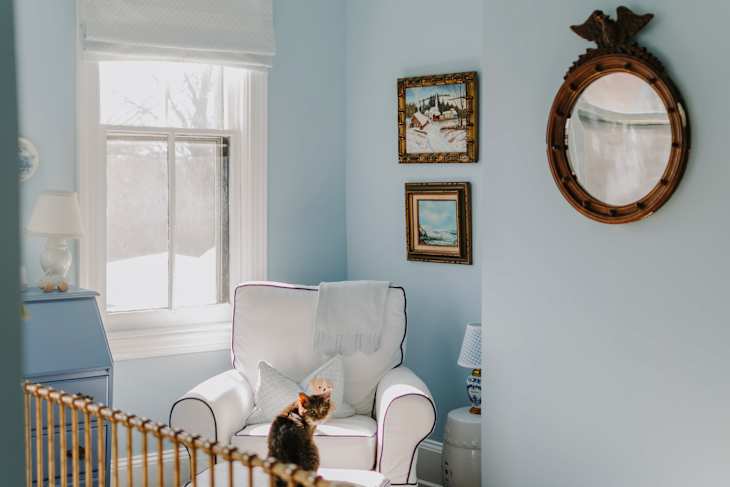
Americana style has never truly gone out of fashion. From understated Windsor furniture to charming handcrafted hope chests, classic elements and beloved silhouettes have popped up in design through generations. As the United States gears up to celebrate its 250th birthday this summer, some of the most iconic decor items from centuries past are having a comeback of historic proportions.
One of those timeless items is the instantly recognizable federal-style convex mirror. These gilded mirrors have been adorning American dining rooms and foyers since the 1700s, when the centuries-old European style was given a uniquely American touch — an eagle sitting proudly on top.
Why Antique Collectors Are Obsessed with Federal Mirrors
With a regal (potentially patriotic?) style and a scale that typically commands attention in a room, federal-style mirrors have long been used as the pièce de résistance in a space. They’re a favorite of antique enthusiasts — particularly young collectors who prefer a side of U.S. history with their finds. But now that the Semiquincentennial is upon us, there’s a new enthusiasm for storied American antiques and traditional design elements — including these federal-style mirrors.
Looking to add a touch of American history to your home? Authentic federal-style mirrors dating back to the United States’ earliest days are going to run you into the many-thousands of dollars, there are also reproductions that have been made for decades. Here’s what you need to know about federal-style mirrors, how to source them, and how to style them in your own home (even if they’re the only Americana piece you ever collect!).

How Are Federal-Style Mirrors Different?
Kristyn McCray, antique dealer and founder of Virginia-based vintage retailer Sincerely James, explains that a federal-style mirror could be interpreted broadly to include any piece dating to the federal design era, from 1780 to 1830. But typically when one refers to a federal-style mirror, they’re envisioning a gilded convex mirror topped by a stately eagle.
This “bulls-eye-style” mirror — which uses convex glass to reflect an entire room — actually originated in France as a way to bounce light around living and dining areas in wealthy homes. As most sought-after styles did back then (and still do today!), these mirrors made their way across the Atlantic, where Americans gave the look their own revolutionary spin.
The Detail That Sets These Finds Apart
“As the convex eagle mirror became ‘Americanized,’ many featured 13 applied balls that line the inside of the frame, which are widely interpreted as representing the original thirteen colonies,” McCray explains.
You’ll see many different designers and brands feature antique models as well as modern re-creations in 2026, according to McCray. “These federal-style mirrors are extremely adaptable pieces. Their versatility can translate across styles, and they can evolve with your home as your taste changes,” she adds.

How to Shop for Federal-Style Mirrors
You can buy modern reproductions of federal-style mirrors, but most fans of the look want to do a little bit of treasure hunting to find the perfect piece. That takes them to antique malls, vintage shops, thrift stores, Facebook Marketplace, and storied older homes owned by avid collectors.
That last route is the one McCray usually takes. She sources federal-style mirrors for her business from estate sales, and her most prized mirror — a uniquely shaped wood version — came from a sale in Tennessee (that one didn’t make it into her sales inventory!). “These have been older mirrors, as well as a few modern reproductions,” says McCray of her estate sale finds. “If you’re looking for a true antique, an investment piece, I see them often at local antique malls.”


But investment is the key phrase here. Authentic 18th- and 19th-century federal-style mirrors can fetch thousands of dollars at antique stores or at auction. Reproductions, on the other hand, are significantly less expensive — as in, they rarely run more than a few hundred dollars. Depending on your dedication to the secondhand pursuit, you may find one for closer to $50 to $100.
Modern Reproductions Are Becoming More Common
The original federal-style mirrors would have typically been carved from wood and finished with gold leaf. Reproductions can be made from everything from resin to plastic to wood-composite. “Instead of gold leaf, you can easily tell it uses metallic paint, has a spray finish, or looks/feels plastic,” McCray explains.
“For more affordable vintage mirrors, look for the Syroco brand, which often made molded wood or resin-based composites,” says McCray, who notes that these durable reproductions are among the easiest to find.

Nailing the Federal Look
You don’t need to transport yourself to Colonial Williamsburg to make the federal-style mirror work in your space. This classic style translates better in a more traditional home, but you can also use these mirrors in more modern or maximalist spaces to add an unexpected element of history.
Imagine a vibrantly colored, eclectic foyer with bold wallpaper and a federal-style mirror hanging above an entry table. Or, perhaps, an all-white living room with sleek furniture and the gilded bulls-eye mirror directly above the fireplace. The look doesn’t have to be a literal interpretation to work.

McCray adds that she prefers to style the mirror in high-traffic areas where it’ll be a focal point: “They’re incredible works of art and discussion pieces, so they need to be where you can appreciate them daily, and they can be seen when guests come to your home.”
Particularly with smaller reproduction mirrors, McCray suggests using them as an accent rather than a focal point. “They’re great to couple with other items in a gallery wall or to fill small spaces on your walls,” says McCray. “Smaller mirrors would look beautiful flanked by sconces or light fixtures.”