
An “Outdated” 1920s House’s “Dingy” Bathroom Gets a Spa-Like Upgrade (the Tub Is Amazing!)
Elizabeth and Josiah Urlaub knew exactly how much work their 1920s American Foursquare home needed when they bought it in 2021. The house had fallen into disrepair as the previous owner aged and moved into assisted living, but all they saw were the “solid bones and beautiful original features like the hardwood floors, wood trim, and Craftsman built-ins,” Elizabeth says. As owners of All-Star Handyman LLC, based out of Saint Paul, MN, they weren’t scared to use a little (or a whole lot of) elbow grease.
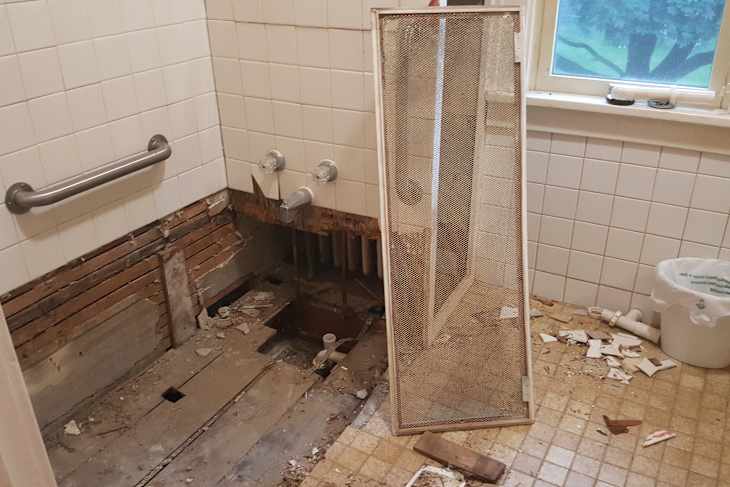
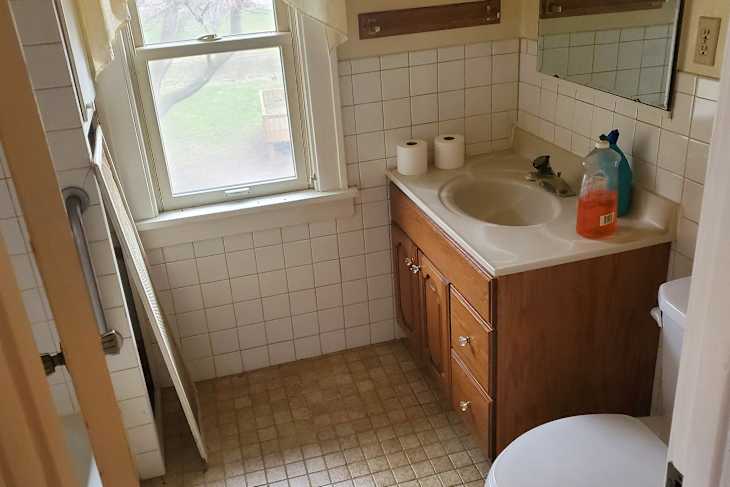
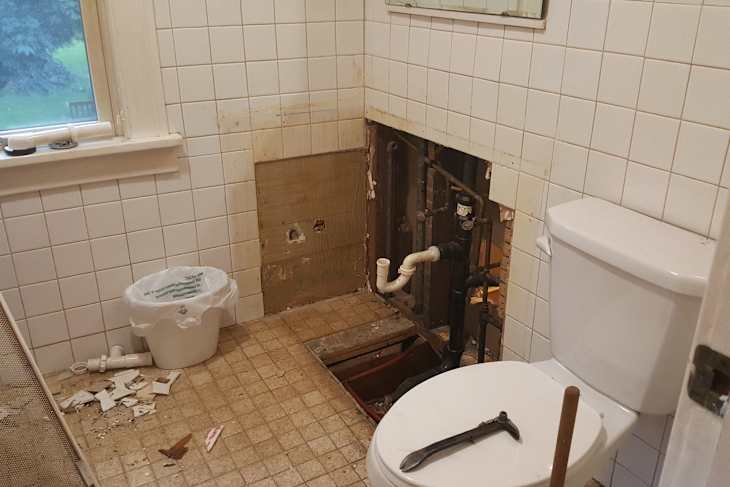
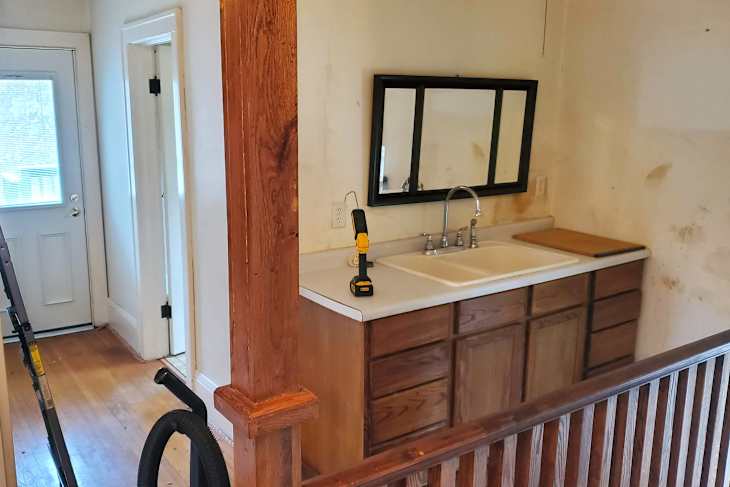
The upper floor of their new-to-them house had “one small, cramped, and dingy bathroom with lots of open space outside the bathroom [in the hall] that was essentially wasted space,” Elizabeth says. They decided to start from scratch and tear out the whole thing — creating two bathrooms with one attached to the primary bedroom, and giving their kids a small bathroom of their own.
When a Hallway Becomes a Bathroom
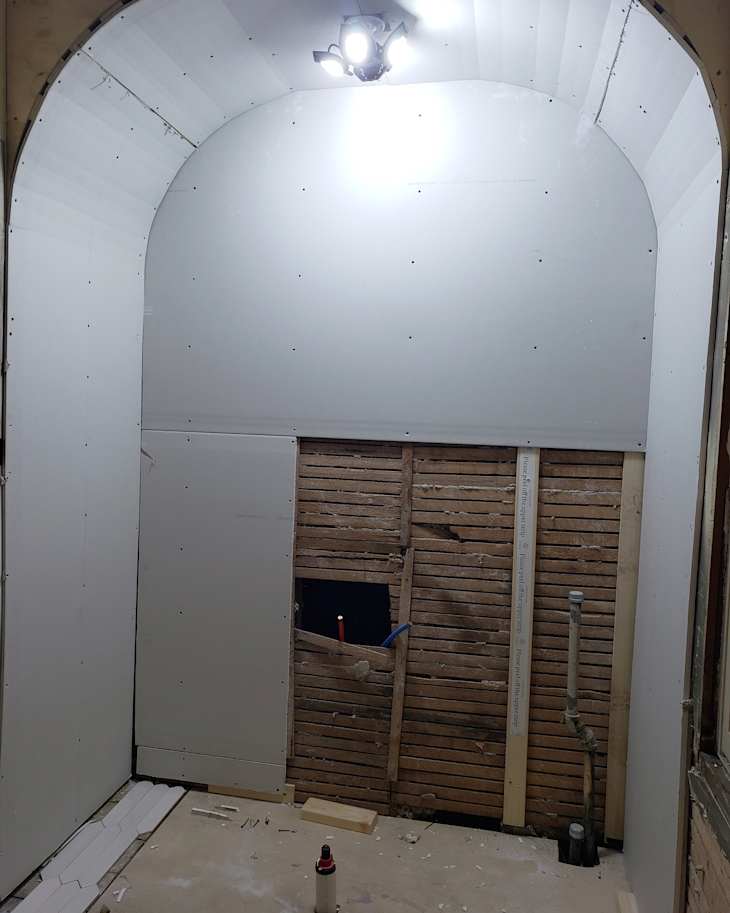
By using the entire space at the top of the stairs, they extended the bathroom from 7 feet to 14 feet. “We reworked the layout multiple times to take advantage of every inch to make it feel luxurious and spacious — even though we still had limited space to work with,” Elizabeth adds.
Keeping Priorities Straight While Honoring the Home’s Era
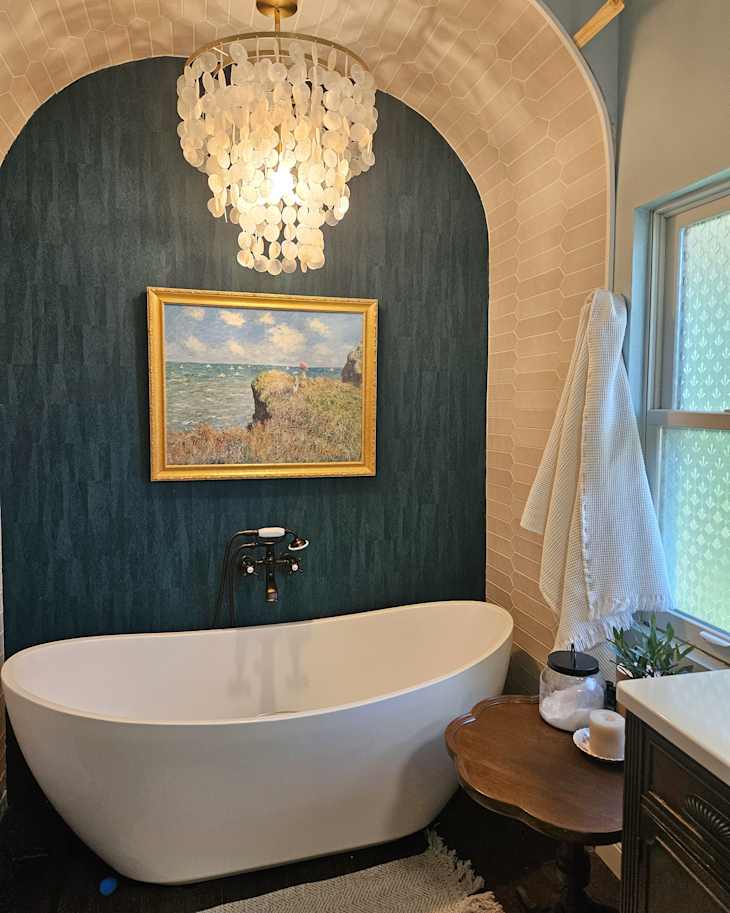
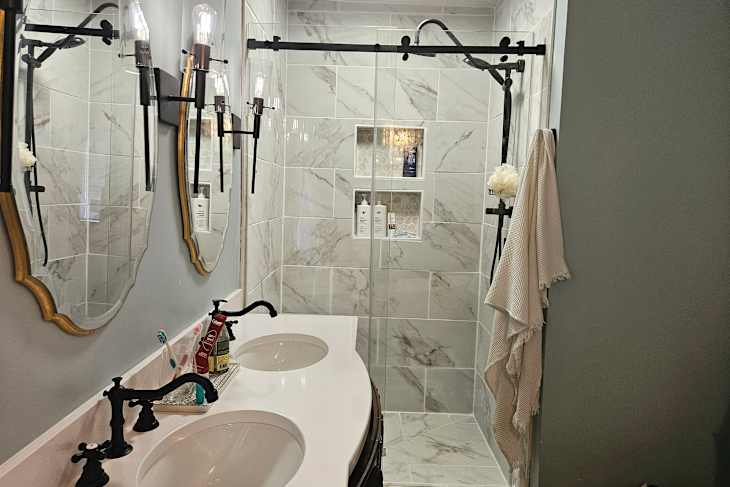
Their space was limited because of the age of the home, but Elizabeth’s goal was to create a primary suite that efficiently used every square inch to create a relaxing escape. But two of Elizabeth’s non-negotiables? A relaxing soaker tub from Home Depot for herself, and a comfortable walk-in shower with a showerhead to fit Josiah’s 6’2” height.
While meeting these must-haves was a priority, Elizabeth was also constantly thinking about the home’s history and how to honor it. “I really wanted to make it feel clean and modern while still honoring the historic feel of the home,” Elizabeth explains.
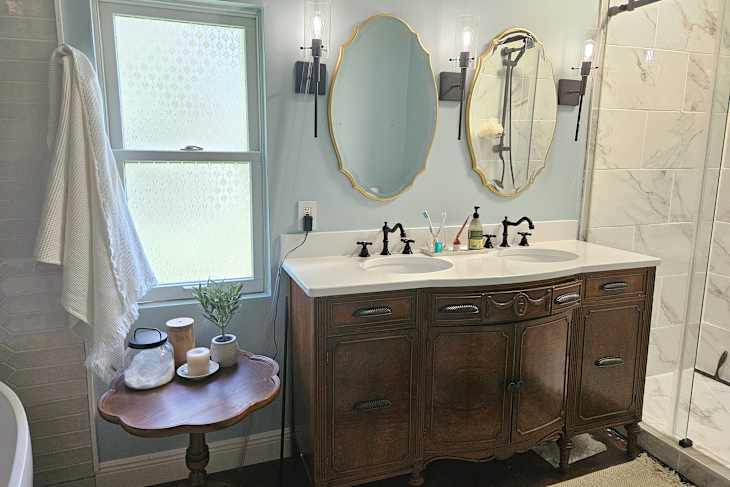
For the soaking tub alcove, she added textured wallpaper and a Layered Capiz Chandelier from Wayfair. When plumbing costs started to add up, Elizabeth scoured outlet stores and online marketplaces to find other pieces to complete the bathroom. The tub was an overstock item bought for $125, the vintage bathtub faucet was $20 on Facebook Marketplace, and Elizabeth converted an antique buffet she also found on Facebook for $200 into the vanity (pairing it with a custom-cut quartz top). By combining new features with antique details, Elizabeth and Josiah brought a modern twist to their historic home.
Problem After Problem After Problem — But It Didn’t Stop Them
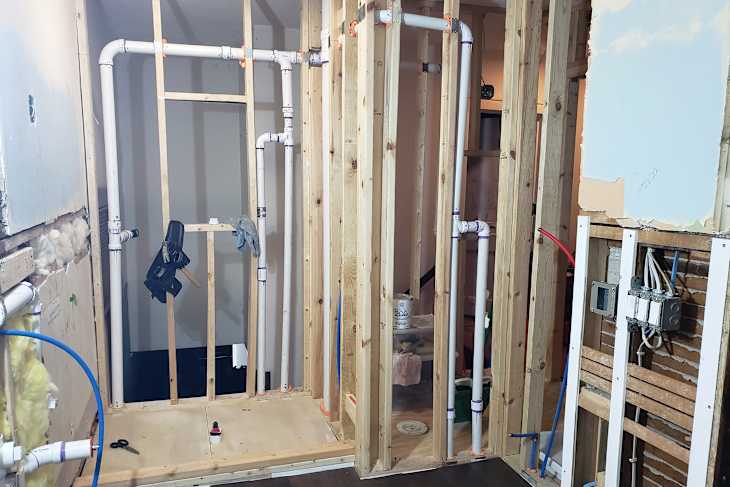
As is to be expected, remodeling an old house always brings up new problems. The walls were still wooden slats and plaster — adding a layer of difficulty when mounting heavy items or making wiring and plumbing updates. “There was also lead paint, so we had to seal off the whole area and use special gear to safely demolish the old wall,” Elizabeth says.
If that wasn’t enough, the plumbing was a puzzle because they had to move everything when they tore down the wall and split it into two bathrooms. “The floor wasn’t deep enough to fit the plumbing at the proper grades, so we ended up having to lower the kitchen ceiling below the bathroom by a few inches,” Elizabeth shares.
Regardless of all the issues renovating an old house can bring, Elizabeth and Josiah were determined to create a bathroom that was the opposite of what the process had been like — effortless, relaxing, and luxurious.
But Elizabeth and Josiah didn’t stop at just the feature upgrades — they decided to add an electric heating panel under the flooring. Stepping onto warm floors right out of the tub or first thing on a cold morning adds to the luxurious feeling they were going for.
Nerves and Home Improvement Firsts
For Elizabeth, designing a project this large was a first. “It was extremely nerve-wracking to try to figure out if my vision on paper would translate to the actual space,” she explains.
Josiah already had the skills and knowledge to tackle each of the problems, but Elizabeth “learned a lot about how to use space efficiently while also having to keep in mind codes and the feasibility of the plumbing and electrical.”
“Our plan changed so much from the beginning and got better with every revision,” Elizabeth reflects. “I’m so glad I took the time to be absolutely sure of my layout and spacing.”
Inspired? Submit your own project here.