
My Grandma’s Hand-Written Letters to Spring Are “Magic” — Now I Write One Every Year
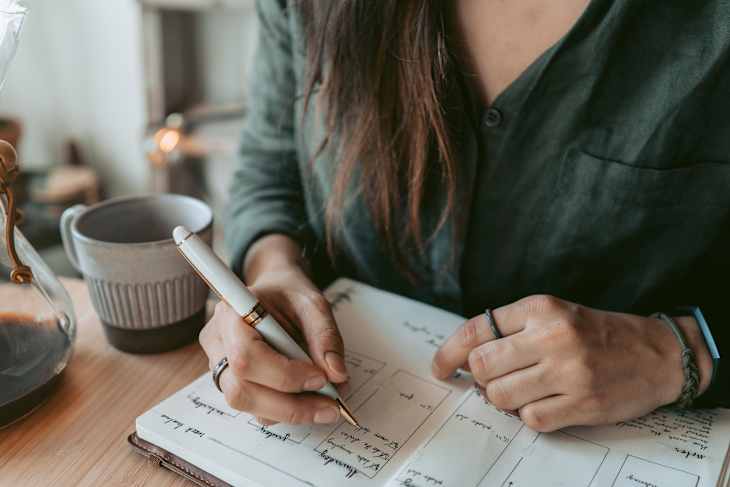
Every year, as the days grow noticeably longer and the grass turns green, I find myself reaching for a notebook and my favorite pen. Outside, a few trees have begun to outgrow their dead leaves and skeletal branches of winter. The sun shows up, seemingly with something to say. My grandmother taught me that it’s during this time, when the earth is waking up, that I should be doing some of my most important work: practicing gratitude and setting intentions for the rest of the year.
As a child, I found it whimsical — and perhaps a bit eccentric. I’d watch her sit at her scratched oak kitchen table, where she’d whisper to the window as she scribbled long, flowing sentences; she wrote to the season as if it were a loved one. Looking back, I see it for the powerful ritual it was. And now that I’ve taken it on myself, I know it’s something like prayer and poetry combined — a way to signal to the universe that I’m ready for the shift, and for personal renewal.
My Grandmother’s Unforgettable Spring Wisdom, Explained
I’ll never forget my grandmother’s response when I asked why she wrote these letters to spring: “Se puede encontrar mucha magia simplemente aprendiendo a abordar el silencio antes del florecimiento.” Or, for English speakers, “A lot of magic could be found in simply learning to address the silence before the bloom.”
My grandmother’s philosophy is rooted in a deep trust in the cycle of life. According to her, winter isn’t a time of death, but of reflective rest and letting go. Spring, on the other hand, is a direct question that begs, “What are you going to grow this year?”
Now I can see that her practice wasn’t just a charming habit, but a masterclass in intentional living. She wasn’t just writing to a season or penning out her hopes; she was practicing the art of invitation. My grandmother doesn’t see spring as just a season, but as a guest that needs to be welcomed.
“For beautiful things to happen to you, you have to invite them in,” she told me, her eyes twinkling. “And you can’t do that without gratitude.” She didn’t just mean being thankful for blessings already received, but for the quiet anticipation of growth. “Thank the sun for its arrival before the first sprout appears in your garden,” she said. “And you make space for the flower to grow and the sun to shine.”
Putting pen to paper is a physical act of welcoming, of bringing the abstract idea of renewal into a tangible, written reality. By documenting our hopes, we’re giving them a place to live and turning them into something real. It’s a way to transform our desires into concrete intentions. And articulating what we still need to work on releasing, like old fears or baggage, creates the soil necessary for new life to bloom.

What Putting Pen to Paper Means to Me
Through my grandmother’s eyes, I learned that new beginnings don’t just happen to us. We have to partner with them. If we don’t acknowledge the coming sun and flowers, we might just sleep through them. As an adult, I’ve taken her wisdom to heart.
Just like she taught me, I look for the “in-between” moments of spring — the smell of wet ground, the increased, frantic chatter of birds outside the window, early bloomers like snowdrops and daffodils beginning to push their way from the ground. To ground myself in the present, I note these things in my annual letter to spring, thanking them for their arrival.
And just like her, I go deeper than seasonal observations. I tell spring about my biggest failures over winter, naming where I need to put more effort in letting go. I confess my fears, the self-limiting beliefs I’m still carrying, the grudges I haven’t quite loosened my grip on, the habits that no longer serve me, what in my life still has me feeling cold. I intend to leave them behind on the page like fallen leaves.
Then, I share my deepest wishes. I tell spring about what I hope to cultivate in the coming months, and how I plan on reaching those goals. I make promises on how I want to grow, perhaps with more trust in my heart or with the boldness of a wildflower. I write explicitly about what I hope to welcome in, be it creative energy or a quieter sense of peace. I vow to find joy and beauty in the little things. I dare to dream.
This ritual has fundamentally changed how I view renewal. It’s no longer a passive event I wait for, but something I reach for. In the act of writing these letters, I’ve learned that growth isn’t a sudden explosion of green — it’s a slow, steady conversation between who we are and who we are becoming.