
The Somewhat Surprising True History of the Toilet
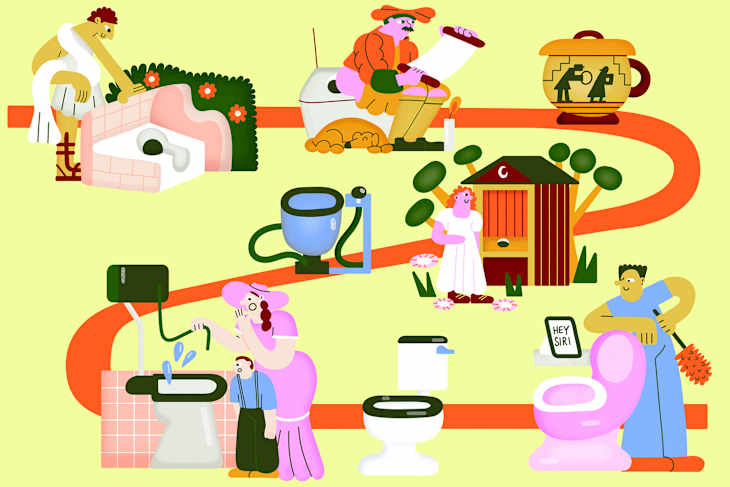
While not a glamorous topic, toilets make life much easier and safer at home. And while I’d love to replace the 1980s toilets in my home with something more aesthetically pleasing (my kingdom for a sleek TOTO), modern plumbing is not something I take for granted at all. But all this toilet talk got me to wondering: I may not like the look of mine, but how much has the aesthetic of toilets changed over the years — and centuries?
To take a quick dive into the history of the toilet, I chatted with design historian and author Maile Pingel along with a few other design and plumbing experts. As it turns out, the history of the toilet is an extensive one that dates all the way back to antiquity — over 5,000 years ago!

When Was the Toilet Invented?
“The earliest known toilets date back to Mesopotamia some 5,000 years ago, but they were far from what we know today,” Pingel says. As settlements grew in size, and people began living in increasingly close proximity to one another, it became necessary to find a way to dispose of human waste. As a result, the first crude “toilets” were developed.
“People would have sat over deep pits lined with ceramic, and it was a communal affair, so zero privacy,” Pingel says. “Other ancient cultures — Egyptians, Romans — devised ways to incorporate water, namely rivers, to carry waste away, but systems were rudimentary and unhygienic (think castle latrines dropping sewage straight down into a moat) with pathogens readily spreading diseases like cholera and typhoid,” Pingel says.

When Did Toilets Become Common in Homes?
Not much progress was made in toilet design until around 500 years ago. At that time, a new familiar development came into use: the outhouse.
“Things got a little better with the advent of the outhouse, which helped control the spread of disease by situating the toilet away from the house,” Pingel says. “It was still rudimentary and not much more than a simple structure containing a hole in the ground or a bucket that would need to be emptied. Some were decorated with a crescent moon to denote women or a sun to denote men.”
According to Pingel, outhouses continued to be a prominent waste solution in rural areas well into the 20th century. They can still be found on some older properties, even if they’re not still being used.
Chamber pots were another option. These were popular from the time of antiquity in Greece to well into the 19th century. Resembling a squat vase or amphora and sometimes lidded, “they were ceramic bowls, often with handles, that could be stashed in a nightstand or under the bed for convenience,” Pingel says. “Royalty would have been accompanied by a servant — Tudor kings had what was called ‘the groom of the stool’ — who would have seen to the pot’s removal and cleaning.”
Though chamber pots certainly had a footing with the upper crust of society, Pingel says these vessels were widely used across economic classes.

The Modern Toilet
Pingel traces the toilets you know today all the way back to a prototype for a “private, indoor” fixture invented in 1596 by Sir John Harrington, a godson of Queen Elizabeth I. It would take roughly another 300 years, though, before anything like today’s toilets would come to fruition on a larger scale.
“In 1775, a Scottish inventor called Alexander Cumming designed a flushing toilet that featured an S-shape pipe with a valve to prevent sewer gases from flowing back into the room,” says Pingel. “But it wasn’t until the late 19th century that Thomas Crapper, a London plumber, designed the preeminent flushing toilet with a tank system we still use today.”
Around that time, Pingel says chain-pull toilets were the norm, and people clamored to have them added to their homes. “By the early 20th century, with sewage systems and plumbing improved in major cities, indoor toilets — bathtubs, too — were a common home feature,” Pingel says.
These early indoor toilets (before plumbing) were typically made of wood and were either freestanding and mobile, like furniture, or incorporated into a room as part of its paneling. “It would open on hinges, like a chest, revealing a seat with a central hole that would allow waste to drop down into a removable ceramic bowl below,” Pingel says.
Once plumbing entered the equation, toilets began to look more like what you’re probably familiar with. “Flushing toilets as we know them today were made of a ceramic base, sometimes with a wood seat, and a ceramic water tank,” Pingel says. Stylistically speaking, by the early 20th century, toilets were very utilitarian and the design fairly standard.
“It wasn’t until the late 1920s that Kohler, the bathroom company we still know today, launched pastel pink and green designs,” Pingel says. From then until the 1980s, really, ceramic colorways would sometimes reflect the shades dominating the decade, including mauve and even yellow or green.
What about that wood toilet seat that seemed so outdated but is now making a comeback? “Wood toilet seats are kind of a funny oddity,” Pingel says. “They harken back to the early days of toilets and have gone in and out of fashion since the 1920s. It does add a ‘furniture’ element to the bathroom and certainly suits a period home.”
The Different Types of Toilets You Might See Today
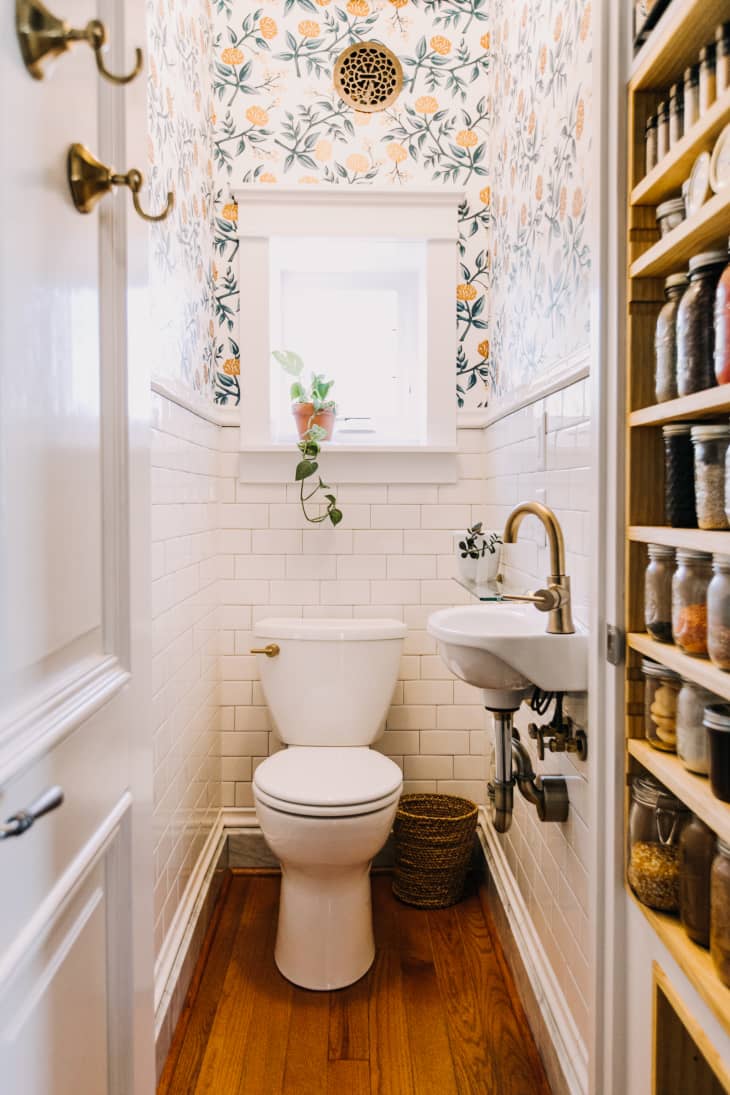
Today, tons of different toilets are available for residential use, including higher-end models with more innovative features like heating and bidet capabilities. Even basic models feature some slight variations in construction and type, like “tall toilets, self-cleaning toilets, and more color and electrical or smart toilets,” says Luke Bartel, the senior category manager of toilets at Kohler.
Here are some of the things you may have to decide when choosing a toilet:
- Two-piece vs. one-piece
- Tank vs. tankless
- Round vs. oval toilet seat
- What material the toilet is made of
- Skirted vs. unskirted
Picking out a “you” toilet comes down to weighing the pros and cons. “The classic two-piece toilet, with a separate tank and bowl, remains the most common choice,” says Todd Harmon, principal interior designer and CEO of Aura Modern Home. “However, one-piece toilets, which feature a seamless design with the tank and bowl fused together, provide a sleeker look and are easier to clean.”
If you’re into higher-tech solutions, tankless designs are great because they eliminate the bulky tank and flush directly from the water supply. Another option is a wall-mounted toilet, which “provides a minimalist, space-saving solution by concealing the tank inside the wall,” adds Harmon.
Toilet shape, which includes a round versus oval seat, and materials is another consideration. “Round bowls are ideal for compact spaces, while elongated ones offer more comfort,” Harmon says. “Materials have also evolved beyond traditional porcelain, with some modern toilets incorporating stainless steel or high-tech ceramic finishes designed to resist bacteria and enhance hygiene.”
“One relatively recent stylistic change is the skirted toilet, which hides the ‘trapway,’ or plumbing aspect with straight sides down to the floor for a cleaner look,” Pingel says. This shape can also be easier to keep clean, since there are fewer nooks and crannies for dust to get caught in.
Some toilets on the market today also offer innovative features that create a personalized experience for each user. “Smart toilets that incorporate advanced features like bidet integration, automatic flushing, heated seats, and drying are increasingly popular in the U.S.,” Bartel says. “Color is also making a comeback — with more green and blue tone toilets along with more neutrals — that allow homeowners to make the space their own,” he adds.
“Now we even have compost toilets, which require no water and just a weekly (or so) addition of mulch,” Pingel says. “It almost brings us full circle with the Mesopotamian pits — though in a more efficient and hygienic way!”
Bathroom Break dives into the depths of your bathroom — from the history of toilets to how to make it smell like a spa. Check out all the stories here.
Design Defined
Never miss the style inspo and recommendations you crave with Design Defined. Follow along each week as our Home Director Danielle shares the best style advice, latest trends, and popular decor finds you just can't miss.