
I Know What Stagers Always Buy At Thrift Stores (It Adds Instant Character to Any Space)
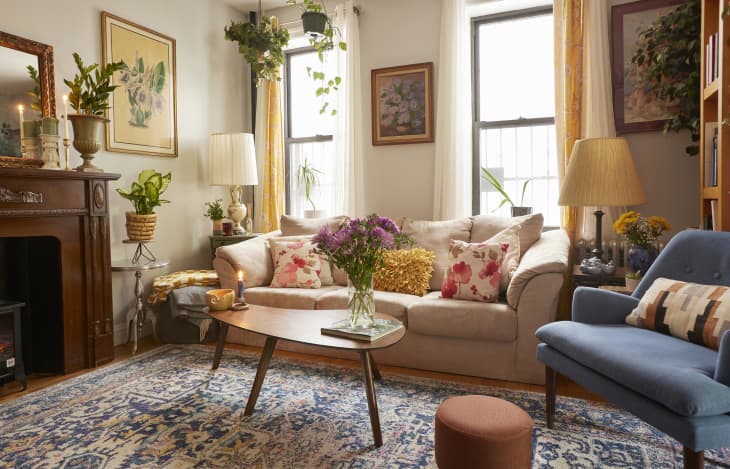
When my husband and I were shopping for a new home last summer, I started to get a sense of déjà vu while touring properties. So many of the houses we looked at were staged so similarly, from furniture to layout. Over time, I realized that made sense, since the whole point of staging a home is to make the space appealing to as broad a group of homebuyers as possible, but it made homes blend in to one another.
But after a number of open houses went nowhere, my husband and I made a game of how many overlapping staging motifs we saw in each house. We tallied how many times we saw the black-and-white buffalo canvas in Colorado living rooms and “Long Live Boyhood” pendants in playrooms. On some weekends, we were touring as many as 10 homes, and to help them from all blurring together, we kept details in our notes app and also started referring to homes by the features that set them apart — like “The Cool Wallpaper” house and “The Pretty Pendant Lights” condo.
Much of the staging that we saw in homes we were touring I recognized from the aisles of big-box stores, and sometimes they didn’t quite feel like a fit for some of the types of homes we were looking at, like mid-century built-homes and historic bungalows. But it got me thinking that thrift stores could be gold mines for stagers, especially for those looking for more unique pieces or those who are staging homes with historic charm.
So, I asked a few stagers what they love to look for at thrift stores, and let’s just say: It led to a light bulb moment!
Why Real Estate Professionals Always Buy Vintage Lighting at Thrift Stores
“I always thrift for vintage lighting — it’s one of the most overlooked elements of design with incredible potential,” says Joy Aumann, a licensed Realtor, interior designer, and founder of Luxury SoCal Realty in La Jolla, California. “Older chandeliers, sconces, and table lamps often have unique designs and craftsmanship that you simply can’t replicate with modern, mass-produced pieces.”
It makes sense: High-quality lighting is expensive. If you’re shopping for lighting on a budget, it’s more likely than not that you’ll get the same-old, same-old lighting that doesn’t pack the luxury punch. Thrifting lighting is a way more affordable, and character-filled way to design a space.
Aumann has transformed lighting fixtures by rewiring them. It’s a DIY project you can usually do for around $15 to $20. Oftentimes, she’ll swap out the lampshades to something more modern, too. By the time Aumann’s finished, the lamps become “unique statement features that anchor a room” and that are kept in her staging inventory that can be used over and over again.
When she’s thrifting for projects, Lisa Vega — the founder and principal designer of Lisa V Company in the North Central Florida and Atlanta metro area — says she’s always on the lookout for pieces that tell a story.
“I also gravitate towards lighting that adds warmth and personality to a space,” she says. These pieces, Vega says — alongside vintage vases and ornate mirrors — have the potential to create a “lived-in luxury” feel that buyers love.
Other Hidden Gems Professionals Love
Along with large mirrors and artwork, lamps are always on the top of professional stager Alice T. Chan’s thrift list.
“Mirrors can be easily refreshed with a coat of spray paint, and lamps can get a new look with a painted base or a trendy lampshade,” says Chan, a home improvement strategist and project director at home renovation company Freemodel. “Even if the artwork doesn’t fit your style, the frames are often the real gems, ready for creative repurposing.”
The beauty of thrifting, she says, lies in the thrill of the hunt. Plus, you’re helping reduce waste by repurposing.