
My Home Is Infested with Clothes Moths — Here’s What Experts Told Me to Do
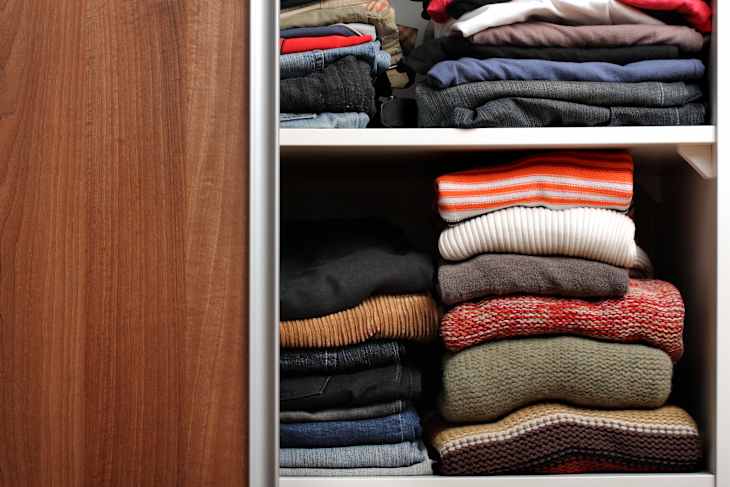
I am sad to report that I have clothes moths in my New York City apartment. I noticed these flying bugs for a few weeks before I Googled them and discovered what they were — and realized that they were happily munching away on my gorgeous orange and yellow vintage wool shag rug. I tried every remedy I could find on the internet — from giving my home a really deep, good vacuum to setting up traps and deterrents — but nothing worked. What’s more, everything online contradicted itself. For instance, some people would say lavender and cedar were great deterrents, but others called it a myth.
The internet was failing me, but I knew what to do: I sought out advice from actual pest experts, including an exterminator and researcher. Below, they helped me learn how to get rid of clothes moths, as well as provided me with preventative measures.

What Are Clothes Moths?
Clothes moths, otherwise known as Tinneola bisselliella, are pests that are attracted to materials made of animal fibers (keratin), such as wool, cashmere, silk, and leather. (Scarily enough, sometimes they can eat non-keratin fibers, but this is not their favorite food source and doesn’t provide the same level of nutrition, experts say.) According to Isabel Novick, PhD candidate in evolutionary biology who specifically studies fungus moths and in particular the webbing-clothes moth, these moths are like cockroaches in their hardiness and survivability. Once you have them, good luck getting rid of them.
What’s more, they release a pheromone to attract other moths to their area and reproduce fast — in a couple of days, a female clothes moth can lay up to 50 eggs, which incubate and hatch within a few days to a week. These babies, as larvae, do the most damage — they eat your precious cashmere sweaters and silk dresses. Then they become adults and the cycle continues.

How Do You Get Clothes Moths?
This one depends on who you speak to. Eric Braun, a technical services manager at Terminix, says that sometimes clothes moths come in through no fault of your own. They can just fly in through a window, find something tasty, and eat your stuff until you find them.
Novick, on the other hand, is skeptical of that belief. “I’ve heard a lot of pest control companies say that that happens. But I just haven’t found any evidence [of it].” She did say that people who live in dense cities (like me!) might be more susceptible to them simply flying in off the street, but for the most part they’re brought into your home because they live on something keratinized that you bought — a rug, sweater, or leather jacket.

It’s important to note, also, that clothes moths are attracted, in particular, to dirty clothes. “Clean items are less attractive than soiled items, because things that we wear frequently [have body oils on them],” Braun says. The body oils smell good to them (yuck!) and have certain nutrients that they can’t get otherwise. So cleaning your clothes, rugs, or other hotspot items regularly is important to eradicate bugs and prevent them.

How to Get Rid of Clothes Moths Once You Have Them
Both Novick and Braun say that reaching out to an exterminator is hands-down the best way to deal with these pests. But unfortunately, it’s not as simple as having an exterminator come around and spray in some closets and under some furniture and go their merry way. Unfortunately, dealing with clothes moths is a lot like dealing with bed bugs (which I also had to deal with about 11 years ago). You have to prep your space completely prior to having an exterminator come in.
Here’s how to get rid of clothes moths once you have them, according to Braun and Novick.
- Determine where the source of your clothes moths infestation is. You may find eggs, clothes moths, or cocoons in the cracks or crevices around the feeding area. I found eggs and moths.
- Get that item professionally cleaned — dry cleaned, heat treated, or frozen. Work with someone with experience dealing with clothes moths.
- Bag, fully seal, and treat all clothing items. That means every closet or area that you have clothes moths.
- Professionally dry-clean keratinized goods. Get items like leather jackets, wool coats, and cashmere sweaters taken care of. Additionally, get infested carpets professionally cleaned, or vacuum them thoroughly prior to treatment.
- Hot wash, hot dry, or even freeze cotton/keratinized items. Novick endorses freezing in particular.
- Store clothing items. Once clean, store items in water-tight plastic bins to protect them from clothes moths in the future. (Clothes moths can chew through soft plastic, like vacuum sealed bags.)
- Treat your spaces with professional-grade extermination techniques. When an exterminator comes in, they’ll inspect the area and treat with a variety of tools, says Braun, such as dust insecticides or liquid residual insecticides to kill the adults and larvae (and as eggs hatch and turn into larvae, they’ll be affected by it). Check with your exterminator to see what products they are using and if they are kid- or pet-safe if you have kids or pets in your home.
- Vacuum often (and empty outside). After treatment, regularly vacuum these spaces with your vacuum attachment in order to suck up eggs. Make sure to empty your vacuum bag right away and take it out of the house.
- Repeat the extermination process as needed. Consider doing multiple rounds of extermination based on the severity of your infestation and your exterminator’s recommendations.

How to Prevent Clothes Moths
There are several methods to try in order to prevent clothes moths; however, not everything is endorsed by professionals. For instance, lavender sachets, cedar blocks, and other natural deterrents can be used, but Braun and Novick don’t go as far to endorse the practice.
Here are the evidence-based prevention methods that they do recommend doing to prevent clothes moths.
- Make sure your screen doors and windows are in good working order — and have no large holes in them.
- Inspect any keratinized items you bring into your home. For instance, if you buy a wool sweater at a thrift store, consider dropping it off at a dry cleaner right away or sticking it in the freezer for a couple of days to kill any bugs that may hitch a ride on your garment.
- Store your items when not in use. Make sure to use watertight hard plastic storage containers, as Novick says that some clothes moths have been found to be able to chew through soft plastic. I plan to store my items in vacuum sealed bags inside a water-tight plastic bin — that way they’re double-sealed from bugs, and I’m able to store as much as possible in a smaller space.
- Vacuum regularly. Vacuum regularly with your attachment — making sure to clean the walls, baseboards, and behind, under, on, and in your sofa. Vacuum your rug with the attachment as well.
- Wash your clothes regularly. Because clothes moths love dirty clothes, it’s important to clean your items often.
I’ve been through large-scale exterminations before, so I know what to expect financially when the time comes to hire exterminators (warning: It’s not cheap). My husband and I will spend one long, annoying weekend going through our closets, deciding what clothes to get rid of altogether and what to save, dry clean, and hot wash, and then washing and drying everything at the laundromat. As for knowing whether or not the treatment was effective? Both Braun and Novick sadly warned me that clothes moths can be dormant for weeks, months, or even years — so we may invest in regular exterminations going forward to make sure we kill any larvae that may have survived our culling.