
This Trick Cooled Me Down in Minutes During a European Heat Wave, and Now I Use It All the Time
Munich was my first international destination as a travel writer. When my flight landed in Germany, it was under an extreme heat advisory, and I couldn’t wait to get to my hotel, take a cold shower, and sleep off my jet lag under a blast of AC. Unfortunately, there was one giant problem with my plan: The innocent worker at the concierge desk told me that, like most European buildings, the hotel was not equipped with air conditioning. I think I may have actually cried.
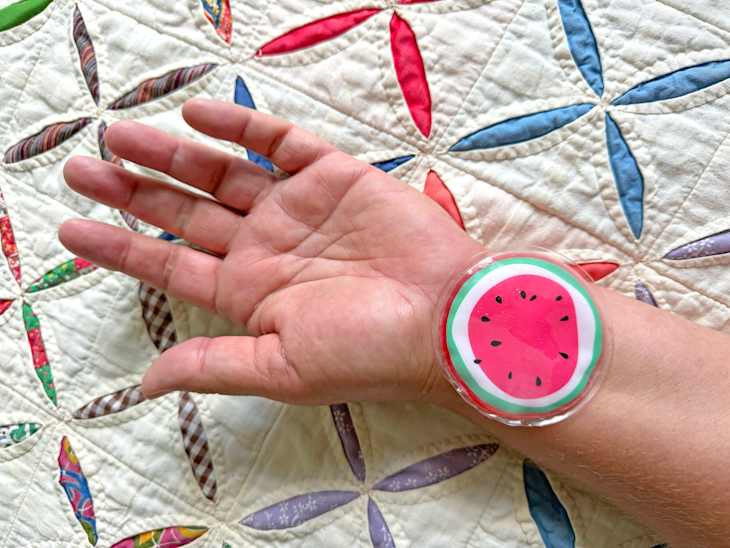
There’s a lot that I learned on that trip, including the fact that powering through jet lag is much better for my circadian rhythm. More importantly, that concierge taught me the quickest way to cool off during a heat wave (especially when the air conditioning is out), and I continue the practice to this day. The trick? Use cold packs on your wrists to instantly cool down your body.
How Cold Packs Work to Cool You Down
According to the National Library of Medicine, your blood vessels act as a heat exchange network to help prevent your systems from overheating. Major blood vessels such as the radial and ulnar arteries pump blood just below the skin’s surface on pulse points like your wrists. When you run hot, your wrists, for example, are one of your easiest access points for cooling your body, so if you put ice packs on them it’ll cool down your blood, bringing your overall temperature down. The cold packs work because it’s all about the connection between vasodilation (the widening of blood vessels) and temperature regulation.
Additionally, if you’ve ever gotten so hot you can’t think about anything else, that’s your parasympathetic nervous system showing up. The cold packs induce something Washington State University refers to as the Mammalian Dive Reflex. Essentially, your vagus nerve will sense the sudden temperature drop, and regulate your stress level while also restoring proper focus so that you can think about something besides how hot it is.
Did Using Cold Packs on My Wrists Work?
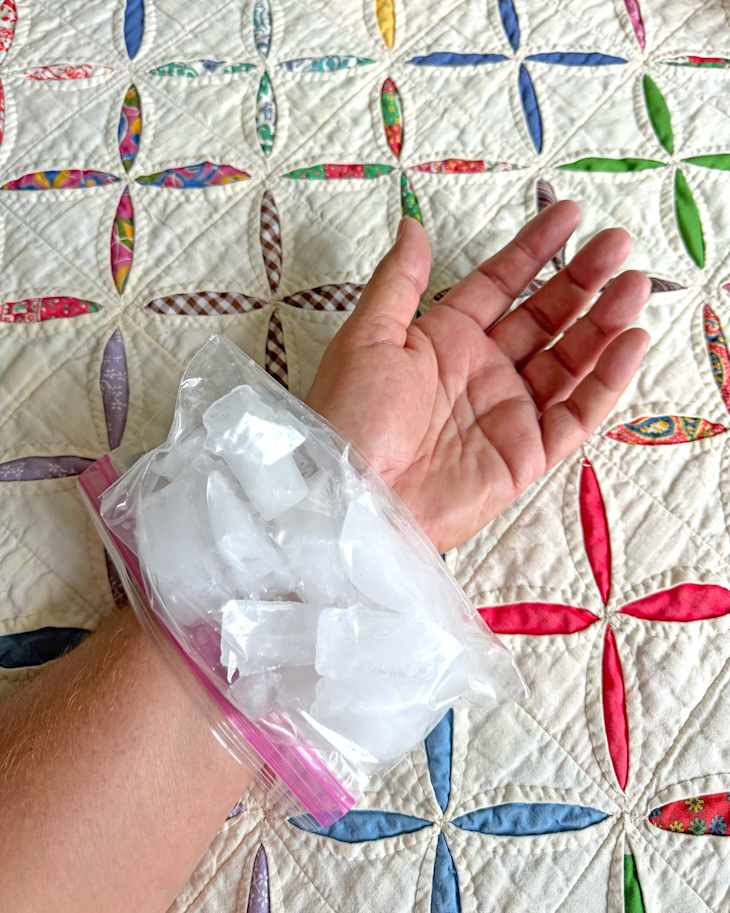
In that Munich hotel, I was desperate to try something, but all I had was some ice and cold washcloths from the hotel that first night. Still, I wrapped the ice with the cloths and used them like wristbands. I laid under the ceiling fan with the extra relief on my pulse points. It absolutely helped.
But when the ice melted in the bed, I had to sleep in the dreaded wet spot. Still, it was worth it to be several degrees cooler in the midst of that brutal heat wave. I just had to tweak my method a little. After I left Munich, I bought a set of cooling gel packs intended for puffy eyes, thinking that would be the best way to cool down while traveling. But if you wanted to get fancy with it, you could purchase therapeutic wrist ice packs.

Word of Caution: Know Your Limits with Cold Packs
If you’re using ice, many experts recommend avoiding direct skin contact by covering the packs with a cloth. And don’t keep the packs on for too long — when they’re applied for more than 20 minutes, the cold packs will cause the opposite effect: vasoconstriction. This is when your blood vessels constrict, thus encouraging your core to conserve heat. Instead, opt for a quick 10 to 15 minutes per icing session. You may want to cycle an on-off process of 10- to 15-minute intervals to achieve optimal cooling.
It’s important to note that if you feel confused, have a throbbing headache, and experience a loss of consciousness, you might be experiencing a heat stroke. In this case, call 911 immediately. In the interim, apply ice packs to the neck, armpits, and groin as recommended by New York Presbyterian.