
This 1800s Kitchen Trend Was Overlooked — Now, It’s All Over Gorgeous Cabinets
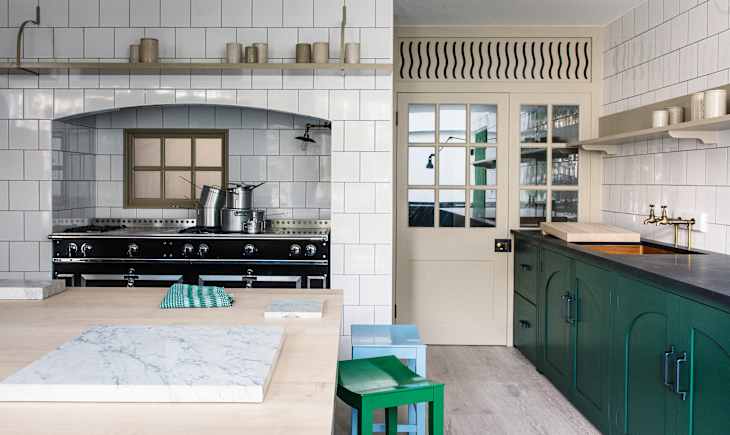
Almost a full decade since maximalist decor and historic design began dominating modern design at large, more interior designers are paying attention to details — especially in the kitchen. I wouldn’t necessarily call this a move toward full-on glamour (although, if a glam kitchen is what’s on your mood board, by all means, go for it). Instead, I’ve noticed a growing appreciation for old-school details that make a kitchen feel more like a thoughtfully furnished room — and lately, those details are showing up most often in cabinetry and millwork.
First came skirted sinks and café curtains, which brought a bit of softness and pattern to otherwise streamlined cabinetry. Then came adorable bun and ball feet, giving kitchen cabinets the look and presence of freestanding furniture. Now it’s all about decorative cutouts in cabinets (often referred to as vents!), which first began gaining steam in my design feeds back in early 2025. Since then, I’ve watched as more homeowners incorporate the detail into their makeovers (or a modern version of it!) — and as professionals have made them a mainstay in traditional design showrooms.
What Are Kitchen Cabinet Cut-Outs?
Kitchen cabinet cutouts are shapes or patterns carved into the fronts of drawers and doors (typically placed in the center or top-third of the design). They can take many forms, from slot-like slashes and dots to diamonds or droplets. They’re more than just pretty flourishes and features — they actually evolved from the need for ventilation at least as early as the Georgian period in England (and perhaps even before that elsewhere).
“Cutouts in cupboard doors are an aid to ventilation, as Georgian joinery was usually built against walls and in basements, which were often pretty damp, so ventilation was essential to prevent mold,” says Merlin Wright, design director at Plain English cupboardmakers, a bespoke cabinet company whose designs sometimes include slats and cutouts. “Another use was in larders and pantries, which were designed to keep foods cool and dry — and which were often connected to the outside wall (on the cool, northern wall) with adjustable vents. This allowed cool air to flow through the cupboard.”

Where Did This Kitchen Detail Come from, Exactly?
Some of the simplest iterations of cutouts look like rows of slashes or slots. Wright notes that you could also find these above doors in Georgian kitchens and in servant’s areas of large homes, which were typically also located in basements. But modern interpretations could look different; in designer Sarah Sherman Samuel’s latest kitchen featured in Architectural Digest in 2025, she incorporated circular cutouts into a built-in in the home’s playroom.
Sherman Samuel is far from the first designer to do this, though. It turns out kitchen cabinet cutouts date back (at least) to the Georgian period of architecture, meaning these design elements used some 300 years ago are now back again.

How Kitchen Cutouts Were Invented
Whether above doors or on the cabinetry itself, these cutouts might have evolved from similar carvings used on shutters — and generally were the brainchild of estate carpenters. “The patterns and shapes of slots are interesting, as there are many regional variations, where the creation of a local craftsman would be admired and copied by others,” says Wright. “These differences can clearly be seen on the shutters of Georgian buildings, where cutout patterns can be attributed to a particular builder or craftsman.”
It also wasn’t uncommon to see some of these cutouts backed in materials like mesh to keep perishables as safe as possible. “Some cupboards needed a lot of ventilation such as meat-safes, where meat was salted and hung to dry,” Wright says. “Our Petworth Slots (pictured above) are based on an example from Petworth House, where the large, lozenge-shaped slots were backed with mesh to prevent flies.”

When Were Kitchen Cabinet Cut-Outs Popular?
Though a necessity hundreds of years ago, cabinet cut-outs weren’t always 100% integral to kitchens as appliance technologies and refrigeration advanced. In the mid-century era here in the United States, cut-outs were sometimes used as a streamlined, hardwareless pull option for opening and closing doors and drawers. You can still find modern kitchens with cutouts used this way today.
Wright is quick to point out that cabinet cutouts never went away entirely in the first place. “Slots and holes are certainly decorative, but we still make larders, and they are essential in an airing cupboard, so that air can pass up through slatted shelves and out through ventilation holes at the top of the doors,” he adds. For that reason, cutouts are still a mainstay in Plain English’s traditional kitchen design as well as any renovations where a client wants a period-appropriate look or just an extra touch of decoration.

Where Can You Find Kitchen Cabinet Cut-Outs Today?
Some designers seem to be gravitating toward cutout details again more for their form than their function. I’ve seen circle cut-outs arranged like diamonds across a stretch of cabinets in high-end kitchens. You can certainly find these features in pantries and larders (whether just single cupboards or entire freestanding rooms), but other spaces are getting in on the cut-outs, too. Laundry rooms and mudrooms are two other areas where these make sense — a little extra ventilation never hurts spaces that come into contact with damp clothing and footwear.
Maybe a little less unexpected, though, would be cut-outs in a home office or a bedroom with built-ins. But mark my words — they’re coming! What cut-outs offer is one more way to personalize a space and add a bit of old world appeal. You can choose from a variety of cabinet cut-out patterns and placements to play up your wallpaper and fabric choices as well as the overall design aesthetic of your room. So they’re just another way to have some more fun with your design.