
I Create a “KFP Area” for Passover Every Year, and It Keeps My Home So Organized Every Time
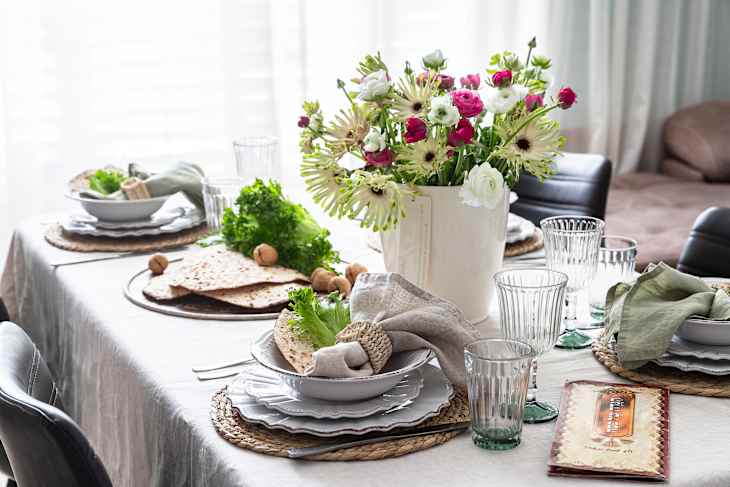
With any religious observance, families all over might do things a little differently than others. I grew up in a household that considered themselves to be a sort of mid-level of observant Jews. We did not keep Shabbat in a traditional sense, but we kept a Kosher home and followed the various holidays throughout the year pretty strictly.
At no holiday is this more the case than at Passover, which is a week-long holiday each spring that involves very strict dietary guidelines. The history of Passover begins with Jewish people escaping Egypt on short notice — such short notice that they had no time for their bread to rise. In honor of this, people observe this holiday by enjoying specifically unleavened bread, or, in this case, matzo. In fact, anything that “rises” is off-limits, including pasta, beer, and oatmeal — and must be removed from the home before the holiday begins.
Because of this, there are firm cleaning rules that go into place to properly clear your home of any chametz (that’s anything containing wheat, barley, rye, oats, or spelt) as well as anything that’s not marked with a Kosher certified label. And within various sects of Judaism, there are also laws about avoiding rice, beans, or corn.

For most families that observe Passover, that means giving away just about all the food in your house (or storing it away in your garage), cleaning it from top to bottom, and then restocking with specifically marked foods that fit the Kosher guidelines of the holiday. Sounds like a ton of work, right? It is, and it’s also quite expensive, which means there’s a lot of prep and planning involved to adhere to the rules without being too wasteful.
For my family of five, we start with a communal shopping list on all our phones that has every item we’ll be needing for Passover. Every time we obtain an item, we check it off the list, and we’ll also add items as needed. We’ll put in notes for any specials or sales we spot (like the one we discovered at a local Brooklyn Kosher grocery store that had a major deal on eggs with a sell-by date well into May, so we jumped on it!).

To make things manageable at home each year, I create an area — a box, a table, a corner — that is the designated Passover area. This “Kosher for Passover,” or KFP, area is like a waiting room for items that need to be transferred somewhere else for the holiday. The best thing about it is that it keeps us organized and maintains a stock of what we have so far and still need to get.
This area allows us to do Passover prep in stages, rather than a mad rush in the final days. This year, our KFP area is split into two spots: the basement fridge, which has been emptied, cleaned, and now stocked with eggs; and a nearby folding table that began its prep this season in mid-March with the most important Passover staples: my favorite KFP hot sauce, lots of kosher wine for Seder, and chocolate-covered matzo for my mom.

As Passover prep extends over a period of weeks, this area goes through various stages that start small and continue to grow. For instance, 10 days pre-Passover, everything from spices, matzo, and candy to baking and cooking staples (matzo meal, potato starch, and cake meal get used a lot) are waiting here. The beauty of this area is that it will transcend from a waiting room to a staging area soon, as the items used during Passover are moved to the main fridge and pantry during the holiday, when the rest of the house is transitioned.
Passover is really hard work, and it can be difficult to understand if you haven’t experienced it for yourself. What is known to many as the no-bread holiday is so much more — it’s strict diets and protocols, with tons of cleaning, organizing, and shopping that come into play. Having a designated Passover area to allow for planning, storage, and piece-by-piece organization has made all the difference.