
Move Over, Massive Islands — “Micro Islands” Are Taking Over Kitchens
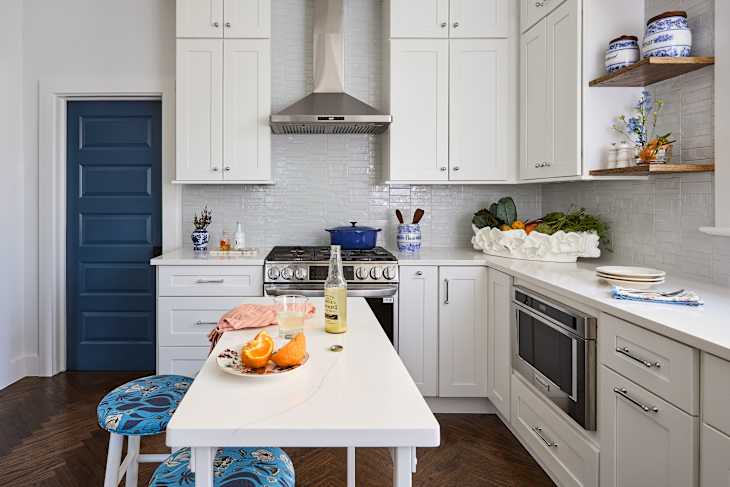
For decades now, the “dream kitchens” many people have saved on Pinterest have had a few things in common. These kitchens typically feature white walls, soaring ceilings, and a massive kitchen island — the kind with enough room for meal prep, entertaining, and a homework station. But lately, designers are moving away from the once-coveted oversized island in favor of something much smaller and smarter.
Enter: the “micro island,” a scaled-down version of a traditional kitchen island that delivers extra counter space, storage, and seating potential without overwhelming the room. Think: narrow butcher block carts, slim built-ins, console tables, and compact freestanding pieces that can fit in a myriad of kitchen sizes and layouts. In smaller homes and apartments especially, the trend just makes sense.

“Space in the kitchen is a premium, especially in older homes and apartments in the Northeast,” says designer Sarah Storms of Styled by Storms. “Smaller kitchens often have an empty area in the layout where it’s too far to prep on the other side of the kitchen, but there’s not enough clearance for a traditional island.” And that’s exactly where a micro island can live and support all of the things you want to do in your kitchen without creating an obstruction.

What Is a Micro Island, and Why Might You Want One?
Storms describes micro islands more like work tables than traditional islands, referencing the original function islands were inspired by in the first place: having an additional surface for prepping and gathering around that doesn’t dominate the room. Unlike traditional islands, micro versions can be surprisingly slim, sometimes around 18 to 22 inches wide, making them much easier to fit into tighter layouts.
“People want a place to gather in the kitchen, even if the micro island wasn’t initially intended for that,” says Storms. “These smaller features solve for extra prep space, but they also become a place to hang out, have a drink together, or eat a quick breakfast.”
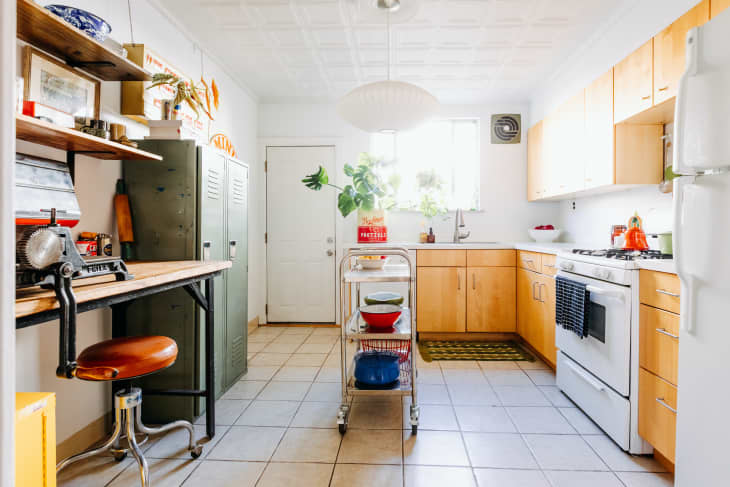
Another reason the trend is taking off? People are becoming more realistic about how much space they actually have. In open-concept homes, oversized islands can interrupt pathways, which makes kitchens feel cramped. A compact island keeps a room’s flow smooth and unobstructed, while still providing the function people need.

Adaptable options are much easier to source and make work. Freestanding tables and movable butcher block carts can shift around as needed, which makes them especially renter-friendly. They also visually lighten a kitchen — something designers are increasingly prioritizing as people move away from overly built-in, heavy-looking spaces. There’s now thought that bulky islands can close off even large kitchens and make them feel boxed-in.
If you’re considering adding a micro island to your own kitchen, scale is everything. Designers recommend leaving enough clearance around the island so drawers, appliances, and walkways are still comfortably accessible.

Prioritize pieces with open shelving or slim profiles that won’t visually crowd the room, and look for designs that will allow you to tuck away stools. And don’t underestimate the power of a simple console table: In many kitchens, it’s all you really need.
Design Defined
Never miss the style inspo and recommendations you crave with Design Defined. Follow along each week as our Home Director Danielle shares the best style advice, latest trends, and popular decor finds you just can't miss.