
This Simple Plywood Detail Makes Every Window Look Custom
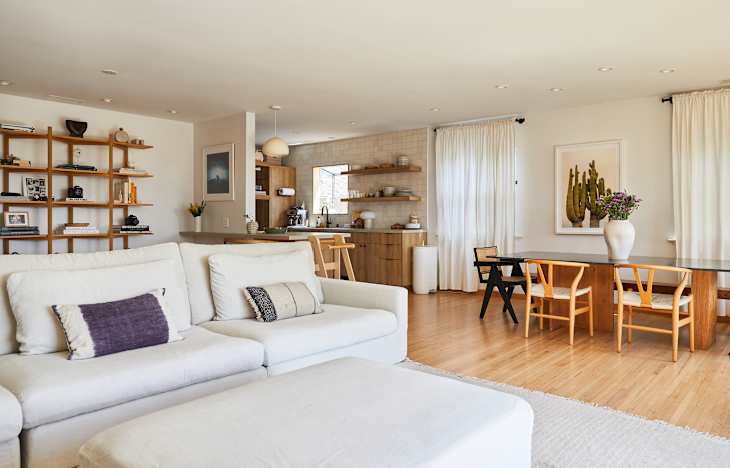
While renovating a home involves big-picture decisions about materials and room layouts, it’s the thoughtful details that truly define a finished space and often influence how a space feels. And it’s not always the priciest of elements that pack the biggest visual punch. In this California ranch house, one of the most memorable features isn’t a new kitchen or flooring choice; it’s the plywood wrapped around the windows and door frames. Used as simple, modern trim, humble plywood delivers the look of expensive custom millwork at a fraction of the cost.
When photographer Monroe Alvarez, and her husband, director Samy Mosher, bought this 1,503-square-foot house five-and-a-half years ago, they described it as “bright” and “utilitarian.” Rather than tackling one major renovation (Monroe was pregnant with their first child when they moved in), the couple chose to update the home slowly, focusing on projects that would pay off in the long run. Working with Vlad Factor of FACTOR HD and their neighbor Polo Furlan (of CAF Construction), they added a wood slat wall that doubles as a sound dampener and installed an Eris Doors accordion door connecting the living space to the backyard.

This Plywood Detail Completely Changed the Feeling of the Home
One brilliant design decision the couple made, though, is also one of the simplest: They used plywood to trim out the home’s windows and doors.
“Our neighbor Polo is an amazing contractor who wrapped every window and doorway in plywood trim,” Monroe explains in her House Tour. She calls this feature one of the projects she’s proudest of. “Rather than replacing every window and door, Polo designed simple plywood wraps that completely changed the feeling of the home. They’re one of those details people notice immediately, even if they can’t quite put their finger on why the house feels warm.”

How Plywood Turns Ordinary Windows into Stunning Design Features
Polo’s solution stands out for more than its cost savings. According to Angi, custom window casings can cost between $500 and $1,200 per window, making plywood an appealing, affordable alternative. But what really makes this solution so successful is the visual effect it creates in this home: Ordinary openings completely transform into major design moments. While some traditional window trim is made of solid woods (think: oak or maple), unpainted plywood is used here as flat-stock casing, wrapping only the inside face of each window opening.
Because the plywood extends the full depth of the wall, each opening reads as one continuous wood frame. The wood’s thin profile feels simultaneously delicate and refined — not bulky in the slightest. The lack of extraneous ornamentation or other decorative molding details provides an unmistakably modern look.

Why the Simple Detail Has Such a Big Impact
Wrapping every window and doorway in plywood gives each opening far more depth and visual interest than standard drywall returns or traditional painted trim. It also introduces another layer of natural wood throughout the home, reinforcing the family’s organic modern style while making every room feel warmer and more closely connected to nature.
Repeating the same plywood treatment from room to room creates a sense of continuity that makes the entire home feel more intentional. Although the material itself is inexpensive, the repeated architectural detail gives the impression of custom millwork without the expensive price tag. The result feels understated instead of fussy, which perfectly suits the home’s effortless, laidback look.

Why Plywood Deserves a Second Look
“People told us not to use plywood as a finished material,” Monroe writes. “I’m so glad we ignored that advice. Using plywood around every window and door gave the house warmth without pretending to be something more expensive. We still love it years later.”
Yes, plywood is an affordable material that’s often used as a structural layer hidden beneath finished surfaces (although, be aware that the price can vary depending on the type or grade of plywood you choose). But Monroe’s home is a reminder that it can also be the finished material. Left natural, plywood offers a soft color tone, visible wood grain, and all the warmth that real wood brings to a space. Available in species like pine, birch, oak, maple, and more, plywood offers a surprising amount of finishes and wood grain patterns to can choose from. Because it’s available in large sheets and is relatively affordable, plywood is also easy to work with for both professionals and DIYers alike. It’s compatible with a variety of home design styles, too, from Scandinavian and organic modern to Japandi and other minimal interiors.

Proof That Plywood Can Look Totally High-End
Monroe’s home isn’t the only one that’s used plywood as a stylish, finished material. Countless House Tours on Apartment Therapy feature plywood design details, from the DIY plywood shelf/room divider in this Brooklyn loft and the custom plywood furniture in this Brooklyn loft, to this transformed new-build in Oslo and the sleek shelves in this Australian home. In each home, plywood offers sophistication with simplicity. Again and again, when thoughtfully used, plywood proves it can feel architectural and designed rather than just functional.
Samy and Monroe’s house proves truly memorable, successful renovations aren’t always the ones that cost the most money. Sometimes intentionally repeating one architectural detail throughout a home creates a stronger visual than splurging on all higher-end finishes. And often, it’s the details around a room like trim, window surrounds, and door casings that quietly make a home feel finished and personal. See more of these plywood window and door details in Monroe and Samy’s full House Tour.