
This Is the Easiest Way to Make Your Outdoor Space Look Instantly Styled
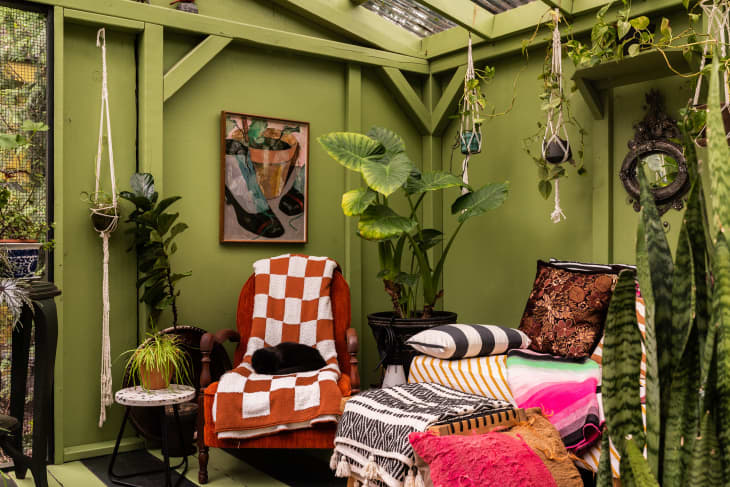
Outdoor spaces have officially entered their main-character era. Whether it’s a petite balcony or a full backyard setup, these areas are no longer an afterthought — they’re an extension of your home and, yes, they deserve just as much design attention. But if you’ve ever tried to style one, you know how easy it is to overdo it. Between potted plants, decor, and furniture, your outdoor space can quickly start to feel cluttered instead of curated.
The secret to making your outdoor area feel polished is surprisingly simple: Make sure to use one oversized planter somewhere in the space. It’s a small shift that makes a major difference — and once you see it, you won’t be able to unsee it. Read on to learn how to master the statement planter rule, including designers’ tips on proportions, placement, and the materials that feel fresh for spring.

What Is the “One Statement Planter” Rule?
No matter the setting, a singular statement piece instantly anchors the space and reduces the visual “noise” that a bunch of smaller pieces can create. Lauren Lerner, interior designer and founder of Living with Lolo, explains: “One oversized, intentional planter does more for a space than six average ones scattered around,” she says, “giving your eye a clear focal point and making the whole setup feel considered.”
“A statement planter should act like a focal point, not filler or an afterthought,” adds Lauren Ackerman, senior commercial interior designer at Wayfair. It’s the easiest way to make your outdoor space feel intentional — editorial, even — and cut down on clutter while elevating the entire setup.

How to Select and Style a Statement Planter
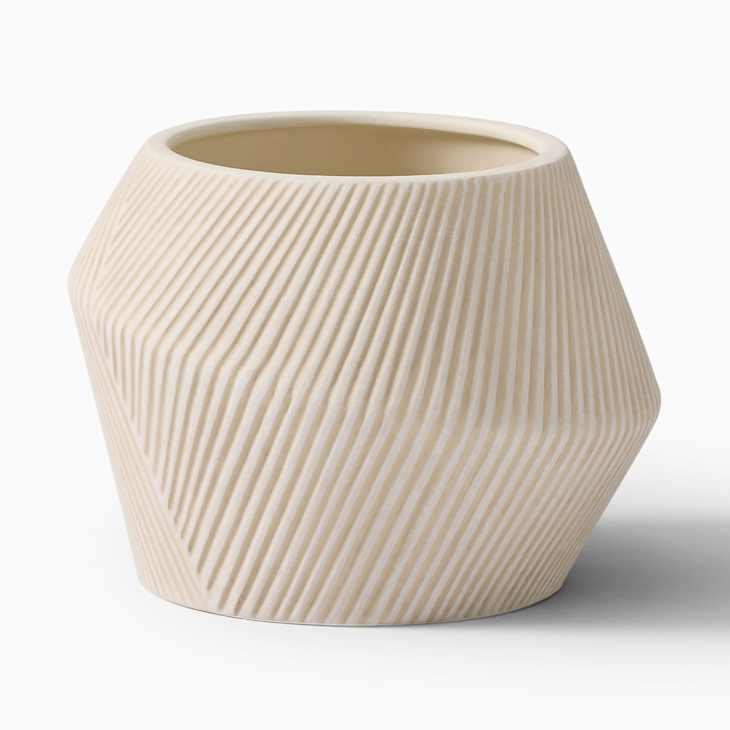
Finding the perfect planter is mainly a game of proportions, according to the pros. “The planter [must] feel proportional to the space, the plant, and the surrounding furniture,” says Ackerman. Lerner echoes that sentiment, emphasizing that this is where most people miss the mark: “I always say go bigger than feels comfortable,” she says. Specifically, she recommends a minimum of 18 inches for smaller setups, and sometimes goes up to 24 to 30 inches for larger spaces.
Material matters too, though: “Natural materials like terracotta, stone, or concrete will add warmth and texture, while metal or fiberglass will bring a modern and architectural element to your space,” Ackerman says.


Once you have your statement planter, placement is everything. “You want to use it as an anchor for the space,” Ackerman says. That means positioning it where your eye naturally lands, whether that be near an entryway, beside a seating area, or in an empty corner that needs purpose.
But wait, what about the other smaller potted plants you were hoping to add to your outdoor space? The experts say they can still have their place, just as long as you start with that one statement planter to ground the look.