
I Used the “Reverse Hanger” Hack on My Closet, and It Wasn’t What I Expected
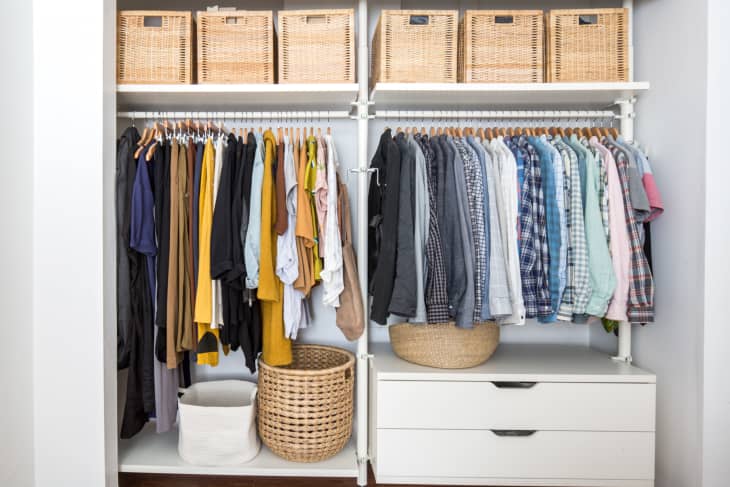
I’ve long heard of the popular “reverse hanger” hack, which promises to help you declutter your closet by showing you what you actually wear without requiring a full marathon try-on session. But despite its reputation (and my general love for decluttering), I had never actually tried it myself. So when I found myself in the mood to declutter — with a consignment bag already sitting in my car, waiting to be filled — I decided it was time. I tested the method over a few busy weeks filled with in-person plans and meetings. And while I definitely learned something about my wardrobe, I also discovered that this hack isn’t quite as foolproof as it seems. Here’s what happened when I tried it.
What Is the “Reverse Hanger” Hack?
As shown in an Instagram Reel by creator Marci of @monday.with.marci, the method is straightforward: You start by turning all of your hangers in your closet backward. Then, as you wear items, return each hanger to its normal position. After a set period of time (typically six months to a year), anything still hanging in reverse is fair game to donate or sell. In theory, it’s an easy way to identify what you actually reach for day-to-day — and what’s just taking up space.

How I Used the “Reverse Hanger” Hack in My Closet
Because I didn’t have six months to wait, I tried a shortened version of the method earlier this month — a time when the weather can swing wildly from chilly to warm in a matter of days. To keep things focused, I applied the hack to one specific section of my closet: my button-downs and blouses. I know I have too many (including a few that continue to hang in my closet despite not being my first choice).
I flipped all the hangers backward and, over the next few weeks, turned them forward again each time I wore something. The results were telling: More hangers stayed backward than not.
What I Learned from Trying This Decluttering Hack
After a few weeks of testing the reverse hanger method, a few patterns became pretty clear; here’s what I learned.
I reach for the same pieces again and again.
Now, I wish I could blame wearing less than half of my shirts on the fact that it was quicker (by a second!) to grab one with a right-side hanger — but I know that’s not true. I like what I like. And while I try to tell myself that, yes, I do wear everything I own, that’s just not the reality. I reach for the same four or five shirts over and over again.
This hack only works if you give it enough time.
Here’s where the “reverse hanger” trick ran into a hiccup: It really needs to be done over a longer period of time. There are plenty of shirts I wear regularly — just not every single week. For example, the floral pink-and-green blouse that’s perfect for Saturday antiquing with the girls, or a silky number I save for date nights. These didn’t come up during my experiment, but if I’d done this over a few months instead of a few weeks, I would have had a much better sense of whether they get worn often enough to justify keeping.
It doesn’t work for special-occasion pieces.
Despite its strengths, here’s where the “reverse hanger” hack truly doesn’t work: statement clothing. I have a small closet dedicated to dress-up coats and special-occasion dresses. These aren’t items I wear often, but I do love them — and I wear them for big events. Some are seasonal (like holiday outfits), while others might only get worn once a year or even every other year. If I used this method too strictly, I’d end up getting rid of pieces I actually need, only to have to buy or rent something similar later.
While I could take a more annual “reverse hanger” approach to these pieces, I’m not convinced it’s the most effective way to declutter them. Instead, I’ll stick to going through these items once a year or so, trying on anything that I’m unsure about, and keeping what I love. Not everything needs to be a workhorse to earn its place in my closet and, trust me — even though my green backless sequin dress won’t see its hanger turned backwards every year, that thing isn’t going anywhere.