
I’m Taking Notes from This House on How to Achieve the “Soft Architecture” Look
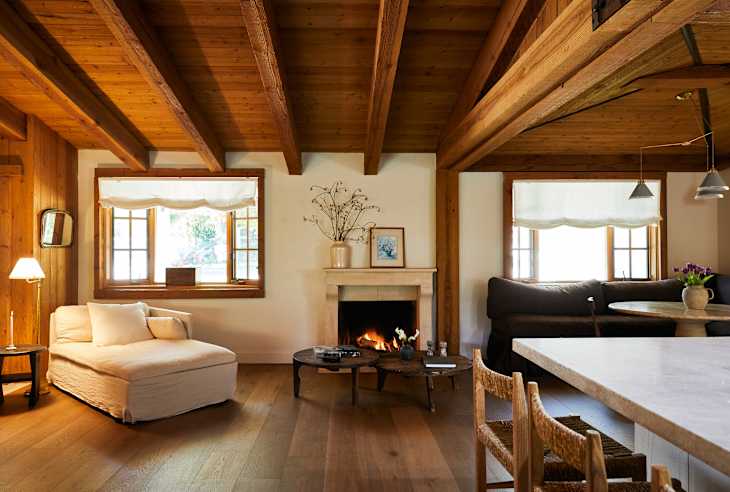
It’s interesting how once someone points something out, you can’t unsee it. For context, in this year’s New/Next List, Apartment Therapy editors predicted that “soft architecture” would be a blossoming trend. (Unfamiliar? That’s OK; it essentially means blurring hard, rigid lines in homes with softer, smoother, more tactile alternatives.) When I came across interior designer Emma Cali’s farmhouse in Agoura Hills, California, I felt the home embodied this design style.
Recently, it feels like people have been gravitating toward spaces that feel welcoming, soft, and, ultimately, comforting. That has led to an overhaul of ‘hard’ items, like swapping out curtains for doors. “Put it this way: A cocoon-like, curved couch in a nubby knit upholstery is probably more inviting to the average person than a sleek, boxy leather sofa,” AT’s Executive Home Director, Danielle Blundell, explains. “As minimalism has warmed up, and maximalism has crept back into the collective design consciousness, many people are looking to create calm and comfy spaces that feel nurturing.”

A Custom Dining Banquette Has Soft Edges
Banquettes are ideal for small spaces (especially if they include storage!), but they’re also a cozy alternative to traditional, rigid seating. The custom dining banquette in Emma’s dining area — expansive, plush, and rounded — was designed with comfort in mind, and it’s one of the spaces she’s most often asked about.
“It was originally an extension of the kitchen that I demoed to make a cozy area to eat, have wine, and play games,” Emma said at the time of the House Tour.

Canopy Beds Are a Prominent Feature of “Soft Architecture”
Fabric is a huge proponent of the “soft architecture” style, and you often see it on canopy beds. (But it’s also been spotted with the rise in furniture skirts — including on bathtubs!) Danielle has seen a surge in these bed frames replacing traditional headboards, and acknowledges their benefits for lessening noise and also blocking out light.
The canopy bed in Emma’s home is interesting because it doesn’t appear to be a traditional bed frame with posts. While Emma doesn’t explain exactly how the bed came to be, it looks like chains were installed in the ceiling, rods hung from them, and thick linen curtains draped over the rods. It looks similar to this two-item project that created a canopy bed for $245. Ultimately, “soft architecture” is about making a home feel that extra bit cozier by choosing soft instead of hard, smooth instead of rough, and loose instead of rigid. Keeping that in mind, plus the main features listed above, can help you create a plush-filled home you’ll want to relax in. To see more of Emma’s home, visit the full House Tour.