
Homes Are Losing Their Hard Edges, and “Soft Architecture” Explains Why
We’ve scoured markets and feeds to spot the standout looks shaping home style next year. From "Soft Architecture" and the latest “it” shade of green, to shine-maxxing, and the vintage furniture everyone’s going to be shopping for soon, see every trend we're calling in our full New/Next List.
The past few years have been all about interiors with major curve appeal (think: rounded sofa silhouettes, oval rugs, scalloped trim, and arches galore — painted on walls, used as decor, and installed over doorways, windows, and even built-in shelving and nooks). For a while, trendspotters like myself were wondering where all the right angles and clean lines had gone? Then, at least in my case, my attention shifted to predicting the next iteration of all this curvature? After spending a year studying designer show houses, pouring over our own Apartment Therapy House Tour photography, and scrolling Instagram ad nauseum, I’ve landed on the next big residential — and maybe even commercial — design trend: what I’m calling “soft architecture.”
In the pursuit of all things cozy — maybe the most pervasive interior design goal of this entire decade, second only to personalization — homes are literally losing their hard edges. Designers are trading sharp forms and rigid furniture for sumptuous fabric surfaces and additional rounded details, which collectively make rooms feel warmer and more inviting.
What Is Soft Architecture, and Why Is It All the Rage Right Now?
Very angular construction and furniture can be visually imposing, reading as “cold” the same way certain materials, like glass or concrete, can. Put it this way: A cocoon-like, curved couch in a nubby knit upholstery is probably more inviting to the average person than a sleek, boxy leather sofa. As minimalism has warmed up, and maximalism has crept back into the collective design consciousness, many people are looking to create calm and comfy spaces that feel nurturing. So they’re gravitating towards furnishings that communicate that ethos. The next step? Architecture that does the same.
Soft architecture is all about dramatic fabric features, gently rounded corners, and tactile touches that feel smooth. Consider the elements that would typically be rigid in a home — walls, molding, and furniture; soft architecture smooths these things out, rounds them off, or adds a layer of cushioning or blurriness. The fabrication of these features is easier than ever, thanks to custom millwork and the availability of CNC machines. And many commercial spaces, such as hotels and spas have already embraced this trend, softening up with the hopes that guests and customers will stay (and spend) a bit longer.

Fabric Is Becoming an Architectural Feature
Take a blocky wall covered in pleated drapery fabric, for example. “Drapery brings softness, movement, and texture in a way that harder materials can’t,” says Tony Machado, senior vice president and head of design at LUCID, a hospitality development firm. He and his design collaborators at ROW NYC, a newly reimagined boutique hotel in the heart of Manhattan’s Theater District in, settled on rich green velvet drapery to cover a good portion of the lobby’s walls. Not only does Machado’s design strategy evoke the idea of Broadway stage curtains, it was also used to “introduce warmth” into and ground the grand space. “The velvet drapery softens the architecture, creates a sense of intimacy within the seating areas, and encourages guests to relax and linger,” says Machado.
Alexandra Cole, the design director of the studio the DesignAgency studio — and Machado’s co-collaborator on ROW NYC — echoes this sentiment. She adds that fabric-draped walls play a practical role in design, too: They provide insulation and sound absorption. “Acoustics were also an important consideration given the existing hard architectural surfaces,” says Cole of the project. “The drapery helps absorb sound and reduce reverberation, which is especially beneficial in such an activated and lively setting.”
Adding Drama, Without the Hard Edges
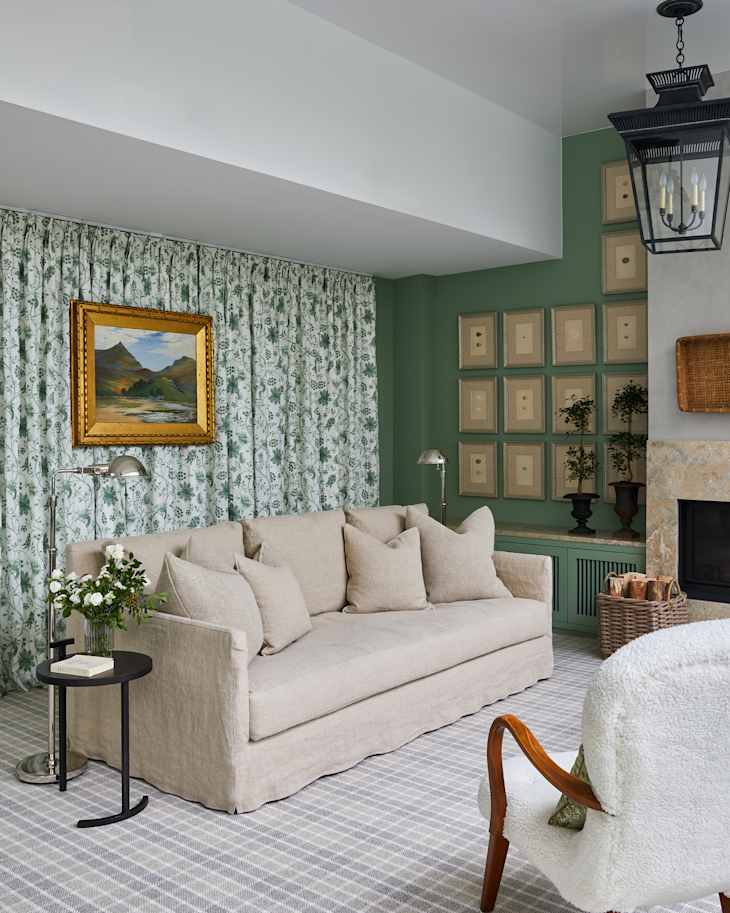
Maybe that’s why fabric walls have popped up in so many designer projects and house tours recently. Homeowners and renters alike are using drapery as a problem solver of sorts. They’re the perfect solution for hiding beat-up or super-plain walls without painting, interior doors that lead to nowhere (or just aren’t being used), and awkwardly positioned windows.
Sometimes fabric walls are about creating a focal point where there isn’t a clear one — or, on the flip side, accentuating an obvious focal point like the wall behind a bed or sofa. This version of soft architecture is also perfect for adding a pop of color or pattern to a space that otherwise could use it. Even better? You can hang art over the drapery, as shown just above in this beautiful living room by designer Meagan Camp.
More Elements Are Getting the Textile Treatment
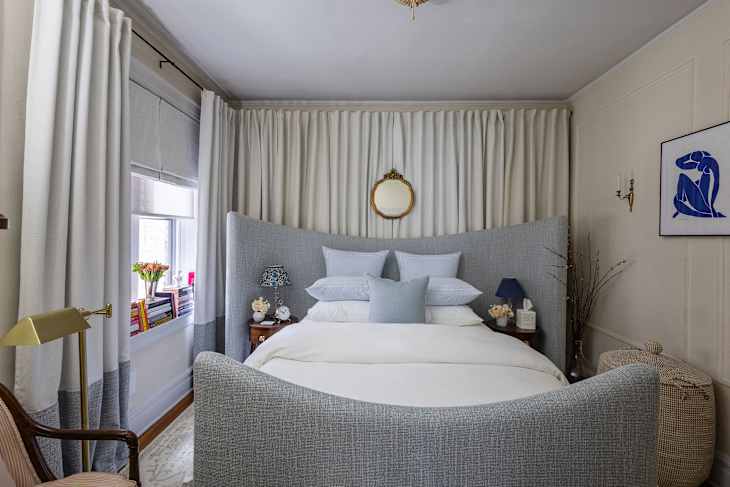
Drapery walls aren’t the only fabric features coming for your home. I’ve noticed a big uptick in canopy beds, particularly half-testers, being used in lieu of wooden headboards and metal bed frames. They’re not just for kids anymore either; plenty of primary suites and guest rooms are trying this whimsical-meets-traditional trend out. A canopy packs many of the same noise canceling benefits wall drapery does. And if you’re after total darkness in your room, consider one like putting a sleep mask on your bed.
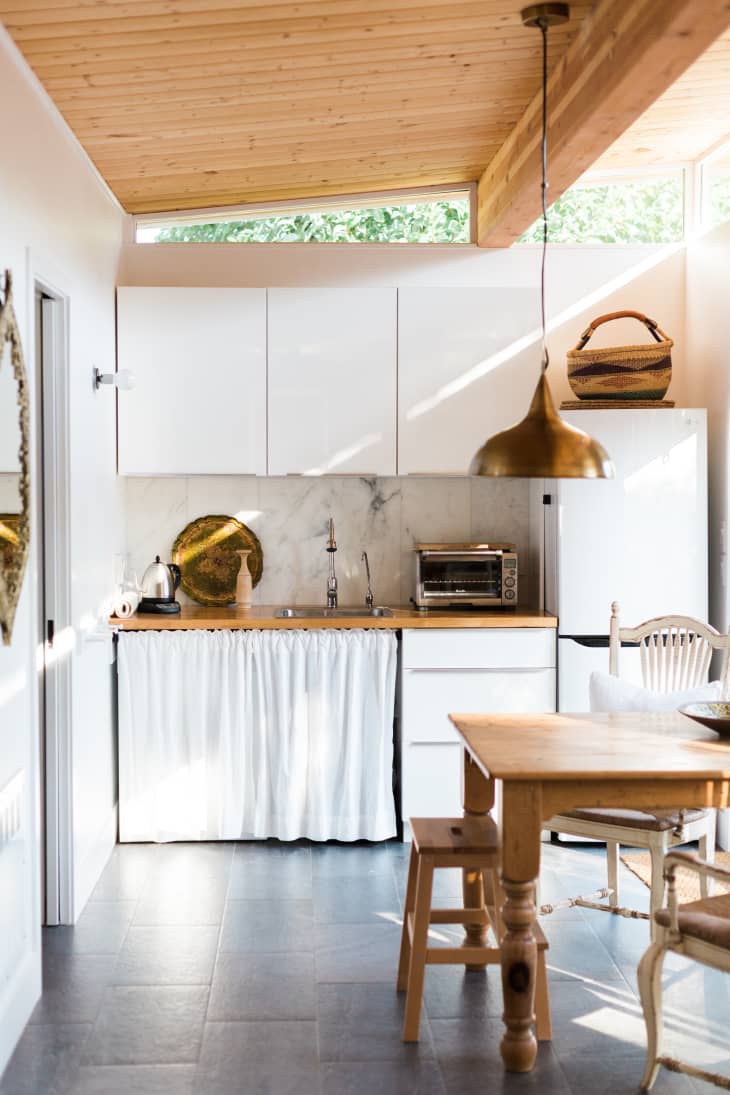
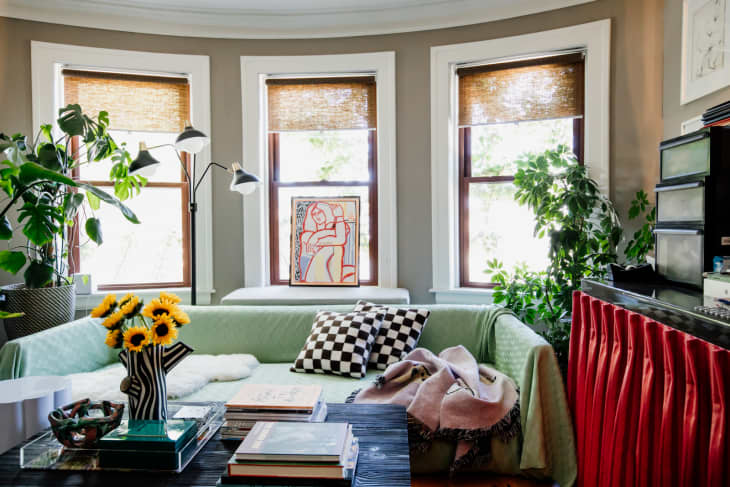
Not to be outdone by floor-to-ceiling wall drapery and canopies, fabric skirts are expanding their roles in homes as well. Anywhere you’re potentially used to seeing a cabinet door — under a sink, on a kitchen island, etc. — some designers are starting to skirt with material instead. Pendants, wall sconces, and even table lamps are popping up with soft skirted shades. And earlier this year, the tub skirt, essentially a ruffled trim on a cast iron clawfoot, went viral for its romantic appeal.

Soft Architecture Is More Than Just Fabric and Upholstery
Though soft architecture might be most pronounced in fabric-forward features, there’s a softening up and rounding off of traditionally hard elements and building materials happening as well. Curved kitchen islands, built-ins, and walls are proving that a tiny bit of bend can take the edge off a space and introduce a sense of ease to it. Niches and nooks are being topped off with rounded arches, transforming the most structured rooms with cozy curvature. And remember the bullnose edge? It’s back and making everything from countertop profiles and cabinets to drywall corners and tile installations look more soothing and sculptural. For proof, check out the rounded detailing on this cupboard and counter closeup from a gorgeous Brooklyn Heights kitchen designed by Jila Keshavarz-Miller.
The list doesn’t stop there. Any kind of feature that feels diffuse or blurred falls under this category, too. Consider limewashed or plaster-look walls to be part of the soft architecture movement, as is fluted and reeded glass. Curves might be leading the way, but anything that obscures hard sightlines and softens crisp surfaces is fair game. I can’t wait to see where this trend takes us next.