
Before and After: A Dated 1990s Bathroom Gets an Accessible Upgrade with MCM Flair
It’s important for everyone to have a home that they feel, well, at home in. For the more than one in four Americans who have a disability that affects their daily lives, design can impact more than just home-y feelings — it’s also a matter of functionality and comfort.
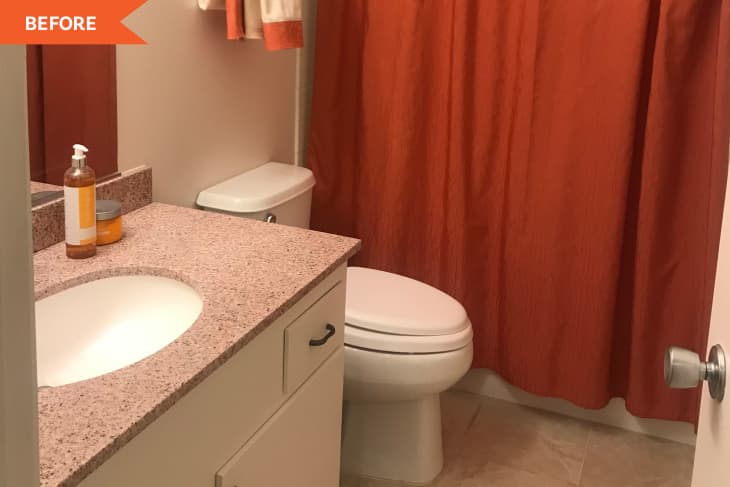
Thankfully, there are some changemakers in the design world who are making design more accessible, like Elizabeth Pode (@dontmindthedust), who’s taking on her own mid-century home in California. Elizabeth recently renovated her home’s second bathroom, which had last been upgraded in the 1990s.
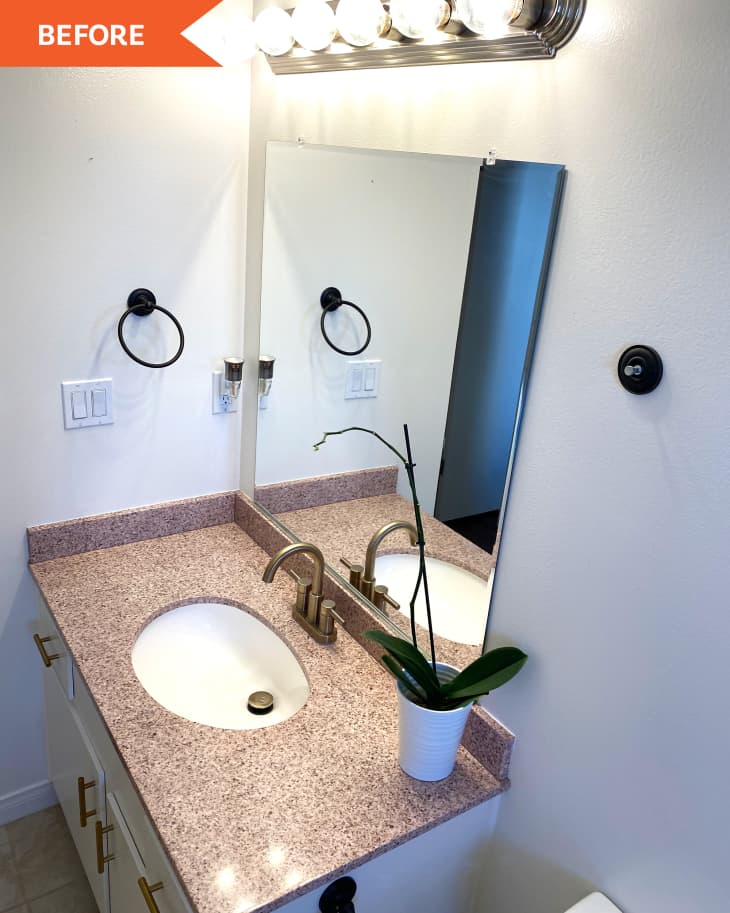
“I love pink as much as the next girl — heck, my front door is pink — but it really wasn’t speaking to me for this bathroom,” Elizabeth says. “After trying a few cosmetic changes, like a new faucet and drawer pulls to add a bit of temporary pizzazz, I had finally budgeted for a total gut job. While the original tub may have been fine for the average homeowner, because of my disability, it’s hard for me to get in and out of the low cast-iron tubs on my own. So with the choice of the perfectly accessible new tub, I was more than happy that the rest of the ho-hum bathroom had to go in order to install it.”
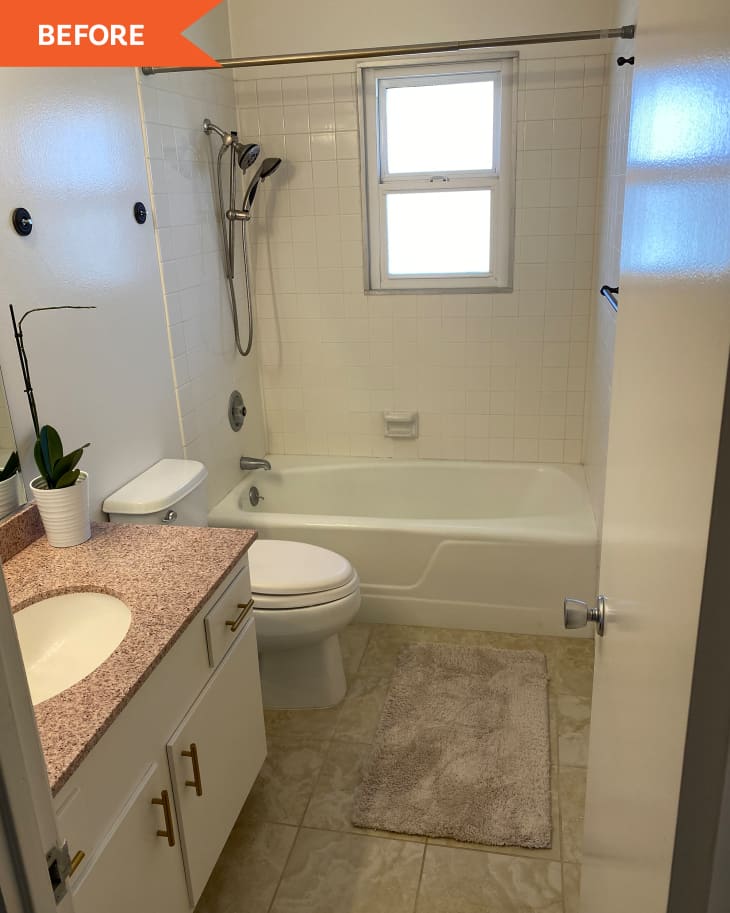
“It’s a bummer to have a bathroom that is only half accessible,” Elizabeth adds. “Lucky for me, I live in a two-bathroom home, so I was able to make the first one completely accessible right away and could take my time contemplating how I wanted to best use this one.”
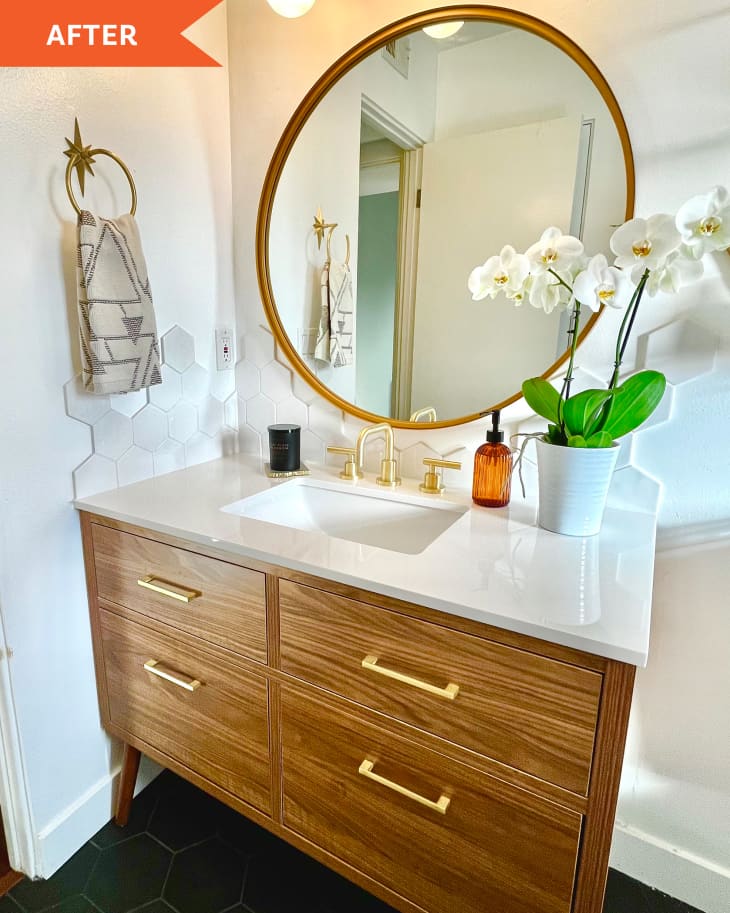
Elizabeth’s design decisions were guided by the original mid-century style of her home. “While the bathroom now feels brand new and fresh, it totally fits into the 1960s style of the original home without being too kitschy,” she says. “I wanted all the permanent fixtures to be a blank canvas so that I could swap out accessories whenever I wanted a change of pace.”
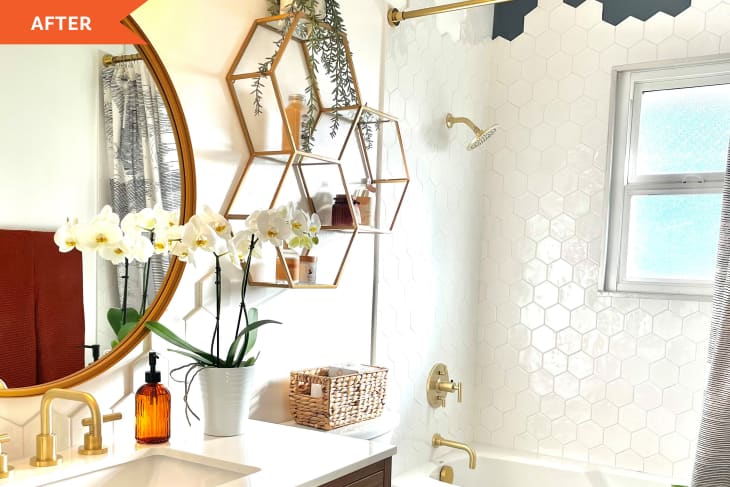
In place of the old pink-counter vanity, Elizabeth went with a tapered leg engineered wood vanity from Pottery Barn. Above, she added a circular mirror from Target, and a three-globe light fixture from Amazon. For more mid-century personality, Elizabeth filled the bathroom with brassy hooks and hardware from Anthropologie, new linens from West Elm, and a World Market honeycomb shelving unit that matches her new hex tiles, which were installed by tile pro Marty Monica. “He was more than happy to take my oddball ideas on what I wanted for tile and make them perfect,” Elizabeth says.
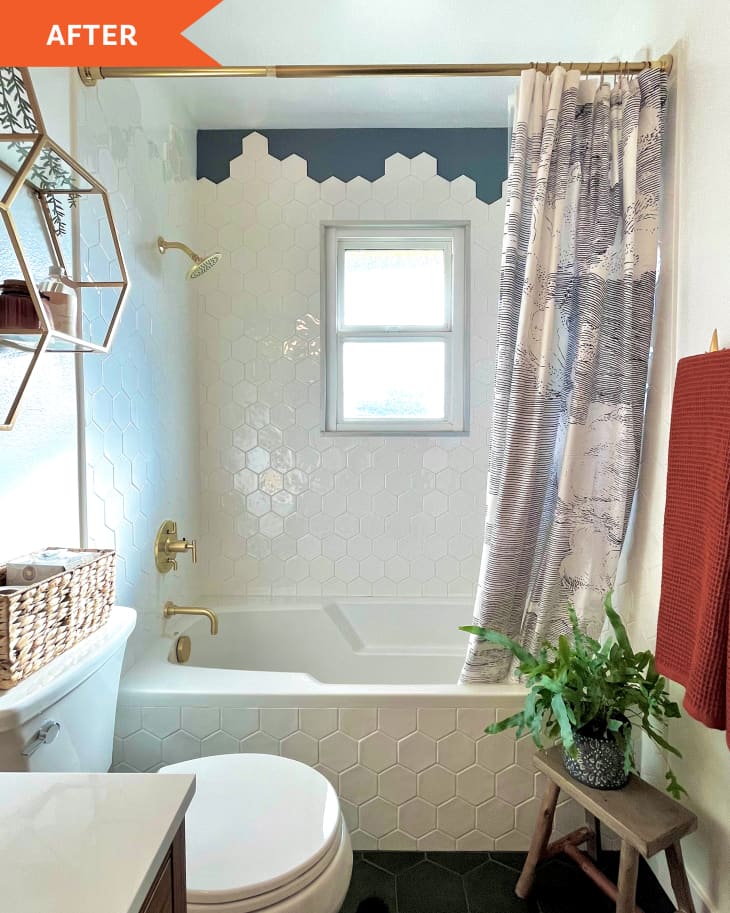
The tile is one of Elizabeth’s favorite parts of her new design. “I love how the asymmetrical tiles turned out for a bit of interest that brings your eye up and a subtle replay of it in the backsplash,” she says. Her tub (also covered in hex tiles) is another win. “Having a tub I can get in and out of easily to soak my muscles was a must!” she says.
Mostly, Elizabeth is proud of how she was able to stay true to her design sense while marrying form and function. Careful planning and budgeting made her vision a reality.
For more ideas and inspiration on how to design with accessibility in mind, check out these nine stylish upgrades and this essay on how color and accessibility go hand-in-hand.
Inspired? Submit your own project here.