
From Colorful Vintage Tiles to Bougie Bidets: See Bathrooms Transform Over the Past 100+ Years
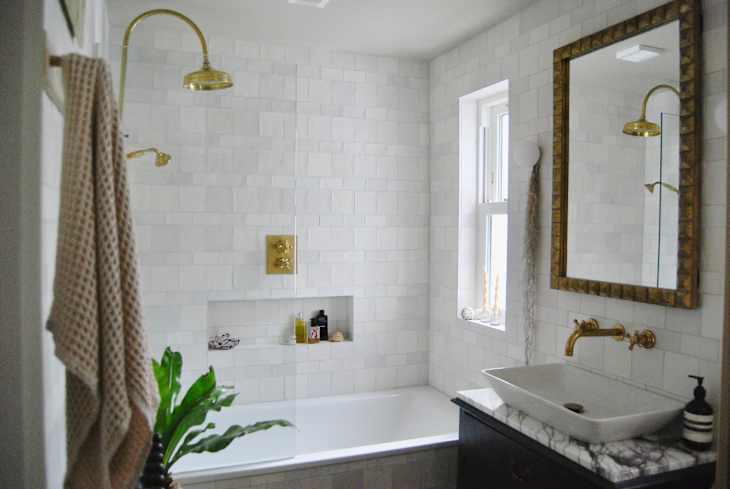
The bathroom is one of the most utilitarian spaces out there. Kitchens and living rooms can be the backdrop for creative expression, but the bathroom? Sometimes it feels like the most fun you can have with bathroom design is a new shower curtain idea.
Or so I thought. Turns out, the bathroom has an interesting backstory. “Bathrooms have transformed so much over the years, shifting from purely functional spaces to personal sanctuaries designed for comfort and relaxation,” says designer Kara Childress. “They’re no longer just about necessity — they’re about creating a retreat, a place to unwind.”
That’s exactly why I’m taking you on a walk down bathroom memory lane by reviewing the many looks and transformations the modern bathroom has undergone. You just may find a newfound appreciation for this space the next time you use yours.

Pre-20th Century: Basic Baths
While the use of bathrooms reportedly dates back to 3000 B.C., bathrooms were pretty primitive for centuries. Ancient Egyptian, Roman, and Greek civilizations had their own drainage systems, but the predecessor to the modern shower used today wasn’t invented until the late 18th century.
The flushable toilet was invented in 1596 but wasn’t mainstream until the end of the 19th century, when a new valve and siphon system helped eliminate nasty sewer stenches. Before then, most homes had their bathrooms outside. Translation? Don’t take something as simple as an en suite bathroom for granted, because they didn’t even exist a few centuries ago. Prior to that, it was all about outhouses.

1920s: Color Crazed
Turns out, the Roaring ’20s is known for a lot more than jazz, flappers, and speakeasies. With Art Deco as the design style du jour, many bathrooms became displays of dazzling hues. According to Alessandra Wood, an author and design historian, this colorful approach was brand new for bathrooms. “Prior to the 1920s, bathroom trends tended to follow more general trends related to health and wellness, mainly germ control,” she explains. “They centered around white interiors that could show the level of cleanliness.”
Maile Pingel, a design historian and writer, agrees. In her estimations, the end of World War I in 1918 paved the way for this brighter, bolder future. “In 1927, Kohler debuted collections of matching sinks, tubs, and toilets in shades like Horizon Blue and Spring Green,” Pingel says. “Those names alone reflect the uplift of the post-war era.”
That said, not all colors were equally prevalent. During the ’20s, green, blue, yellow, violet, and scarlet were particularly trendy, so you can easily bring a bit of Roaring ’20s magic to your bathroom with any of these shades — particularly in your tiles or bathroom fixtures. Plenty of well-preserved bathrooms from this era still exist, and lots of renters and homeowners style around the vintage tiles in particular to maintain their authentic charm.

1930s: Mirrored Marvels
Because the Great Depression essentially ushered in the 1930s, home styles then were generally more pared-back than in the ritzy Roaring ’20s. Still, Pingel said the decade had plenty of “wow” design moments. “Interior fittings were suddenly less about utility and had become something of a status symbol,” she explains. “Improvements in plumbing and heating systems also meant bathrooms could be more decorative.”
One of the biggest trends, believe it or not, were statement-making mirrors. Pingel credits the trend to a London home by architect Oliver Hill, which was featured in Vogue during the time. “Hill cladded the walls with a gray-toned mirror, displayed a collection of bright blue glass objects on floating shelves, installed a black marble floor, and lined the bath and sink with gold mirror — adding Lalique taps, no less,” she says. “It was a glittering sensation!”
Peach-colored mirrors were also popular and offered a more flattering reflection. Colored mirrors might have been all the rage in the 1930s, but if you want to bring the look into your modern-day space, you can find other ways to make your bathroom the fairest of them all. “Find vintage etched mirrors — or try creating a decorative pattern in your existing mirror with a DIY etching kit,” Pingel recommends. “Wall sconces or hardware with an Art Deco look will also amp up the style.”

1940s: Washable Wares
Thanks to World War II, the 1940s wasn’t a decade rife with design inspiration either. “Even soap and shampoo were rationed,” Pingel explains.
However, this decade would lay the groundwork for the rise of linoleum. “The material, essentially made of linseed oil and fillers, was invented in the 1850s but went into larger production in the United States because it was used by the military,” Pingel says. “After the war, the material proved useful for homes too, because it was waterproof and easy to clean.”
Speaking of a squeaky-clean bathroom, Pingel notes that decorators like Dorothy Draper were fond of washable wallpapers during this time.

1950s: Pastel Pops
With World War II in the rearview mirror and a mass move to suburbia underway, America was feeling optimistic — and even injected that sense of joy into their bathrooms.
“Color became a tool that allowed mid-century homeowners to personalize their interior spaces, especially in kitchens and bathrooms,” says Wood. “They leveraged color in bold ways, and ceramic tile reigned as one of the most popular decorative features in mid-century bathrooms and remained popular into the years to come.”
Of course, color wasn’t just limited to a cool wall color or ceramic tile: It was everywhere. “Sinks, toilets, and bathtubs were often all the same color distinct from the wall tiles but perhaps matching the accent tile color,” Wood says.
Want to bring a touch of the 1950s into your space? Wood says the decade’s hottest colors were pink, light blue, pastel yellow, lavender, maroon, mint green, and gray.

1960s: The Tiled Treatment
Bathrooms of the 1960s in one word? Tiles — and lots of ‘em. While colorful bathroom tiles dominated the previous decade, they continued to be used in new, unexpected places during the ’60s.
“Combo shower-tubs meant that the walls above the bath were totally covered in tile and usually those same tiles extended onto the walls throughout the whole bathroom, covering the lower half,” Wood says. “Accent tiles might be used as borders, often bringing in other colors in the space.”
According to Tanner Morgan of Morgan Madison Design in Scottsdale, Arizona, tiles were equal parts style and substance. “Thoughtful material choices, from slab showers to fully tiled spaces, not only create a bold visual impact but also enhance longevity and ease of maintenance,” Morgan explains
Some experts say patterned tiles also started to gain traction during this era. While ceramic tiles might be deemed outdated in some people’s books, Wood says they’re durable enough to last for many years to come. “The company B&W Tile has been making ceramic tiles since 1949 and can custom match any color today,” she explains. “If you want to create a vintage vibe from scratch, they are one of the best suppliers.”
The key to incorporating a ’60s look is to never, ever refinish ceramic tiles. “They become a dull, drab white, and the paint easily scratches off,” Wood shares. “Within a year or two the bathroom will look like it really needs an upgrade.”

1970s: Shaggy Surfaces
Once the 1970s rolled around, things got very groovy. Sure, browns and avocado greens were the covetable colors, but this era brought a new appreciation for textural touches in the bath.
“We also saw some of the decade’s favorite design elements — wallpaper and shag carpet — make their way into the bathroom,” Wood says. “Aside from carpeted floors, you could also find rugs on the toilet seat lids and even the tanks.”
Admittedly, a carpeted bathroom might seem strange today. Who wants to step on a soggy, stenchy surface? But back then, though, many thought it was luxe and cozy underfoot for stepping out of a bath or shower.

1980s: Over-the-Top Opulence
The 1980s called, and the bathrooms were totally glamorous. While the decade did see some more subdued, contemporary modern baths (think: spaces with square tiles and dark grout), opulence also reigned supreme.
“Black sinks, toilets, and bathtubs paired with gold fixtures made a moody statement in these bathrooms,” Wood shares. “In very expensive homes or hotels, bathrooms might have exotic stones in bold colors paired with sleek contemporary cabinets, and, of course, a soaking tub with built-up steps as the focal point of the space.”

1990s: Design-Minded Minimalism
Minimalism might’ve ruled the runways back in the 1990s, but its influence didn’t stop there. “From the ’90s, bathrooms were all about being practical and functional,” says interior designer Jessica Cinnamon. For some, that might’ve meant designing a more industrial space; however, others say it’s all about adding function-first appliances and decor.
During this decade, enclosed showers started to become very popular, making your daily lather a simple, straightforward experience. Meanwhile, others began adding frosted glass to their shower stalls to get a little bit of extra privacy.
2000s: Subway Tile Sensation
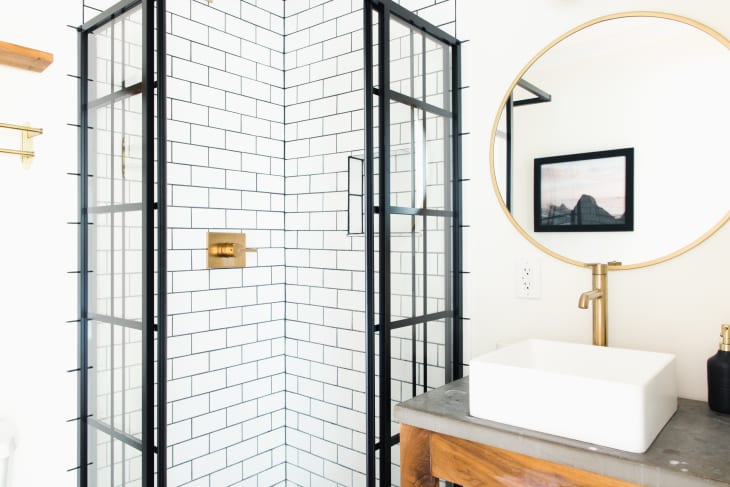
Move over, squares: The early aughts belonged to the subway tile. Although this oblong tile was originally created for the New York City subway back in 1904, these plain but pretty pieces started making lots of appearances in bathrooms (and kitchens!) a century later.
Why? Well, they’re incredibly versatile in terms of style. A set of subway tiles would appear rustic for those boho-obsessed dwellers, yet surprisingly luxe against a more restrained color palette. However, if you wanted to make your space feel totally 2000s, it’d be all about the vessel sink and nickel hardware for me.

2010s: Material Madness
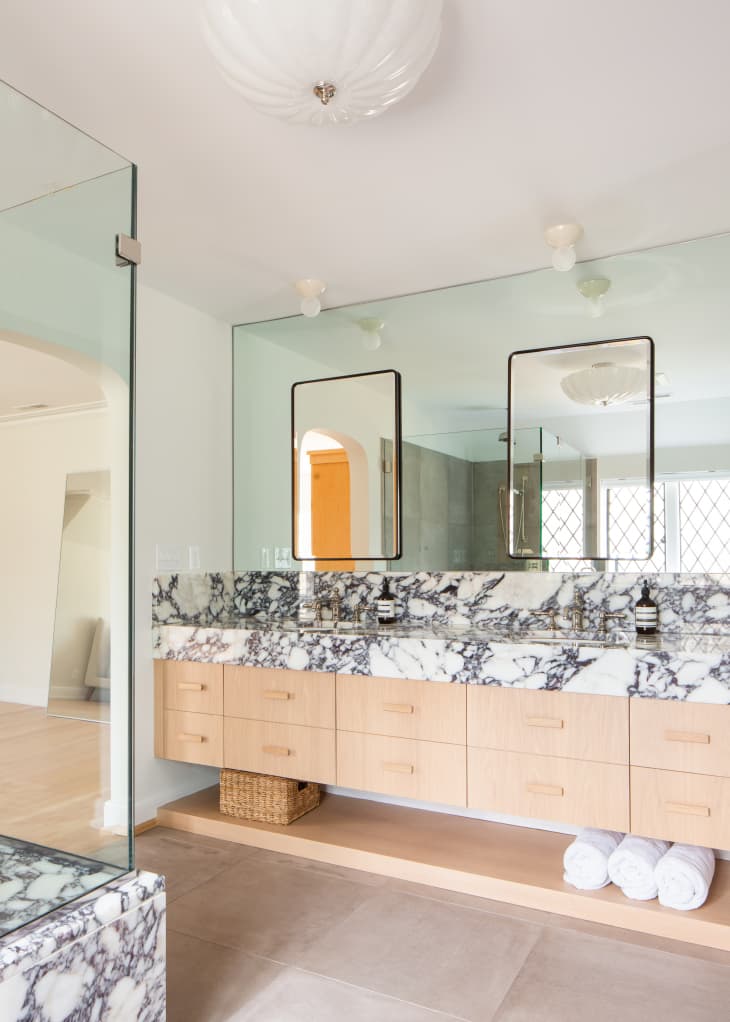
Tired of tiles? You’ll be happy to hear the 2010s saw a major shift toward other (and often natural) materials. “In the past, we saw a lot of basic ceramics and standard tiles,” Cinnamon says. “Now, there’s a shift toward more luxurious and natural materials like marble, stone, and wood, which bring warmth and texture to the space.”
While some people might’ve used shiplap for a modern farmhouse flair on their bathroom walls, others would go full-on luxury with Carrara marble-clad surfaces. Toward the end of the decade, you might’ve even seen terrazzo countertops or floors in some ultra-trendy bathrooms.
2020s: Smart, Sustainable Spaces
We’re about halfway through the 2020s, and some major bathroom trends have already emerged. While we’re continuing to see the use of rich materials — and even some subdued, spa-like shades — designers agree there’s a major push for smart, sustainable touches.
“Smart toilets with self-cleaning, auto-flush, and built-in bidet functions have eliminated the need for separate bidets, making the space more efficient,” says designer Dorothy Tsui of Bobeche Interiors. “Additionally, water-saving faucets with digital temperature control have not only reduced water consumption but also provided a more precise and convenient user experience.”
Cinnamon agrees. She notes that a lot of today’s technology has been focused on creating energy-efficient, water-saving solutions. Who knows? Perhaps the next five years will yield a major boost in our bathrooms’ IQ.
“Smart mirrors with integrated AI could provide personalized skincare or health insights, while voice-activated systems control lighting, water temperature,” Cinnamon muses. “Showers and toilets might become more water-efficient with automated self-sanitizing features.”
Of course, only time will tell.
Design Defined
Never miss the style inspo and recommendations you crave with Design Defined. Follow along each week as our Home Director Danielle shares the best style advice, latest trends, and popular decor finds you just can't miss.