
Why You Should Have This Victorian-Era Kitchen Storage Solution In Your Home (Buyers Love It!)
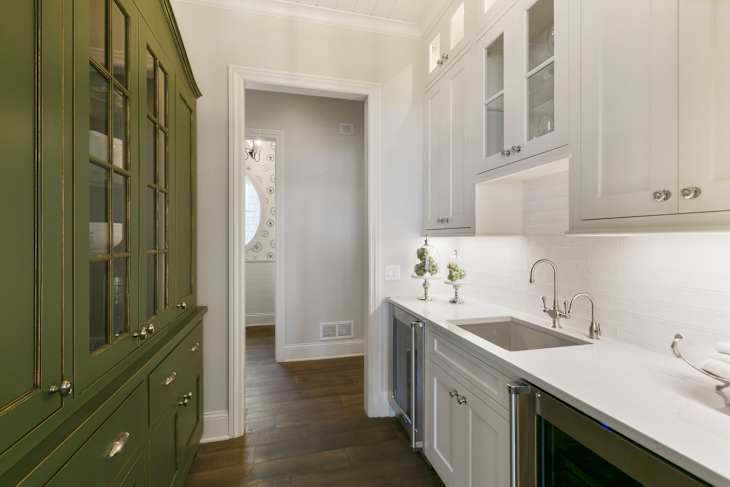
Once reserved for the wealthy who hosted heads of state and royalty, the butler’s pantry, a staple of Victorian homes with waitstaff, was designed to keep food preparation out of sight and the sound of clanging pots and chopping knives out of earshot of formal dining rooms. Today, this coveted feature is making a comeback in modern homes.
As Wesley Kang, real estate agent and founder of 1099Cafe, puts it, “I constantly watch buyers’ eyes light up when they discover original butler’s pantries with flour sifters built into counters.” I spoke to real estate agents and designers about the comeback of the butler pantry, and why they think there should be more of them.
What Is a Butler’s Pantry?
A butler’s pantry, per Realtor.com, is a transitional space between the kitchen and the dining room used to hide dirty dishes during dinner parties and store kitchen items out of sight from guests. Some house prep tables, sinks, and abundant shelving for china, glassware, and other kitchen and pantry essentials.
What Was the Purpose of a Butler’s Pantry?
While a butler’s pantry served many functions, its main objective was to maintain outstanding service among kitchen staff with the utmost discretion. Whether staff were preparing an afternoon tea party or a formal dinner, everything needed to run smoothly, efficiently, and out of view from the rest of the house.
“In the past, the butler’s pantry was about service, discretion, and hierarchy — a buffer between the kitchen and formal dining; during Victorian times, the pantry was all about keeping the servants and their chores out of sight,” says Winnipeg Realtor Kyle Bazylo.
“Historically, these utilitarian spaces were located between the kitchen and the dining room, where staff performed daily chores like polishing silver, organizing china, and preparing meals,” adds Jamie Chang, Naples-based luxury real estate specialist with Premier Sotheby’s International Realty.
However, if valuable china and silverware weren’t guarded, they tended to disappear. To prevent theft, butlers kept these valuables in pantry drawers under lock and key. Butlers also kept track of wine vintages in a log book stored in the pantry, noting which selections would be served for each family member and affluent guest.
The butler’s pantry also housed sleeping quarters, a respite for butlers to refresh themselves in preparation for the following day. In some homes, staff sleeping quarters were located in a portion of the house on the lower level near the pantry.
When Were Butler’s Pantries Most Popular?
The golden age of butler’s pantries took place during the turn of the 20th century in America and the Victorian Era in England, a time characterized by status and lavish entertaining among the wealthy. Heads of households needed a space to prep, plate, and organize every course without disrupting the dining room’s decorum.
Meals were carefully orchestrated behind the scenes using dishware and utensils stored in the pantry, handled by butlers, cooks, and maids who ensured a seamless serving and cleanup experience.
Butler’s Pantries in Homes Today
“In Victorian times, the pantry was all about keeping the servants out of sight. Today, it’s about making life with the family easier and offering busy people a place to put things in order,” says Thomas O’Shaughnessy of Clever Offers. “Even if it’s only a small space, [buyers] get excited when they see a butler’s pantry. They think about how it could fit into their morning routine or major holiday feasts.”
Modern versions often include wine storage, coffee stations, dishwashers, and small appliances like air fryers, which makes it easier to keep the main kitchen messiness out of sight and clutter-free.
According to real estate agents, these rooms are highly desirable.
Butler’s pantries instantly get people excited when they lay their eyes on them — particularly in homes over $400,000, where buyers expect high-end amenities, says Carter Crowley, founder and owner of CB Home Solutions. “I’ve watched buyers’ eyes light up when they see a beautifully designed butler’s pantry during showings, frequently saying, ‘this is just what we need’ or ‘I could actually entertain properly with this configuration.’”
Brandon Hardiman, owner of Yellowhammer Home Buyers, agrees. “Butler’s pantries are gold in real estate listings — especially for homes [listed] over $300,000, where clients expect luxury features that make life easier. Homes that feature them sell 15-20% faster than those without them.”
He adds that “when clients [see] a well-planned butler’s pantry during home tours, they respond with immediate excitement because they immediately envision how it solves their own kitchen storage and entertaining challenges.”
Chang wishes more homes had them because they are such a major selling point. “At the high end of the market, these ‘catering kitchens,’ as they’re [sometimes] called, are a big draw; buyers who love hosting guests and loved ones see it as a must-have, [as it] allows them to keep the main kitchen looking perfect while all the everyday tasks and ‘dirty work’ happen out of sight.”
Butler’s Pantries Are a Top Renovation Request
When buyers can’t find butler’s pantries in a listing in a home they love, that can be a good thing — especially when they’re planning to renovate. Saltuk Dogan, a Massachusetts stone designer and owner of Brick My Walls, has been seeing an increase in requests for butler’s pantries from clients.
Dogan tends to implement materials that coordinate with the main kitchen, such as matching stone finishes and incorporating exclusive details that match the homeowner’s personality — for example, “an antique mirror backsplash or bespoke shelving.”
“There’s a growing desire to reconnect with the past, to infuse our homes with character and a sense of story,” adds designer Terri Brien. “The butler’s pantry answers that need; it’s a space that feels both nostalgic and functional, blending tradition with modern convenience.”