
I Decluttered 6 Years’ Worth of Paper Clutter in 45 Minutes — Here’s How
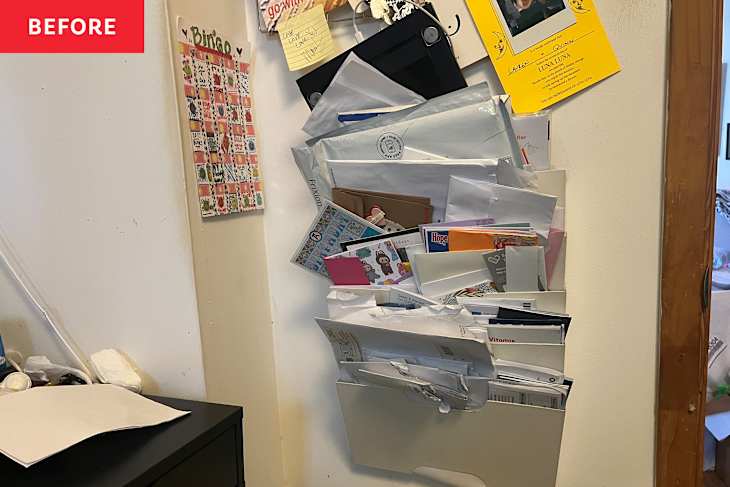
Even though I write about organizing and decluttering for a living, there are certain clutter hotspots in my apartment that feel overwhelming to address, so I tend to avoid them. One of the most intimidating projects is my ever-growing paperwork collection. Birthday cards, instruction manuals, tax records, receipts — it’s like I think someone else is going to go through all of it for me, but alas.
I knew it was time to address my pile of years-old papers once and for all, so I was in luck when the Apartment Therapy Decluttering Cure covered exactly how to declutter paperwork in a manageable, low-stress way. Here’s what happened when I tried it myself.

How to Declutter and Organize Paper Clutter (Without the Stress)
Apartment Therapy’s resident decluttering expert, Lifestyle Director Stephanie Nguyen, suggests sorting paper clutter into five distinct categories: trash and recycling, short-term (items requiring action in the near future, like bills, notices, or expiring coupons), long-term (tax documents, work-related files), leisure reading (magazines, catalogues), and sentimental (cards, letters).
Instead of lumping all of your paper clutter together before sorting it, choose one pile or area to start with to prevent overwhelm. It’s best to move slowly and take breaks when needed, making sure you have plenty of space for each pile. Once you’ve sorted the five types of papers into piles, trash and recycling can go … well, into the trash or recycling, and you should black out or shred anything with sensitive information. The rest go into their own sections: leisure reading should go somewhere you’ll be able to see and read it, long-term papers should be filed away, short-term papers should be organized by urgency and placed near your workspace or entryway, and sentimental items should be placed to the side for now. (Learn more about decluttering those papers here.)

How I Decluttered My Paper Clutter in Minutes
Luckily, most of my paper clutter was in the wall-mounted file organizer next to my desk in my office (aka bedroom), with a small mail pile in my living room. Before sorting, I created designated spaces for all five sections written on sticky notes on my desk. I first went through the mail pile, which only took a few minutes, and I felt so motivated to push through the rest of the paper clutter that I jumped into taking on the file organizer.
In only about 45 minutes, I sorted through six years’ worth of cards, pamphlets, magazines, and more into the five piles. Because the sections were so straightforward, it took the guesswork out of most of the organizing. I recycled tons of coupons that expired as long ago as 2022, perfume samples, political flyers, old bills, and instruction manuals to items I no longer own. The ones for items I do still own went in the “long-term” pile with important documents. Magazines and newsletters went into the “leisure reading” pile, and mail I need to reply to went in the “short-term” pile. Although I didn’t address the “sentimental” pile just yet, I did take most of the cards out of their envelopes, which then went in the recycling pile, reducing a lot of the bulk.

What Happened When I Decluttered My Paper Clutter
Because I live in a tiny apartment with limited storage, I put all of the remaining paper piles back in separate sections of the file organizer with the sticky notes denoting which is which. I’m hoping this helps me keep this space organized, and I can file new papers where they’re actually supposed to go. I put “short-term” papers in the front section so I can tend to what’s most urgent, with “leisure reading” right behind it where I can see it every day.
For as long as I put off decluttering my paper piles, this simple approach truly made the task feel easy and stress-free. I shouldn’t have to do it again anytime soon because I think my new organization system will hold up, but if I do I know it’ll be as uncomplicated as creating five clear piles. The mental and emotional load of decision-making, which is often the most exhausting part of any decluttering project, was mostly handled for me — and that might be the secret to tackling any daunting home project you’ve been putting off. I’d recommend this method to anyone who has limited time, papers to sort, and no idea where to start.