
The “3D” Rule Is This Designer’s Secret for Making Small Spaces Feel Spacious
As anyone living in a small space can tell you, there’s a fine line between a stylishly cozy room and an over-cramped, cluttered mess. The more stuff you have, the more likely you are to veer off into unorganized chaos — especially in floor plans with limited square footage. But what if I told you that there’s more you can do beyond purging en masse? Whether you’re just moving in or reorganizing a room you’ve lived in for years, reworking a common design feature could be key to making your home feel so much larger than it is. You’re likely just overlooking a smart solution that will have you feeling like a minimalist in disguise.
Open shelving may be working against you, as Oyin Antwi — author, cofounder of interior design firm Via Asha Design and Brooklyn-based venture studio Digital Park — has found. It often creates a conundrum for those who aren’t constantly self-regulating. If you already know you’re the type of person to be “prone to clutter,” she advises, you may want to adopt what I’m calling the “3D rule.”
The 3D Interior Design Rule
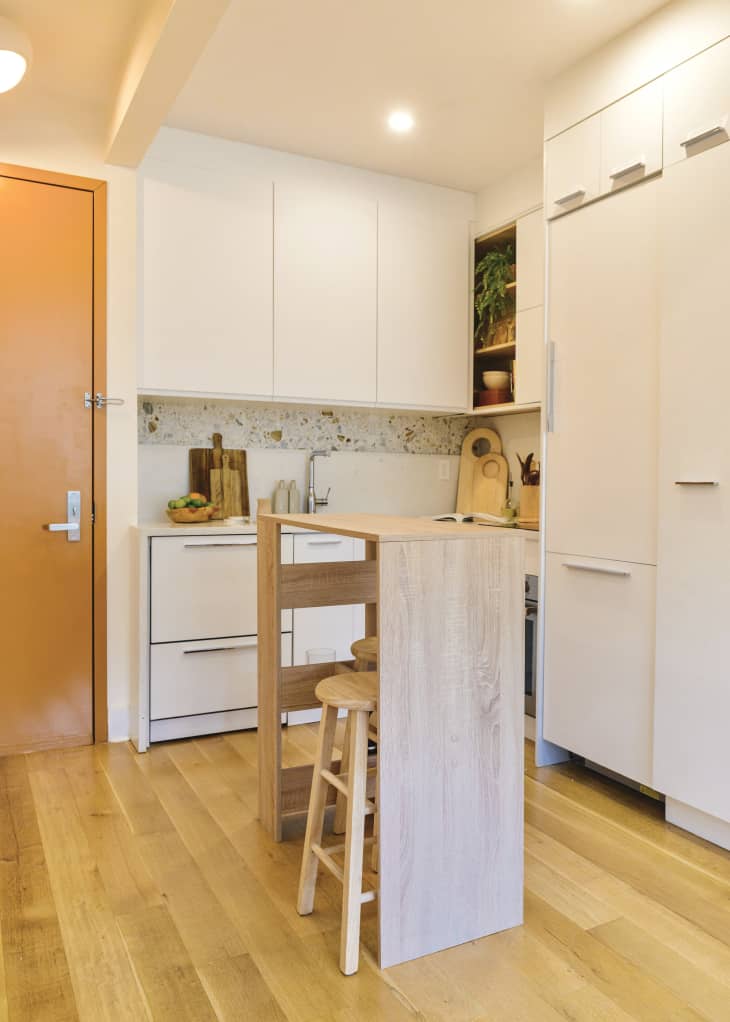
One of Antwi’s rules of thumb in design ethos is to embrace stylish storage solutions that reduce clutter, a clear focus in each room of her West African-inspired Brooklyn condo Apartment Therapy toured in 2023. Part of her redesign aimed to conceal the hodgepodge of everyday life by eliminating open shelving in her kitchen, a tactic that carried over into her living room console and bedroom storage.
The 3D rule stands simply as an acronym to represent Antwi’s advice to always opt for traditional storage that makes use of a cabinet door, drawer, or, in some cases, a dividing drape or curtain. Keeping the contents of your cabinets or storage obscured helps to reduce visual cues of disorganization, maintaining an environment that prioritizes “a seamless line of sight,” Antwi adds.
Keeping open shelving or storage organized is a full-time job, truly; drawers, doors and drapes camouflage any jumbled items if you don’t have the luxury of multiple rows of shelving available. Open shelving can look sleek in staged Instagram shoots, but the chaos of everyday life usually has shelves looking anything but manicured; it’s why many designers skip them altogether.
“Instead, integrate stylish storage options such as decorative baskets, a Lazy Susan drawer, or consoles and desks with built-in storage to keep frequently used items accessible,” advises Antwi, who also authored Helping You Love Your Space, No Matter the Size to help readers troubleshoot tiny apartments. Solutions around doors have somewhat become Antwi’s speciality; we covered the before-and-after of her favorite tip, creating a pocket door, just last year.
Go High and Deep
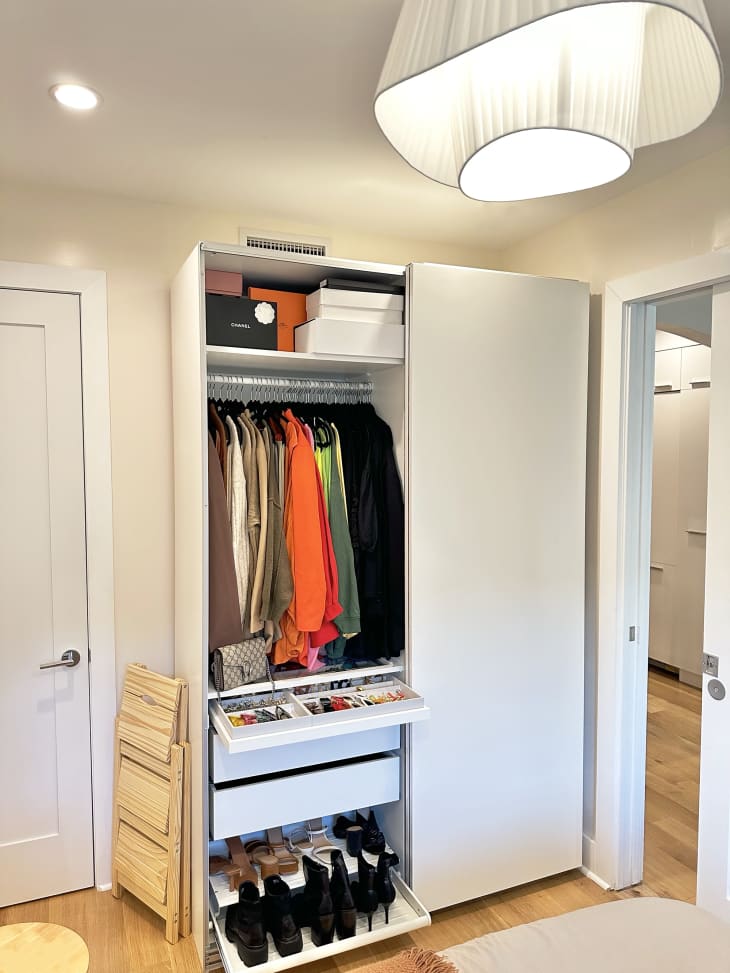
This “3D” approach works best when it’s applied across your whole home, as Antwi brings the smart storage mindset to spaces like her personal closet. She’s deliberately divided portions of her closet to store seasonal items in high-reaching areas (pictured above, where a trusty step stool comes into play!).

“If you can’t go wide, go high and deep,” Antwi says, eyeing areas above cabinets, closets, wardrobes, as well as underneath furniture and beds. “When horizontal space is limited, make the most of your depth and vertical space by storing less frequently used items in boxes that can be stacked higher — or tucked away deep.”

Create Definition in Your Floor Plan
Beyond the signature “3D” approach that I’ve coined using her key advice, Antwi uses additional visual cues to help deepen the sense of space in any room. If you’re looking to fit more than one function into any given space, use colors, texture, or literal furniture to instantly “create clearly defined zones” within the same room, she advises.
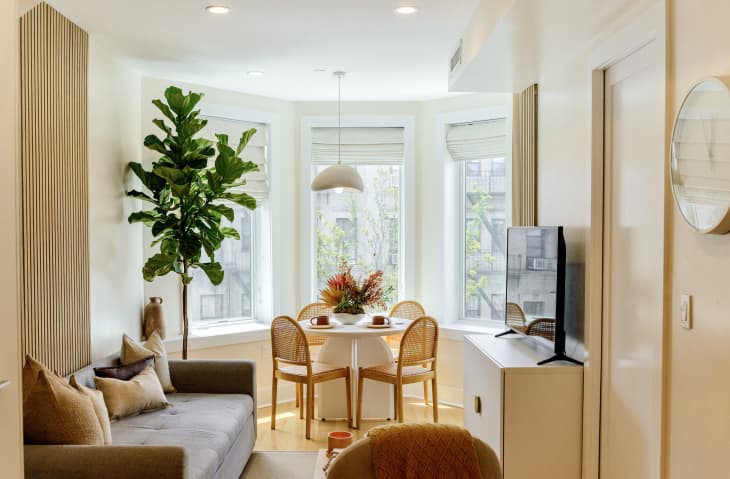
In the designer’s railroad-style apartment, wall paneling has been installed to draw eyes naturally to the living room, establishing a focal point for guests to gather comfortably.
“Use rugs, curtains, wall paneling, or furniture placement to visually separate areas like your lounge area from your sleeping and work areas,” Antwi tells us.
This approach could be a game-changer for those in studio apartments where every inch counts. For more designer-approved ideas for creating living rooms out of seemingly thin air, check out more layout ideas here.