
It’s Flea Market Season! Here’s How to Hunt for Treasures Like a Pro DIYer
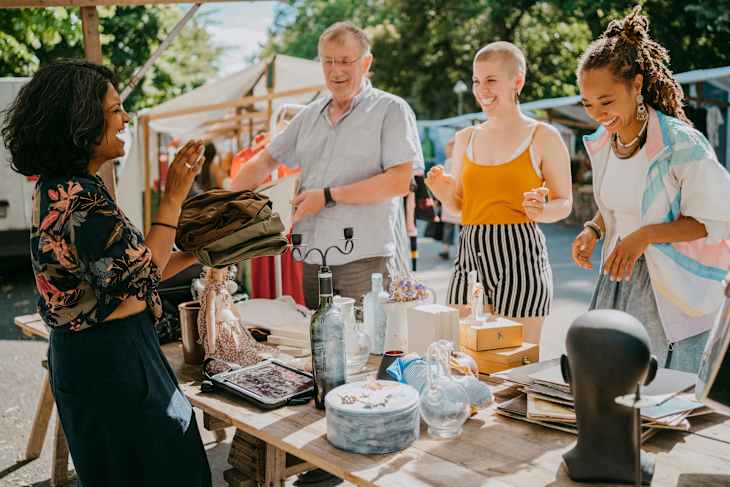
Now that the weather is finally warming up, there’s one spring activity that should take precedence above all the rest: a visit to your local flea market. After a winter spent indoors, there’s a good chance you’re well aware of the pieces around your home that are either missing or could use an upgrade. Instead of shopping for brand-new items, finding alternatives at the flea market promises to bring personality to your space that’ll feel like much more of a reward.
“I tend to gravitate toward vintage and antique pieces both because of the age of my home and because quality materials and construction are important to me,” says Renee Bruner, the creator behind Renee Renovates. “I’m always on the lookout for solid wood furniture with quality joinery, as well as brass pieces, handmade ceramics, natural fiber textiles, and old wavy glass.”
As fun as the thrill of the hunt can be, it can also feel overwhelming to walk into the entrance of a flea market, see a sea of items in front of you, and have no idea where to start finding treasures. The good news? Bruner and Drew Michael Scott of Lone Fox are experts and they’re here to teach you how to shop the flea like a pro DIYer. Here are five tips you need to know.

Hunt with a Goal in Mind
While it’s always fun to head to a flea market purely for the experience, if you want to take home treasures from your hunt, you’ll benefit from more concrete goals. But here’s the caveat: You want your wish list to be general enough to have some wiggle room. “The key is to focus less on finding something specific and more on the overall style you’re after,” Scott says. “With that mindset, you’re likely to discover much more than you expected, especially since it’s often the unexpected finds that end up being the most exciting!”
For example, you may have noticed that your entryway could benefit from a dresser with storage. Instead of getting fixated on the exact look you’re envisioning, be flexible with what’s available. After all, you can always paint or add to a dresser later. “It’s so important to approach thrifting and antiquing with an open mind,” Scott continues. “If you go in searching for a particular item, it can become frustrating when you can’t find an exact match.”
Carry a Handful of Essentials
It’s common to pay with a credit card nearly everywhere you go these days, but flea markets tend to keep things old school. “Don’t expect every vendor to accept credit cards,” Bruner says. “You need to have cash on hand.” Carrying cash will also make it easier to stick to a budget, so you won’t make an impulse purchase on something that isn’t part of your original vision.
Aside from cash, sunscreen, and good walking shoes, Bruner has a small list of other essentials to have on hand for the day. “I always carry a measuring tape in my purse as well as reusable tote bags,” she says. “Bonus points if I remember to bring a magnet to test if an item is solid brass or copper. If the magnet sticks, the metal is mixed!”
Scott agrees on the importance of bringing measuring tape with you, and goes one step further to suggest writing down the exact measurements you need to fit inside your home. “Sometimes, the perfect piece can fly off the shelf, so having those measurements on hand gives you the confidence to make quick, informed decisions,” he says.

Keep an Eye on Signed Pieces
For the most part, you’ll want to thoroughly inspect every item you’re thinking of purchasing. Double-check that the coffee table you’re eyeing is actually made of solid wood or that the so-called “perfect” chair feels as good as it looks when you take a seat. When it comes to smaller items, Scott recommends inspecting things like ceramics and paintings for an artist’s signature.
“There’s something really special about discovering a piece of pottery that’s signed by the artist — it’s often a one-of-a-kind creation,” Scott notes. “These pieces, known as studio pottery, are a beautiful way to bring a personal touch into your home.” One more note? Finding a signature inside a furnishing will also denote its authenticity.
Have a Plan for Larger Furnishings
If you head to the flea with the intention of buying a big piece of furniture, you should have a plan in place for how you’ll get it home. “Buying a large piece usually requires hiring movers or renting a van, so it would either have to be a dream piece that I would go to the ends of the earth for, or I would want to negotiate delivery with the seller,” Bruner says.
There are a lot of factors for deciding if a piece is right for you. It might be the ideal size for an awkward room or boast patina that would otherwise take a century to re-create, but Scott often decides if something is worth the buy it based on the price. “If the piece is in great condition and the cost makes sense, I’m much more inclined to bring it home,” he says. Don’t be afraid to do a quick search on 1stDibs or Charish to see how a similar piece would be priced, just to know that you’re making the most of your purchase.
Haggle the Right Way
Haggling comes with the territory at flea markets, but it’s not a requirement. “I feel like a piece of me shrivels up and dies every time I ask for a discount,” Bruner says. “In general, I don’t shop at overpriced stalls or stalls that don’t have visible prices on their items because I also hate the idea of overpaying.” If you are going to try to negotiate a price down, Scott notes that it’s easier to haggle if you have cash, so sellers don’t have to pay credit card fees. Bruner also suggests asking for discounts toward the end of the day, when many vendors want to close out sales and lighten their load home.
“If an item is damaged and the price is not marked ‘as is,’ start a friendly chat with the seller about it,” Bruner adds. “Often, the conversation will lead to them offering you a discount without asking.” As long as you don’t go into a flea market as an aggressive haggler — after all, these are small businesses — you’ll likely come out with what you’re looking for at a price that’s right for your budget.