
The Underrated iPhone Setting That Drastically Dropped My Usage (It Boosted My Productivity Too!)
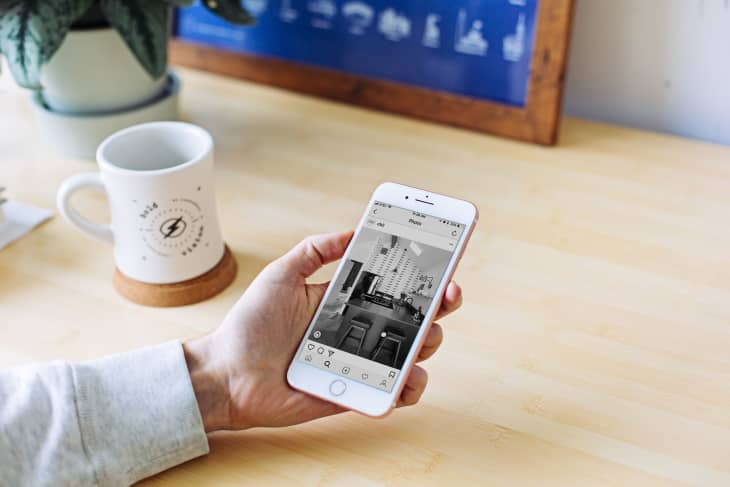
As a freelance digital journalist and content creator, I spend way too much time on my phone — an average of three hours a day (yikes!). While I live in Los Angeles, I have clients in various time zones, so I often catch myself reading emails first thing in the morning or scrolling Instagram Reels late at night. I’m not alone in this smartphone dependency either.
Americans check their phones an average of 205 times a day, according to a 2025 survey from Reviews.org, and tend to get easily sucked into their time-warping, captivating, infinitely expansive little worlds. In the past, I’d ignored my phone addiction, using my profession as an excuse. However, when I started waking up with headaches and realized my productivity was being negatively affected by my late-night scrolling, I knew something had to be done.
So I decided to try the “grayscale iPhone” trick, which is recommended by experts like Tristan Harris, a former design ethicist at Google, who’s made it his life’s work to “reform the attention economy” with his movement dubbed Time Well Spent and the think tank bastion he founded called The Center for Humane Technology.
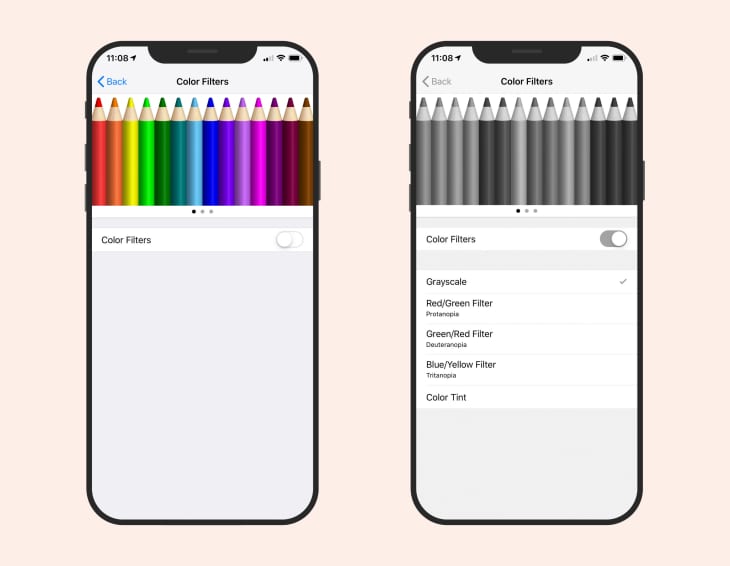
Why (and How) to Change Your iPhone to Grayscale
The tonal change just might be enough to make the apps on your phone a little less enticing, and you’ll help save yourself from endless checking and scrolling. Imagine Instagram without the saturated colors, or dim Snapchat videos getting even harder to see. Plenty of app icons themselves use color psychology to entice you to click on them — and when you take away the color spectrum, you might also be able to take away some of their siren calls.
There are other benefits to grayscale mode as well: It can be easier on your eyes, and help you read and view things better if you’re colorblind.
Turning your iPhone black and white is easy — and switching back and forth is easy, too.
How to Make Your iPhone Screen Grayscale
- Open Settings
- Open General
- Choose Accessibility
- Choose Display Accommodations
- Select Color Filters
- Toggle Color Filters On
- Select Grayscale
You might not always want your phone in grayscale. But you can set your phone up to toggle back and forth between grayscale and normal color with a quick triple-click of the home button or side button.
How to Toggle Grayscale On and Off with a Shortcut
- From the same Accessibility menu as above, scroll down and choose Accessibility Shortcut
- Select Color Filters
If you’re not an iPhone user, instructions for your unique phone model are a quick Google search away: Try typing “grayscale settings” along with the name of your phone model.
What Happened When I Used Grayscale on My iPhone for a Week
I decided to try using grayscale on my iPhone for a full week to see if it could be beneficial. The first couple of days felt strange. Every time I unlocked my phone, the grayscale took me by surprise. Habitually, I would still check my emails and open social media apps, but I realized right away that I wasn’t sticking around on the apps for longer than necessary. I would quickly check for any emails or notifications and put my phone away.
In the first few days alone, my screen time fell to just over an hour. By day three and four, I was used to the grayscale and wasn’t weirded out every time I unlocked my phone. I was only using my phone for specific tasks and wasn’t mindlessly scrolling on Instagram or TikTok. The black and white screen minimized the dopamine hits I would get from these apps, which in turn significantly lowered my screen time.
By day five and six, the lower screen time made me feel mentally and physically less exhausted and drained. At the end of every day, my eyes didn’t feel as dry as they usually did, and I wasn’t getting any headaches. By day seven, I was shocked to see that my screen time had drastically reduced to less than an hour a day. I also felt more productive and active in general.
I was only using my phone to check emails, make phone calls, text, and check social media notifications. By the end of the week, I realized I hadn’t felt the need to post on social media or really check other people’s posts all week. As I’m a content creator and often collaborate with brands, I know I can’t be on grayscale forever. So I’ve decided to keep grayscale on and will just turn it off for about an hour every other day to post my branded content and browse some inspirational videos.
If you’re looking for a way to battle your phone addiction, I would highly recommend trying the grayscale setting. Who knew such a small change would shift my life so drastically? I sure didn’t!
Is Grayscale Better for Your Eyes?
Hand in hand with its ability to make your phone less addictive is grayscale mode’s tendency to be better for your eyes, too. “Bright, colourful screens are more stimulating to the brain, whereas grayscale dulls the dopamine-driven appeal of apps like Instagram or TikTok, making your phone less addictive,” explains board-certified optometrist Dr. Meenal Agarwal.
And with lower screentime comes fewer “ocular side effects,” according to Agarwal. “Spending less time on screens benefits your eyes by having less digital eye strain, reduced dry eye symptoms, better sleep so better ocular and brain recovery, improved spatial awareness (as too much near work can dull your peripheral awareness), and lower risk of myopia progression,” she says.
Other phone settings you can toggle to help your eyes include the blue light filter and auto-brightness, according to Agarwal.
Does Grayscale Drain Battery?
Turning on the grayscale won’t drain your battery any more than its technicolor mode — and depending on the type of phone you have, it could even help preserve that precious battery life. For phones with OLED screens (which stands for “organic light emitting diode”), each pixel puts out its own light, so when the phone’s in grayscale mode, the dark areas can save energy by turning off.
For phones with LCD screens, though, the backlight stays on regardless of the colors, which means it uses pretty much the same amount of energy whether you have a grayscale iPhone or not. If you’re unsure what kind of screen your phone has, you can look up your model to check. Most older iPhones have LCD, while iPhone X and beyond have OLED screens.
If a battery-saving trick is what you’re after, try putting your phone in power-saver mode or turning on airplane mode to reduce any notifications or apps running in the background. Or, try one of these handy ways to charge your phone without a wall charger.
How a Grayscale iPhone Can Boost Productivity
There’s solid evidence that putting your phone in grayscale mode can help you spend less time on it (which, naturally, frees you up to do everything else you’ve been looking for the minutes to do). If you’re working from home and have noticed your smartphone addiction has a tendency to get in the way of completing your tasks, switching it to grayscale even just for the 9-to-5 part of the day could help you stay on track.
Productivity doesn’t have to be your motivation by any means, though. Looking for a low-key, tech-free evening? Dull the pull to spend time on your phone by putting it in grayscale and setting it aside. There are so many wonderful things to do when you want to get offline — here are 40 to start you off.