
Do You Need a Rug Under the Dining Room Table?
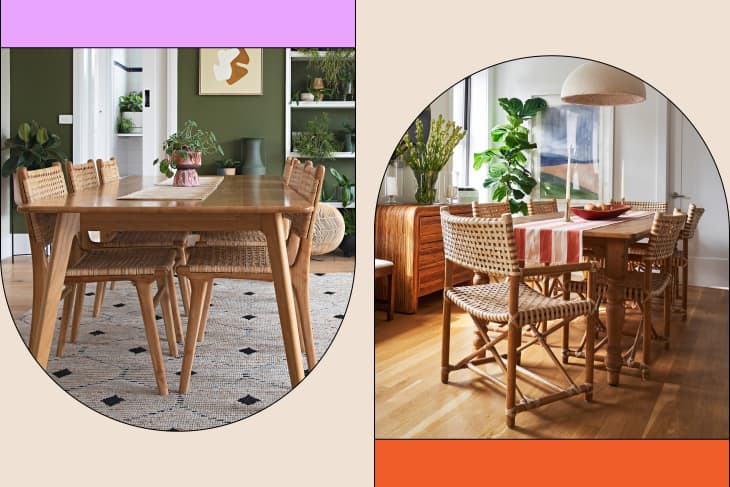
It seems people are divided on whether rugs belong in the dining room or not. There are pros and cons for each side, of course. A rug under the dining room table is another home decor element that can give your space a finished, cohesive look. But on the other hand, those with kids or pets realize just how impractical the arrangement can be (though a pet-friendly rug is always a good idea!). Whichever side you’re on, the truth is that a rug belongs in your dining room if you want it to be there, and doesn’t if you don’t — it’s that simple.
You can decide for yourself with the list of advantages and disadvantages below, as well as 18 dining rooms examples that — rug or no rug — look perfect, just the way they are.
Pros and Cons of a Dining Room Rug
Pros:
- Adds an extra decorative, personalized touch to the space
- Helps with noise reduction
- Anchors the table and chairs to better define the dining area (perfect for open floor plans!)
- More comfortable underfoot than flooring alone
Cons:
- Conceals pretty hardwood, tile, or statement flooring
- Harder to clean and maintain, especially food stains
- Attracts more dust and odors (be mindful if you’re allergy-prone)
- Area rugs can be expensive
All About the Rug Under the Dining Room Table
These nine dining rooms simply wouldn’t be as dynamic without the rugs that grace their floors.
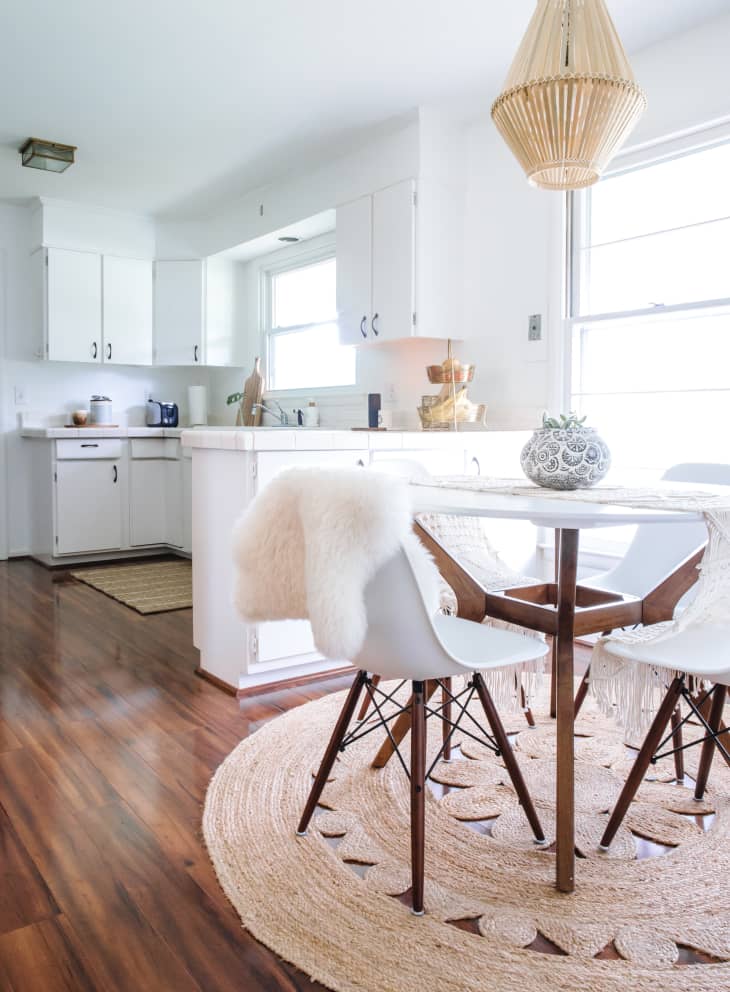
1. Incorporate a minimalist rug.
Not sure if you want a rug under your dining room table? Go with something super minimal, like you see in this chic Michigan home.
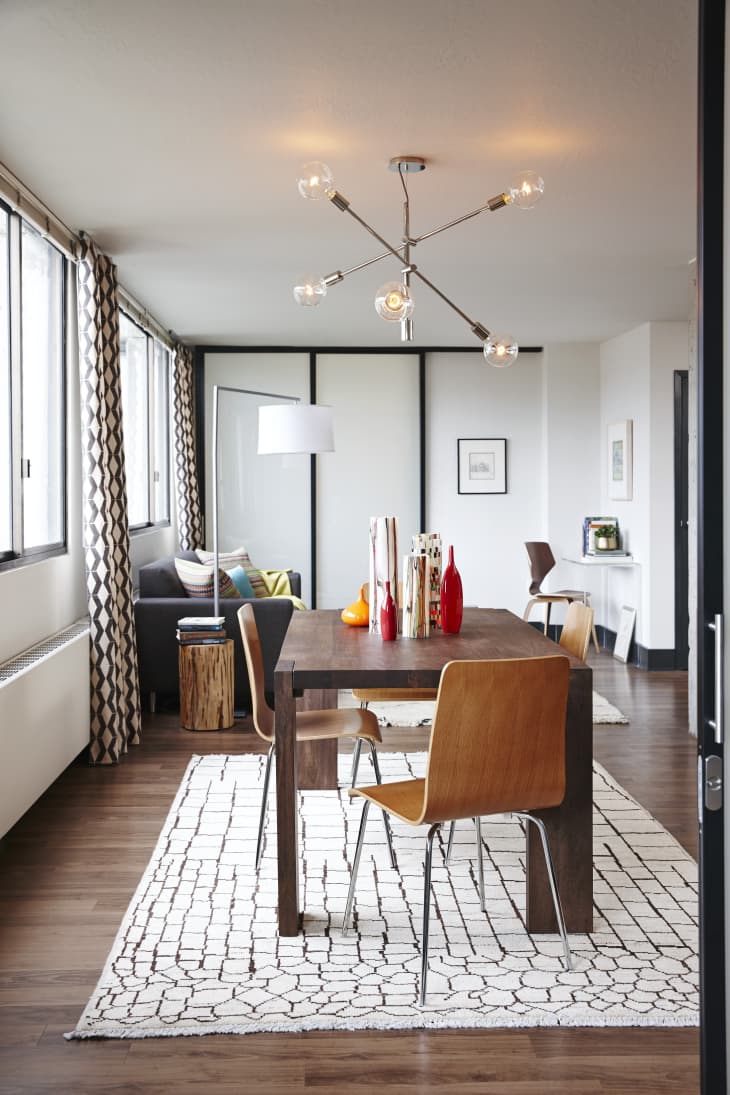
2. Add a gorgeous graphic rug.
If pattern is what you love, don’t miss the opportunity to bring in a graphic rug — when mixed with patterned curtains, you create a room full of personality.
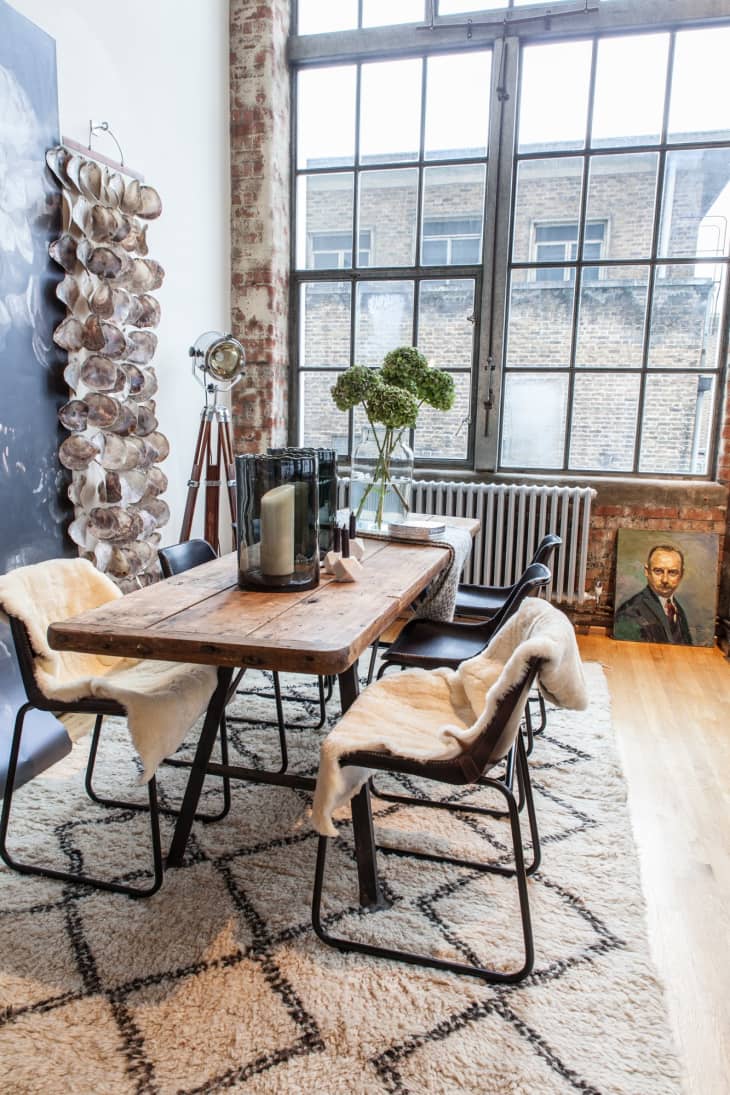
3. Incorporate some texture.
When you’re going for an industrial look, added texture via a rug is a welcomed jolt of coziness.
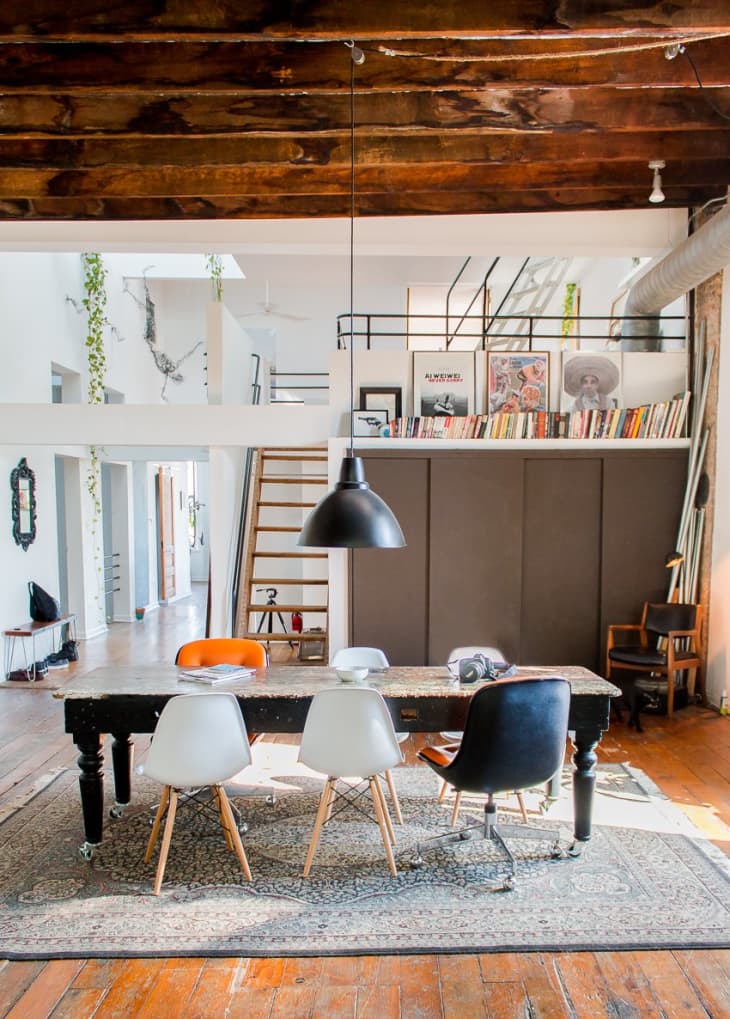
4. Define the space.
Loft living begs for pseudo-defined spaces. Without the rug under the dining room table in this open space, the table would seemingly float unanchored in the room.
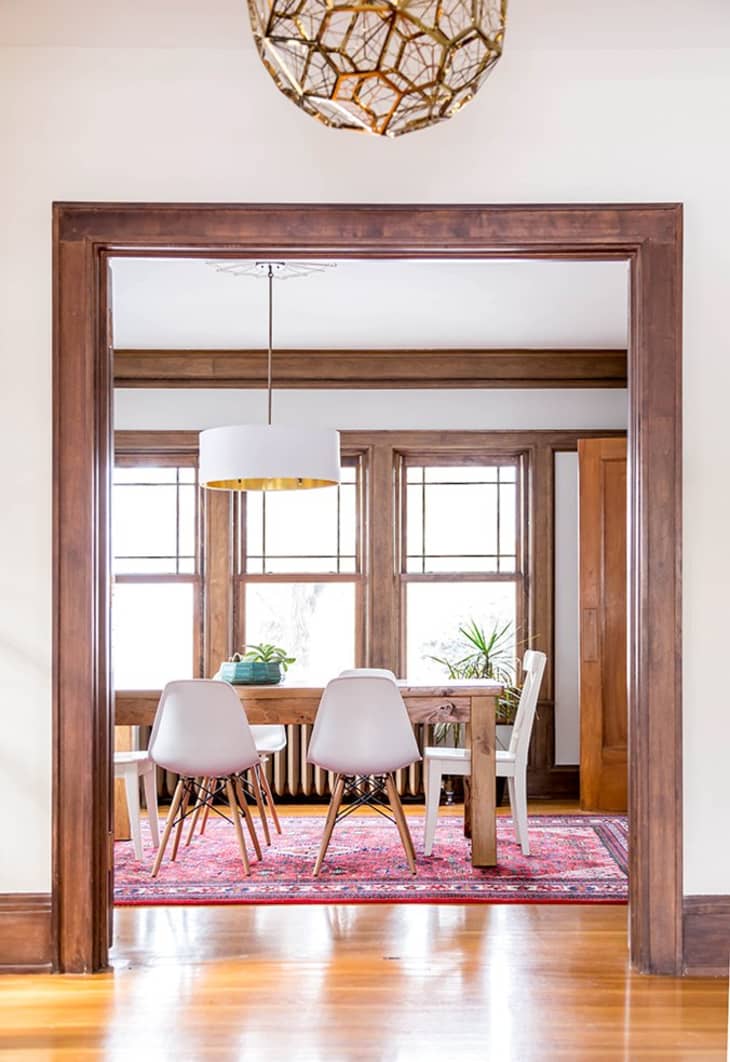
5. Add a touch of color.
The pink-toned rug adds a softness to the room above that’s heavy on wood moldings.
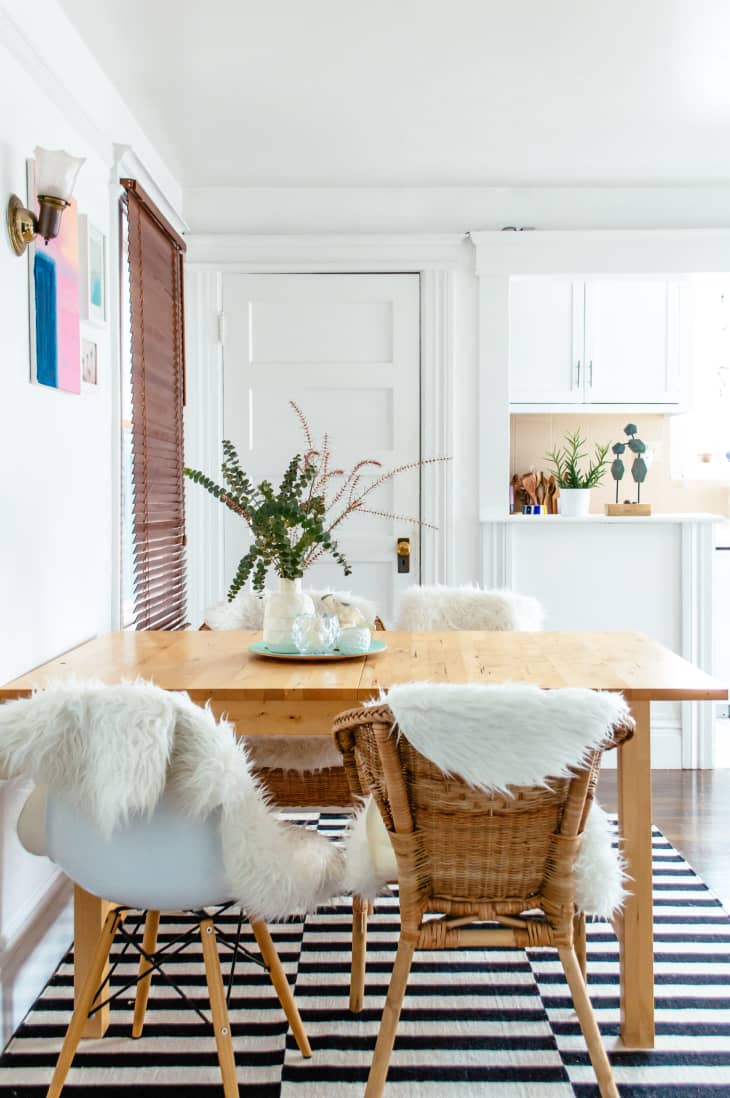
6. Don’t be afraid to go bold.
The illustrious IKEA STOCKHOLM rug adds a graphic hit to the neutral room above.
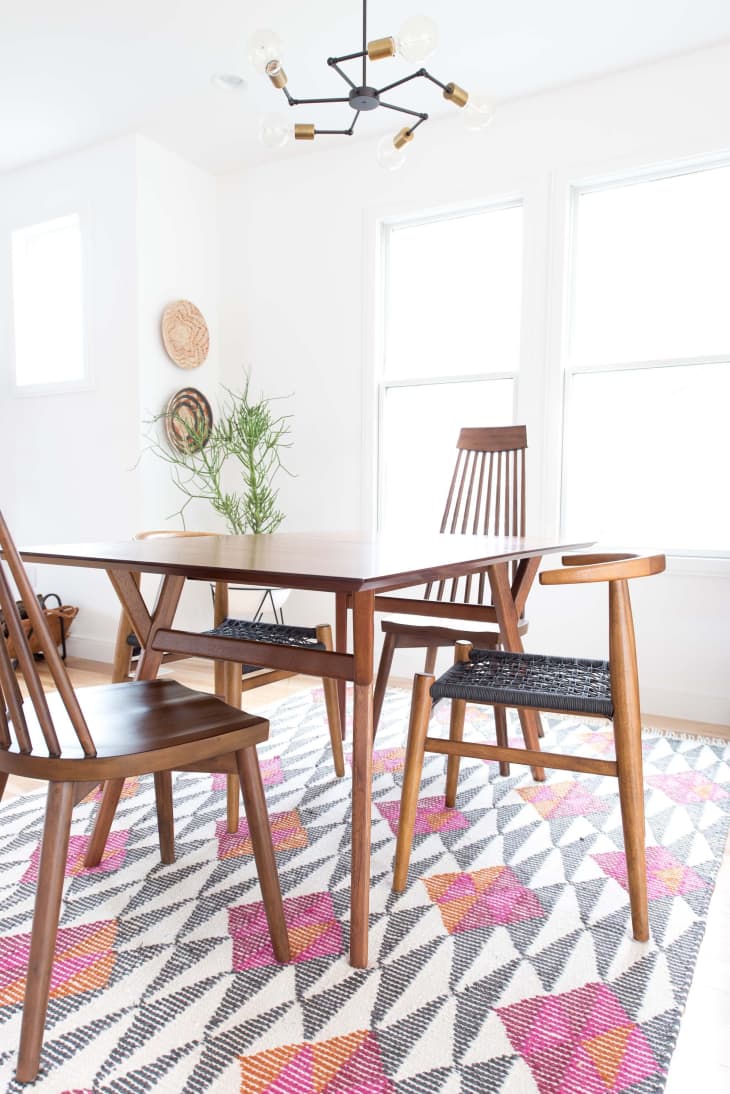
7. Include a touch of visual interest.
Mid-century furniture can be really lovely, but it’s also quite…brown. The geometric rug, with its fuchsia and orange detailing, really brings the dining area here to life.
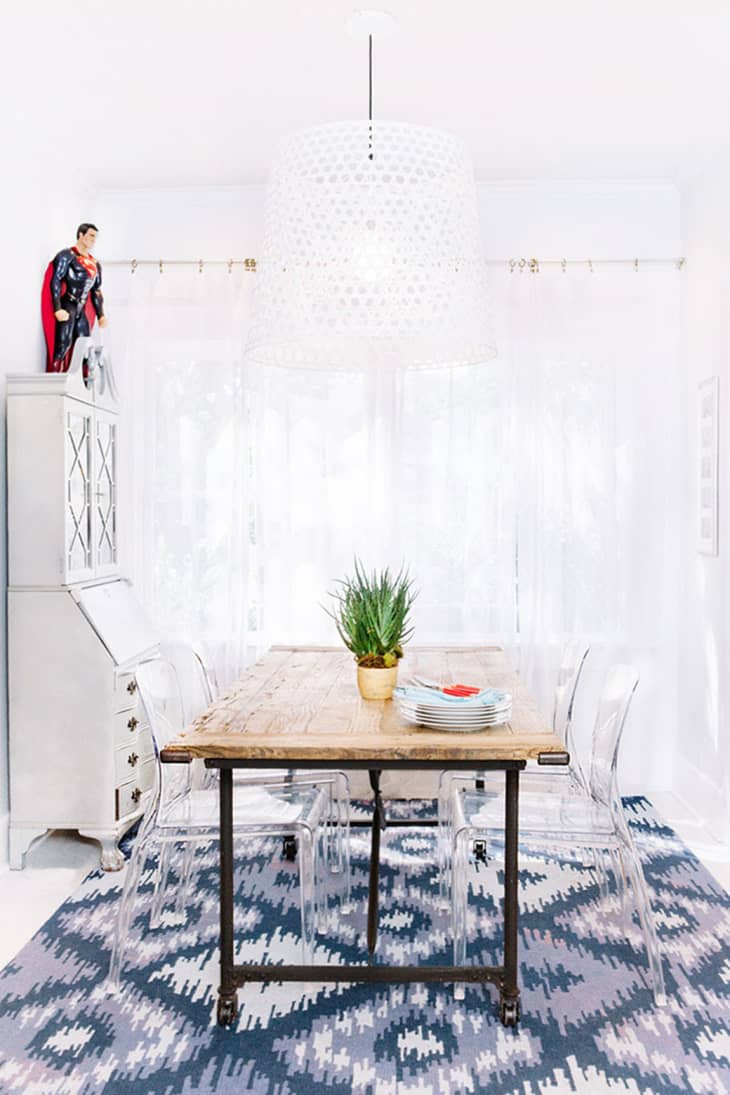
8. Break up the monotony.
Without the rug, this dining room would be completely white. The blue IKAT pattern is explosive (in a good way) in this otherwise monochrome room.
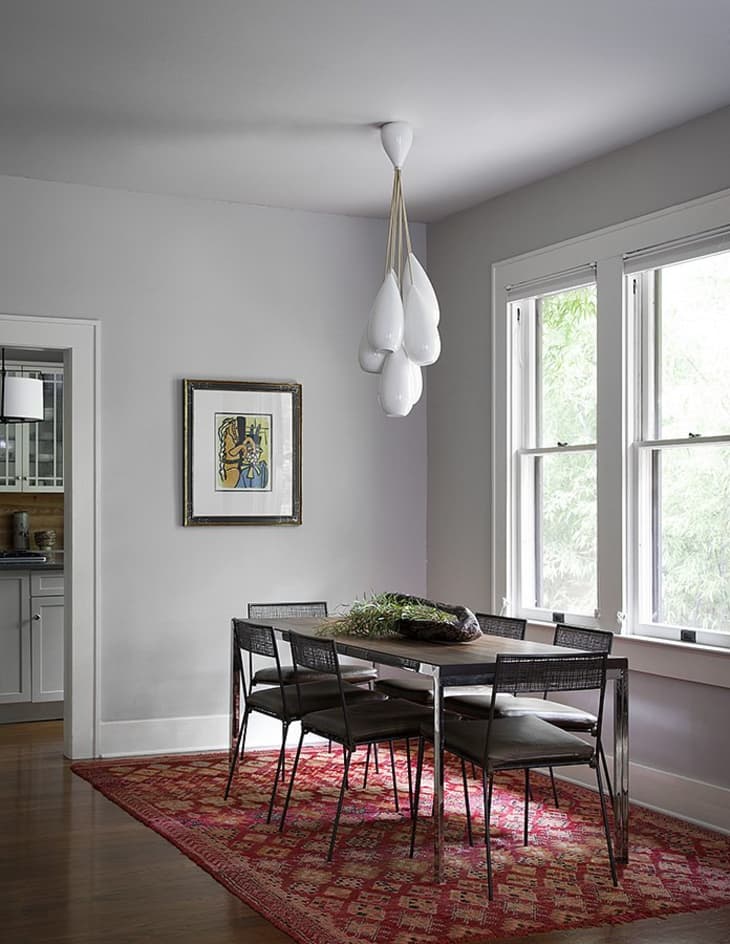
9. An unexpected addition.
Like the dining spaces above, this room would be perfectly lovely sans rug, but the addition brings an eye-catching moment that defines the area.
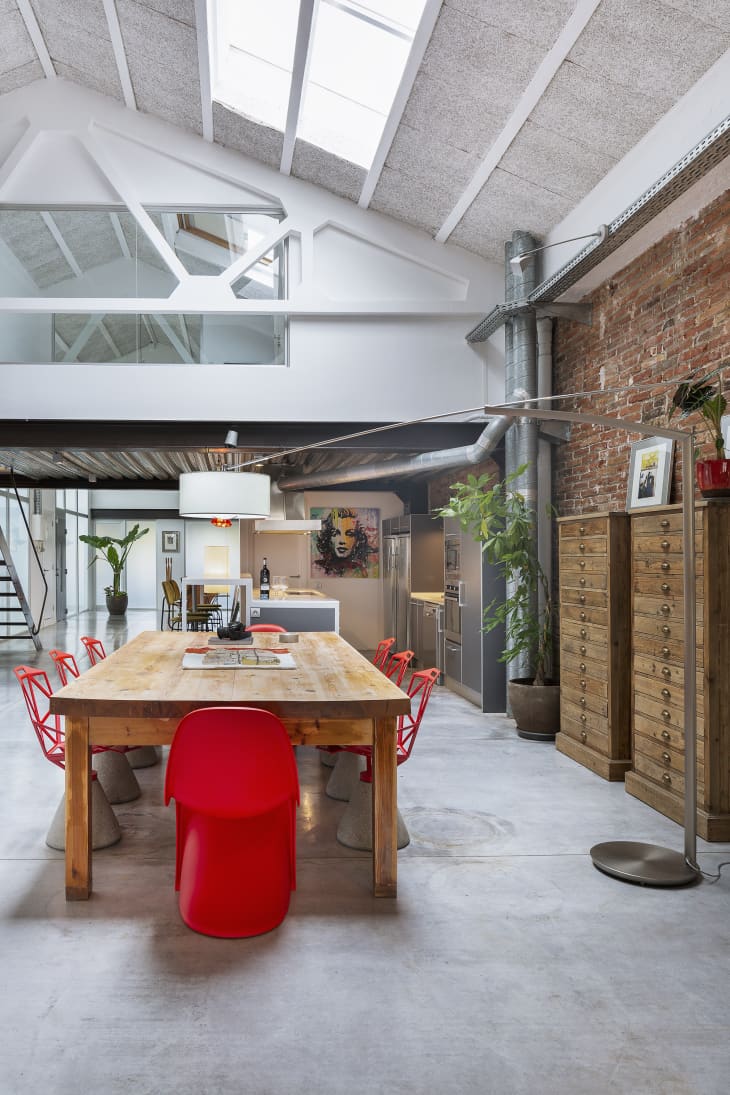
Free of Floorcoverings
On the flip side, check out nine equally gorgeous rug-free dining rooms below. If you’re on team “no rug under the dining room table,” you’ll feel right at home here. And admittedly, these spaces definitely make a strong argument for keeping the area below your table bare.
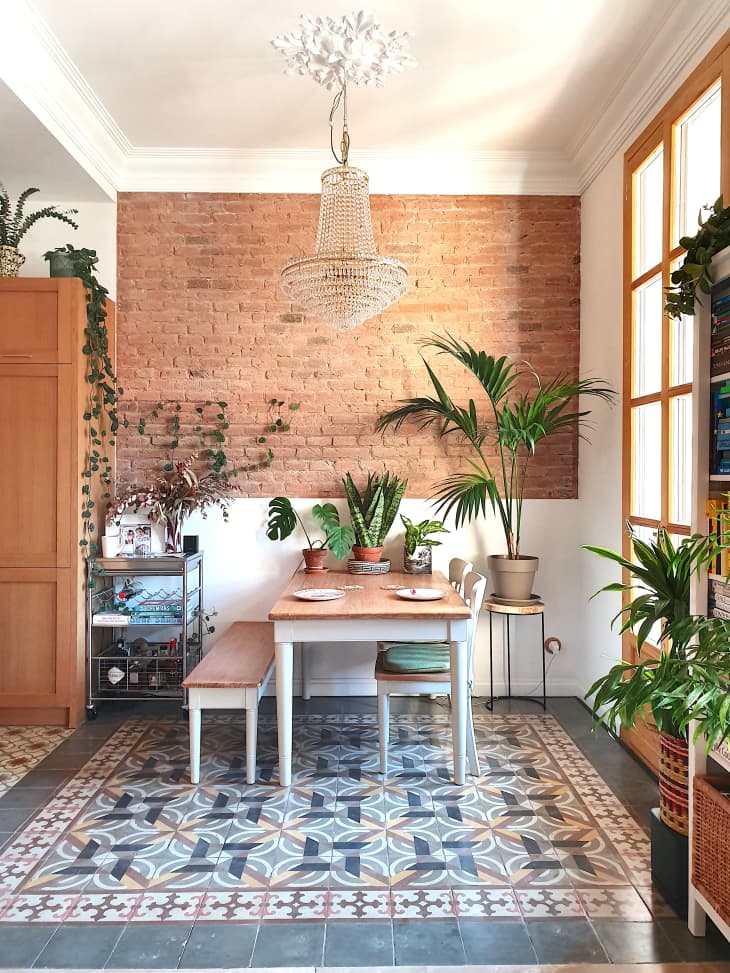
1. Play with patterned tiles.
When your kitchen floor is covered with gorgeous patterned tiles like the ones in this Barcelona home, there’s clearly no need for a rug under the dining room table.
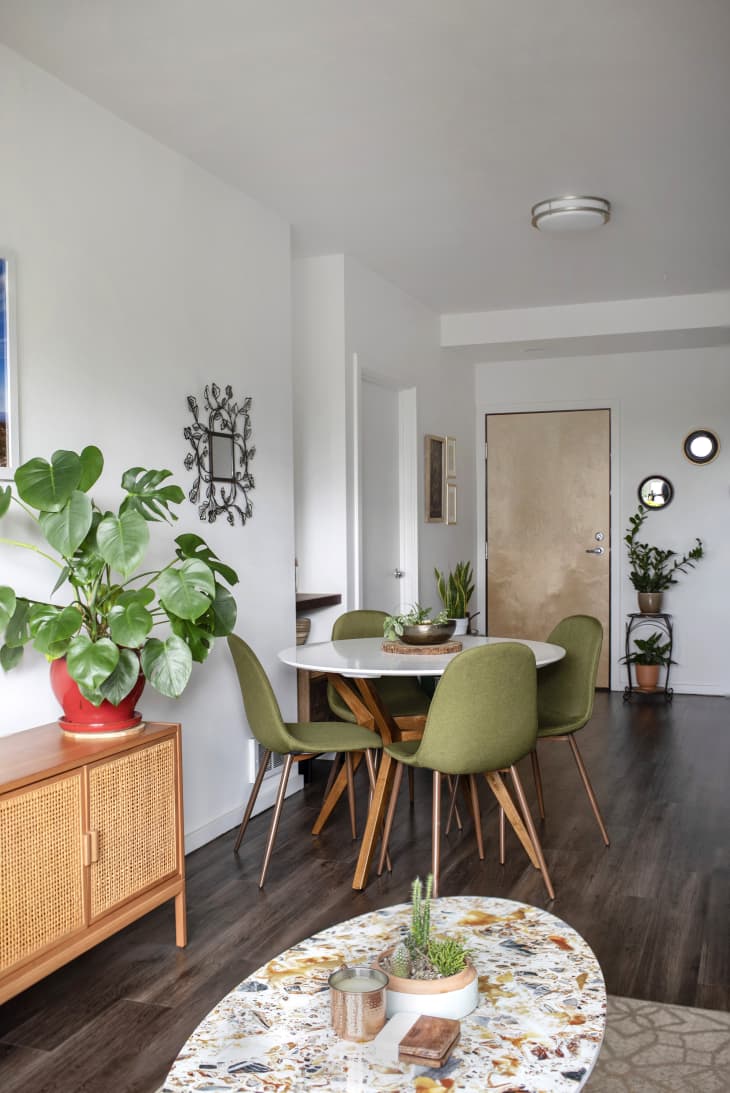
2. Go with a color scheme.
With all the coordinating greens and browns that flow perfectly across the open space in this Portland, Oregon home, there’s no reason to add a rug.
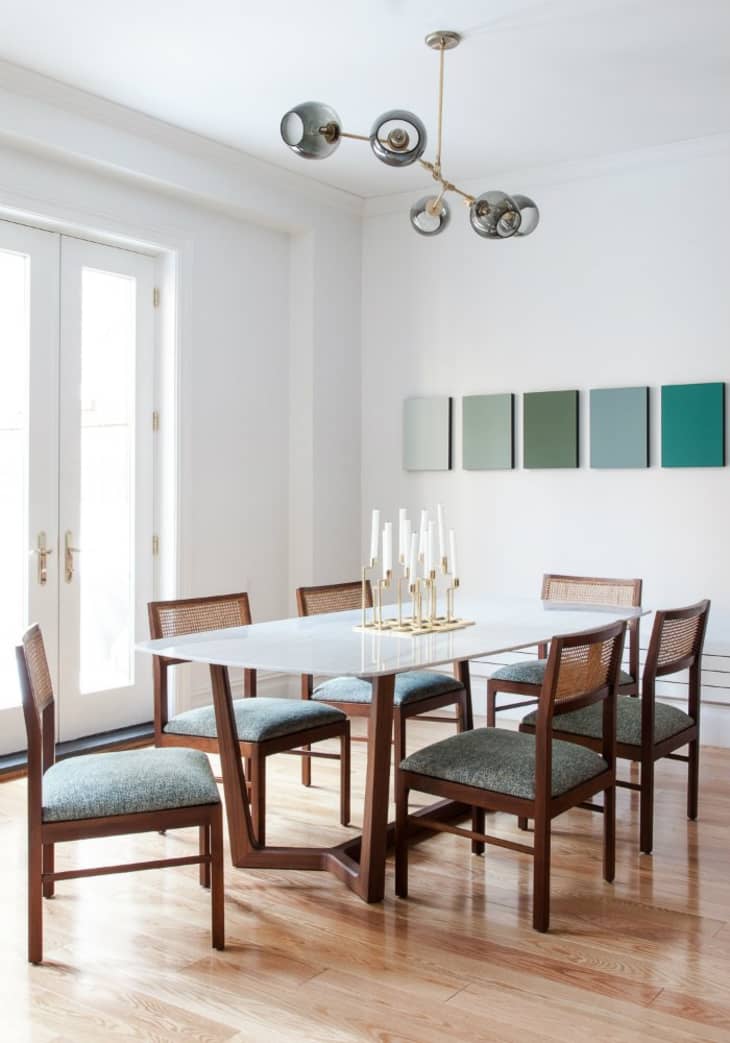
3. Use colorful chair pads.
A patterned fabric on the dining chairs keeps the space visually interesting (as does the mix of modern and traditional you get from combining that chandelier with those caned seats).
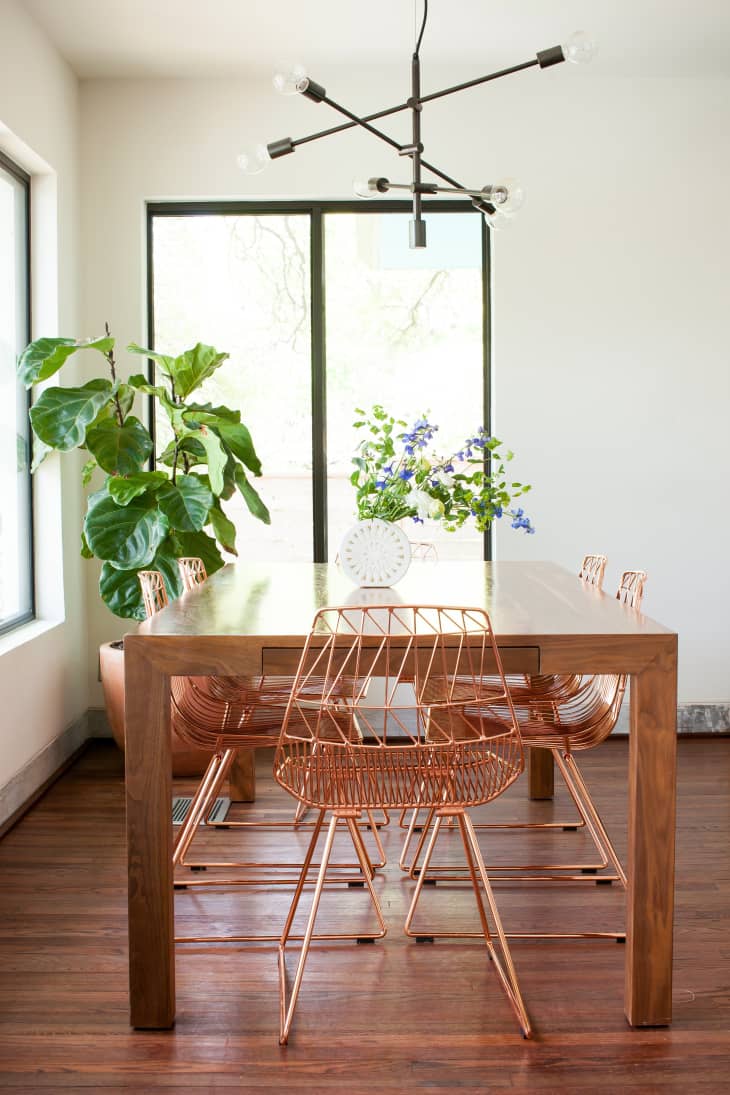
4. Mix materials.
Copper chairs steal the show in this space so that it can get by without the additional element of a rug under the dining room table.
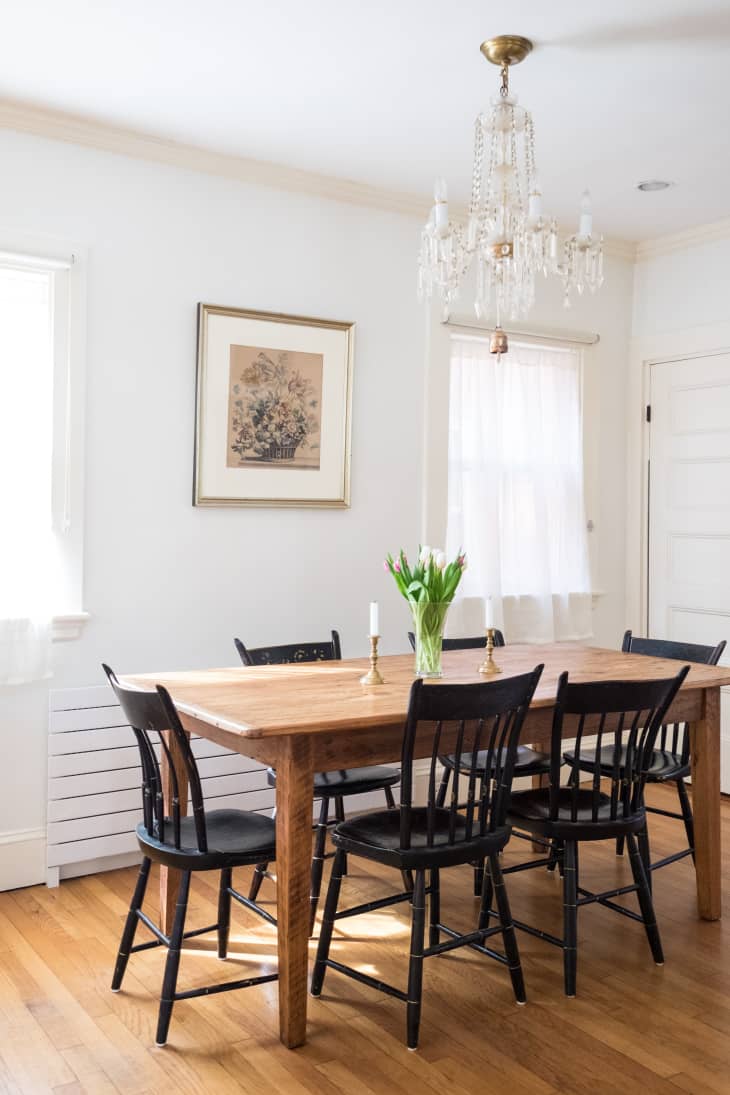
5. Add curtains to soften things up.
Sure, a simple seagrass rug would totally work in this space, but we admit that a dripping chandelier and ethereal sheers make for a truly lovely eating space.
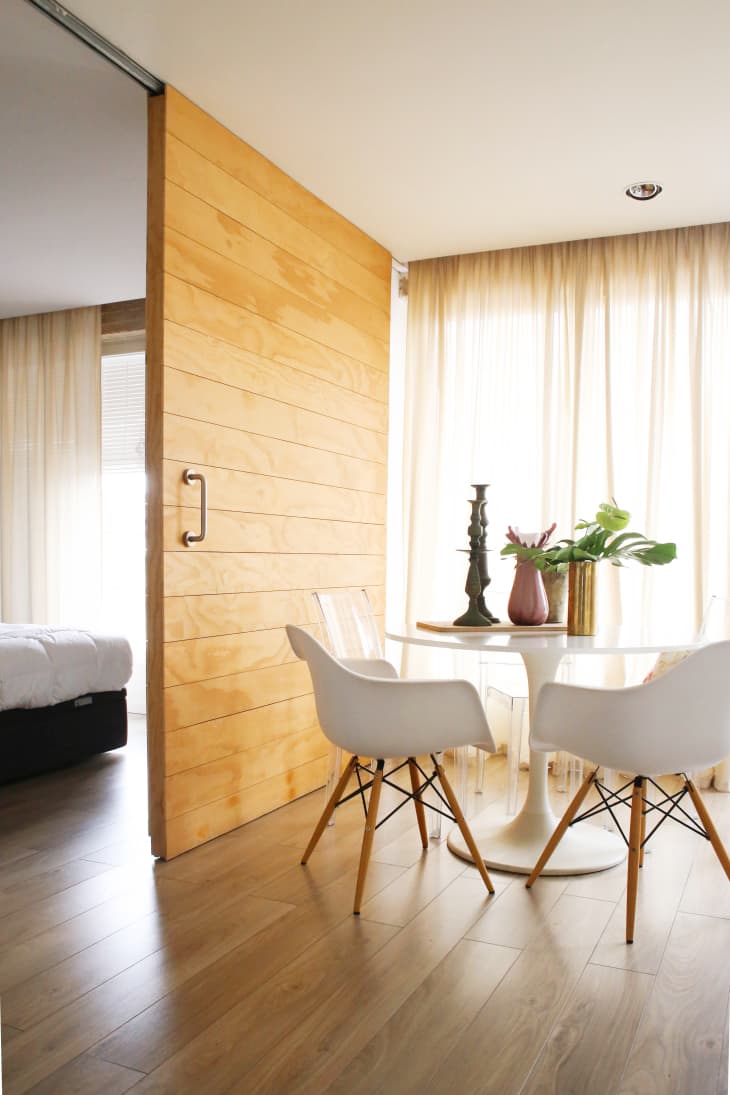
6. No further separation required.
The quiet serenity of this little dining nook is just right, lacking nothing. Perhaps that’s because the wooden sliding door provides all the definition this space needs.
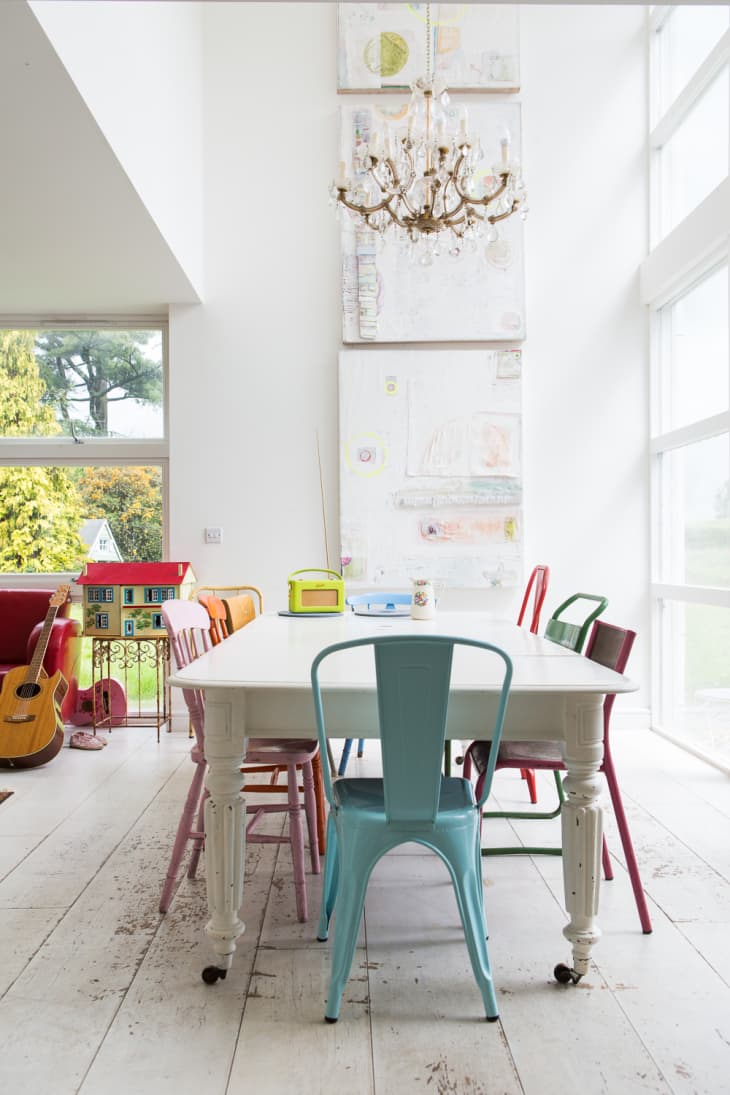
7. Not too colorful.
Mix-and-match chairs for the win. A rug under this dining room table might just make the whole scene seem busy. Plus… covering up those ultra wide-plank floors just might be a sin.
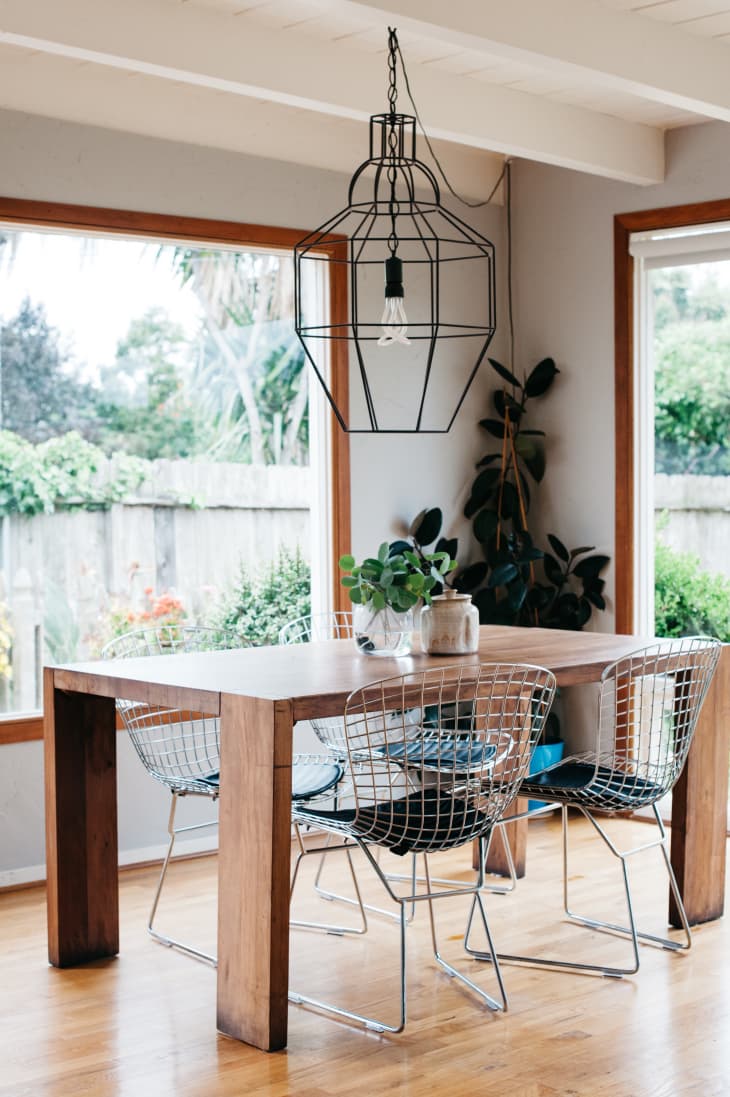
8. Avoid having too many different elements.
It’s the same deal here: with the combination of the stylish metal chairs and the traditional wooden table, a rug under the dining room table might throw things out of whack in this perfectly balanced space.
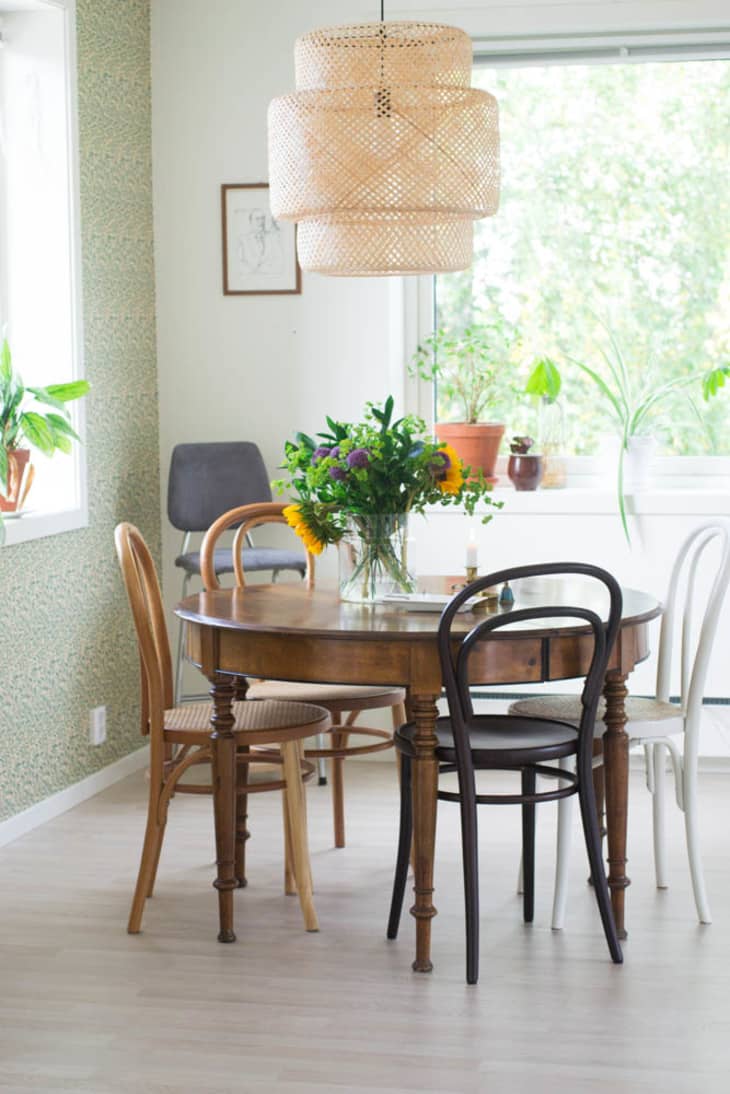
9. Incorporate different wood tones.
There are a lot of different wood colors in this quaint kitchen, so it doesn’t seem to beg for a rug under the dining room table.