
Scullery Kitchens Are 2025’s Buzziest Trend, Thanks to 5 Key Features
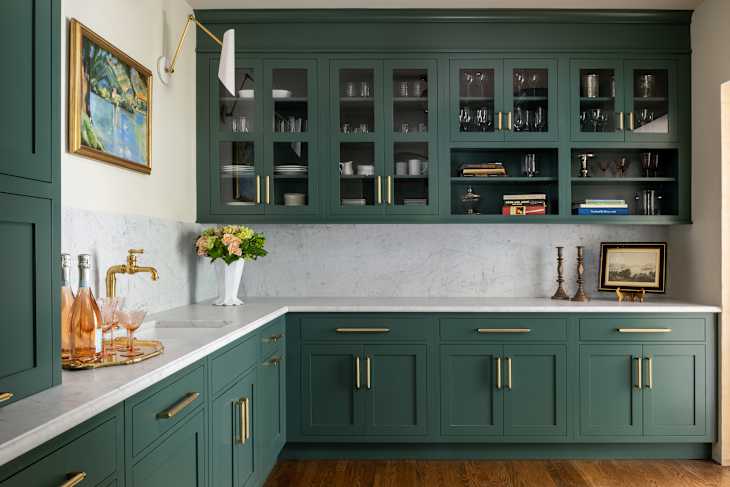
You’ve probably heard of the butler’s pantry, but there’s a different (and slightly trendier!) kitchen prep space making waves in the interior design world: scullery kitchens. Like a butler’s pantry, a scullery kitchen provides a space for extra storage and food prep beyond the kitchen. However, sculleries are far more comprehensive than that. While butler’s pantries are reserved for minor food preparation (such as appetizers and small bites), staging, and quick cleanup, sculleries act as a secondary kitchen space and are smartly equipped for the task.
Historically, sculleries functioned as a space where house staff would wash dishes and prepare food to be served in estates and other palatial homes. Today, homeowners are reviving the concept as a stylish yet highly functional extension of the kitchen (minus the kitchen staff — I wish!). They’re now being carved out as places to stash small appliances, manage mess, and maintain the sleek, clutter-free look that open-concept living demands.
“Our clients are requesting scullery kitchens in their homes as a secondary prep, storage, and cooking zone, both for function and style,” says Krista Watterworth Alterman, creative director of Krista + Home by Vesta, located in Palm Beach, Florida. “Design varies from home to home and budget to budget, but what they all have in common is the homeowner’s goal of keeping the main kitchen elegant, aesthetically pleasing, and clean — void of everyday items like coffee machines, toasters, groceries, and spices.”
Equal parts nostalgic and practical, the modern scullery merges old-world charm with modern convenience in a seriously stylish way. If you’re wondering if this timeless design feature is worth a full home reno, top designers have shared 15 drool-worthy scullery kitchen ideas that’ll inspire your next kitchen makeover.
5 Key Design Elements of a Scullery Kitchen
There’s a misconception that smaller homes can’t fit a scullery kitchen alongside a full chef’s kitchen and a living room space — but they can be tucked into most floor plans with precision. These features set sculleries apart from other kitchen storage spaces, including pantries, wet bars, or a butler’s pantry. They include:
- Counter space: A staple in all scullery kitchens is the counter space. Counters are featured to make meal prep, baking, and other tasks easy to complete in a space away from the main action.
- Additional sink: Dishwashing is another staple of the scullery kitchen, meaning that sinks are almost always included (usually alongside dishwashers when possible).
- Ample storage: Sculleries blend pantry and prep space, meaning they don’t skimp on storage. You’ll often find upper and lower cabinetry, shelves, pantry cupboards, and drawers lining the walls.
- Integrated appliances: While most sculleries do include a dishwasher, they may also integrate other large appliances for functionality, based on budget and space — these include additional refrigerators, freezer drawers, wall ovens, or full oven ranges.
- Separate yet connected: Sculleries are accessed from the central kitchen, although they are distinct spaces, but do not necessarily require enclosure. Many modern sculleries are designed to blend seamlessly with the primary kitchen, with entrances hidden behind pocket doors or cabinetry, creating a “secret room” effect.
15 Stunning Scullery Kitchen Design Ideas
Wondering how these spaces may look in your own home? Top interior designers are showcasing their scullery kitchens as inspiration for your own custom build or renovation. Below, we’re sharing images and tips around layout and construction to help you jump-start your dream kitchen addition.
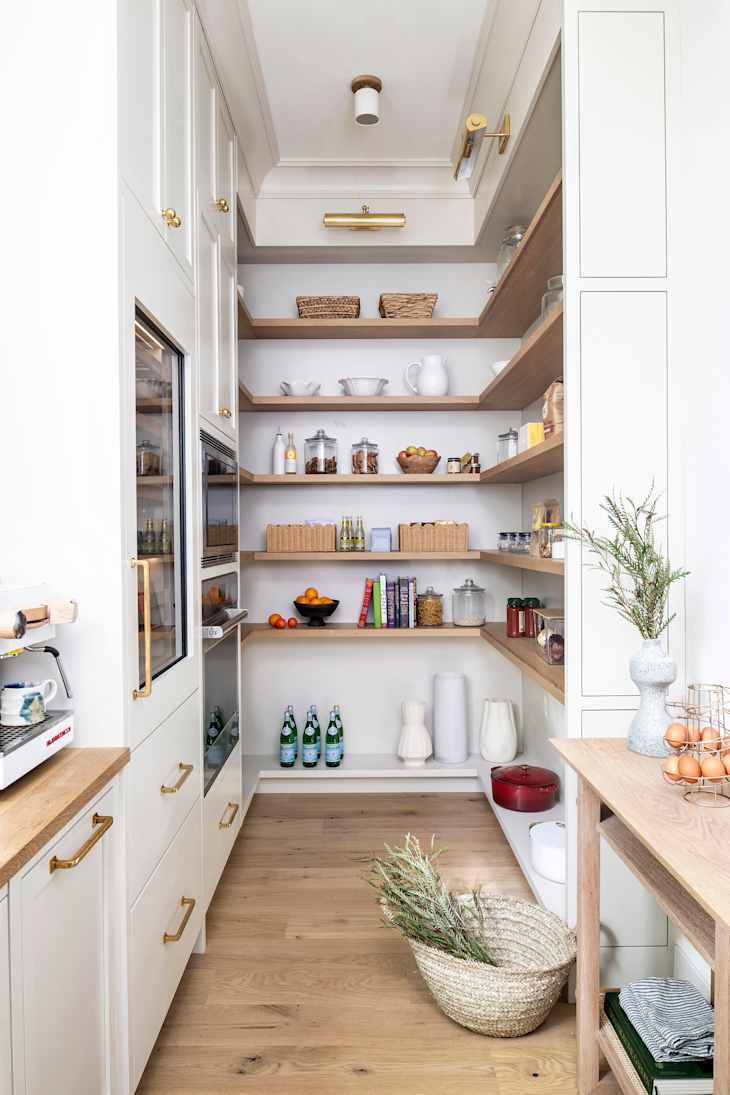
1. Include Integrated Appliances
When floor space is tight, as in this slim scullery kitchen design by Carrie Moore Interior Design, built-in appliances are the solution to ensure everything fits neatly. Drawer refrigerators, a wall oven, a microwave, a dishwasher, and a wine fridge all fit neatly in this stunning scullery design, with plenty of room left for pantry storage. In addition to the appliances, it features many other design elements that help pull the look together.
“This scullery was designed to house the messy side of cooking and keep the kitchen clean … It features blue and white hand-painted tiles, white oak butcher block counters, a fireclay farmhouse sink, unlacquered brass hardware, and a pull-chain sconce by Workstead,” says cofounder and principal designer Carrie Moore.
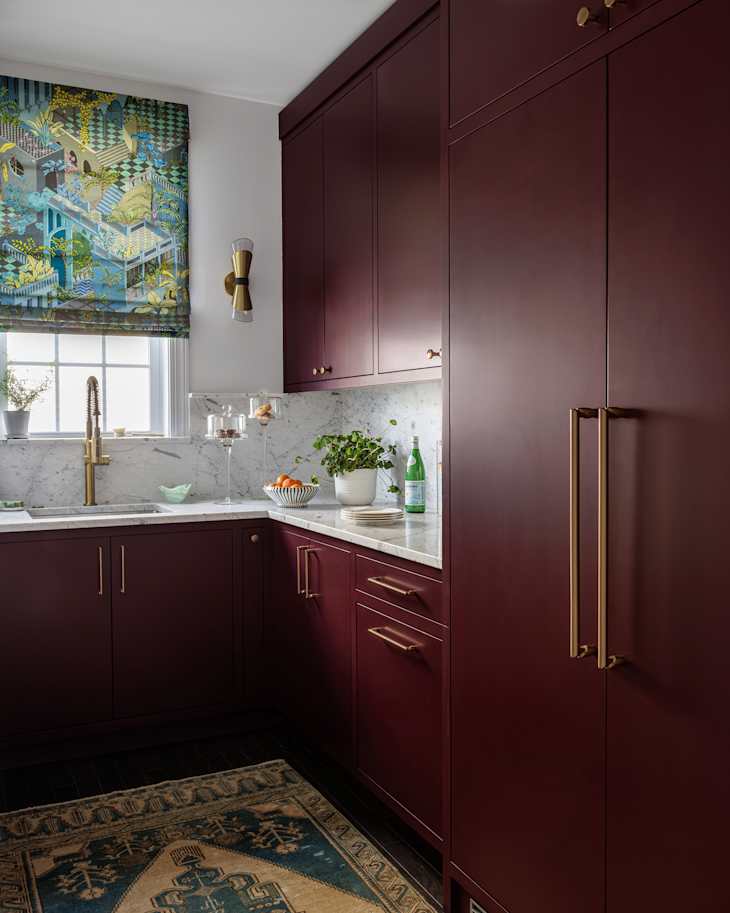
2. Choose an Unexpected Cabinet Color
If your kitchen design is elegant and restrained, the scullery is where you can let loose and have some fun! Take, for example, this bold scullery design by Erika Bonnell Interiors. Dramatic mahogany colored cabinets take center stage in the space, while the marble countertops, brushed gold hardware, and fixtures bring a touch of elegance and refinement.
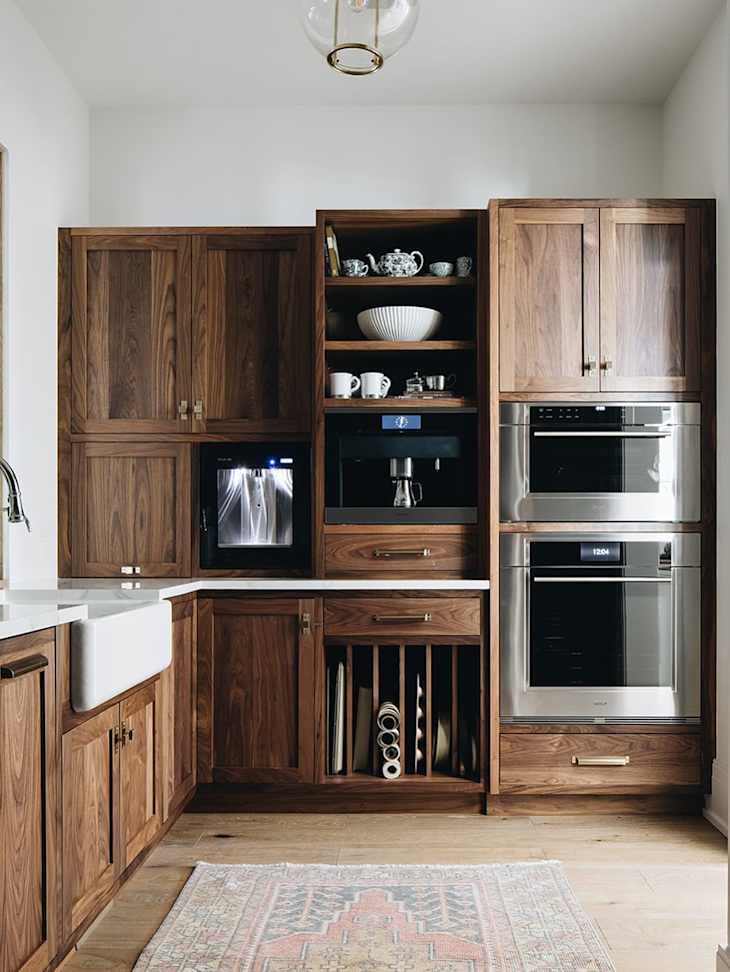
3. Feature Natural Wood Cabinetry
Painted cabinetry is gorgeous, but there’s something so effortlessly warm and elegant about letting natural wood shine (we’ve seen it before!). This sleek yet inviting scullery design by Amy Storm & Co. features warm medium-toned wood, white countertops, and brushed brass hardware. Kitchen cabinet towers on the back wall bring ample storage while keeping the essentials within arm’s reach.
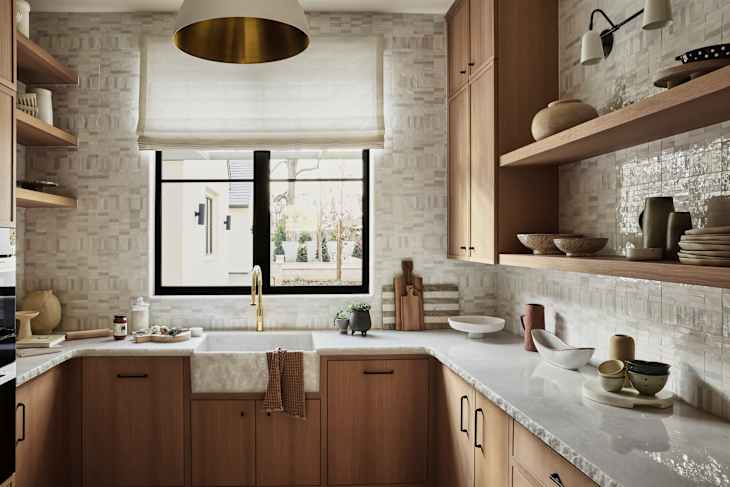
4. Embrace a Quietly Luxurious Look
If loud and bold isn’t your thing, consider a more restrained approach, as demonstrated in this scullery kitchen by interior designer Lindye Galloway.
“This scullery kitchen is the essence of quiet luxury and instills a seamless balance of natural warmth and refined texture,” she says. “Custom white oak cabinetry is carried over from the primary kitchen, and a handcrafted mosaic tile backsplash creates depth without distraction. The soft limestone countertops, unlacquered brass details, and sculptural shelving styling lend a lived-in elegance that feels both elevated and functional.”
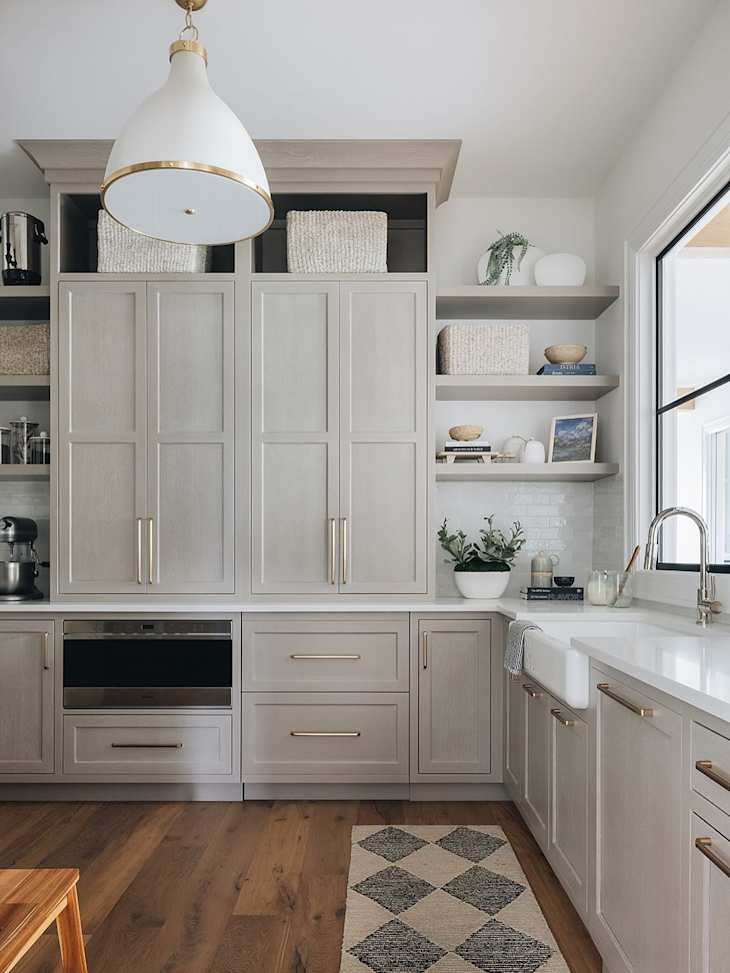
5. Mix Open and Closed Shelving
Open shelving can lead to visual clutter in the primary kitchen, but in the scullery? It’s the perfect chance to highlight open shelving as items will be in daily use. This scullery kitchen by Amy Storm & Co. demonstrates the power of mixed storage solutions perfectly, featuring a combination of traditional cabinetry, cabinet towers, open shelving, and blank wall space.

6. Incorporate a Statement Piece
When planning the design of this scullery kitchen, Julianne Kelly of Florida-based Carrier Design Co. decided to make the focal point of the space visible from the main kitchen.
“We designed this scullery so that the copper sink is the main focal point since it can be seen from the kitchen. The right side of the scullery is utilized as a cocktail and beverage station, while the left side allows for more pantry storage,” she shares.

7. Go for Floor-to-Ceiling Cabinetry
This scullery designed by North Carolina-based Emerald & Oak Design Studio doesn’t let even an inch of space go to waste. Floor-to-ceiling cabinetry ensures ample storage for all kitchen essentials, along with a full fridge, sink, and more. The stunning navy cabinets, herringbone wood floor, and sleek gold hardware are just bonuses at this point.

8. Lean Into a Traditional Aesthetic
Traditional design lovers, this one’s for you! This stunning scullery kitchen by Amy Storm & Co. feels historical yet effortlessly modern. Rich slate blue paint is accented by ornate details, such as raised panel cabinet doors, picture frame wall molding, and wall sconces, creating an elegant yet comfortable space that anyone would feel lucky to wash dishes in.

9. Keep It Light and Bright
If you love light and airy kitchen design, don’t be afraid to extend that into the scullery kitchen. Light wood tones, white cabinetry, stainless steel appliances, and light stone countertops characterize this sleek and classic scullery kitchen design by Emerald & Oak Design Studio. This space also features a rolling kitchen cart with a stainless steel worktop, adding extra functionality and durability for any task.

10. Embrace Rich Green
What was once the primary kitchen in this home was transformed into a functional scullery space by Maryland-based Aidan Design when the kitchen was moved into an adjacent room. Featuring a sink, dishwasher, refrigerator, and wine refrigerator, it’s equipped with everything needed to make hosting and everyday cleanup easy, while keeping the messes hidden.
“The homeowners had the vision for this Benjamin Moore’s Tarrytown Green cabinet color that we complemented with dining room wallpaper, brass fixtures, and marble countertops, plus slab backsplash,” says Kelly Emerson, senior designer at Aidan Design.

11. Elevate an Existing Butler’s Pantry
A few minor tweaks can turn a traditional butler’s pantry into a fully functional scullery space. Take a look at this butler’s pantry-turned-scullery kitchen design by Minnesota-based Whittney Parkinson Design. While it’s located off the dining area, it’s equipped with a sink, storage, and appliances to help make food prep and cleanup a breeze. The bold matching cabinetry, trim, and ceiling make this transitional space truly stunning.

12. Design Around Existing Windows
Do you have a spot in your home’s layout you’re eyeing for a scullery, but exterior features are in the way? Find a clever way to work around it! This scullery by Amy Storm & Co. demonstrates how a once-frustrating design hindrance can be transformed into a statement feature with a bit of creativity. A floor-to-ceiling window provides the perfect opportunity for a built-in seating area, ideal for taking a break between tasks or stopping for a much-needed snack.

13. Create a Chef’s Display
Unlike in the primary kitchen, where small appliances and pantry essentials are normally hidden out of sight, the scullery kitchen offers the perfect opportunity to display these staples proudly. Keeping things visible, as demonstrated in this scullery kitchen by Amy Storm & Co., also makes the space more functional, meaning you won’t have to search for the things you need once you get into the meal-prepping zone.

14. Incorporate a Double Oven Range
If you have the space, why not include a full double oven range in your scullery kitchen, as demonstrated in this elegant space by Amy Storm & Co. Not only will it multiply your oven space (just think how easy holiday hosting will be!), but it’ll also keep any undesirable food smells from lingering in the main kitchen. This feature may also be a solution for anyone who is renovating a current kitchen as is.

15. Go All In on Black
This sleek and dramatic scullery kitchen by Amy Storm & Co. proves that dark and moody black cabinetry can be just as beautiful as airier spaces. Besides its aesthetic appeal, this prep space doesn’t skimp on storage. Floor-to-ceiling cabinetry makes the most of every square inch, while open shelving keeps everyday essentials easily accessible.
Design Defined
Never miss the style inspo and recommendations you crave with Design Defined. Follow along each week as our Home Director Danielle shares the best style advice, latest trends, and popular decor finds you just can't miss.