
I Hate Spending Money on Plants — Here’s My Go-To Way to Get New Ones for Free
Although I have high aspirations of traipsing through my effortlessly lush and bountiful garden (à la Martha Stewart at Turkey Hill or Pamela Anderson at Arcady), the truth is that many of my plants have yellowing leaves and I once actually killed an allegedly unkillable snake plant. As you can imagine with my luck, I am quite frugal when it comes to spending money on plants — and I’m not going to resort to something ethically questionable like “propflifting.”
So when my neighbor Katie texted several of us around the block asking if we wanted to participate in what she called a “propagation party,” which is the plant equivalent of the take-a-penny-leave-a-penny jar, it was an instant yes.
Though I was nervous about what on earth I could possibly bring to the literal plant table (I live near some pretty talented gardeners who have a few years’ head start on me), I was excited to see what my neighbors had to offer. And also, I live in the Midwest and there was bound to be at least one or two trays of amazing snacks.
What is a propagation party?
A propagation party is a pretty basic concept: Get a group of gardeners together (in this case, it was several neighbors) and bring enough cuttings of a healthy plant to share with everyone in attendance. We also had a neighbor who brought in leftover seeds, which was great for the more advanced among us. The idea is that everyone who joins is able to bring a few cuttings home with them so they can grow new plants without needing to spend extra money.
A propagation party is similar to a plant swap, but it’s a much more casual atmosphere. At a formal plant swap that’s hosted by a community garden or a local park system, participants can bring full houseplants, cuttings, and even plant supplies like pots or gardening tools. The number one rule at a plant swap is that you leave with as many things as you came in with. Trust me, I just read through several Reddit threads of angry gardeners who left a plant swap empty-handed or didn’t get fair trades. You absolutely do not want to break this rule or you will get dragged on the internet.
At our propagation party no one was counting to see how many cuttings or packs of seeds everyone was going home with, and yes, there were indeed several trays of snacks and even homemade lavender tea. (I know. I have the most wonderful neighbors in the world.)

What do you bring to a propagation party?
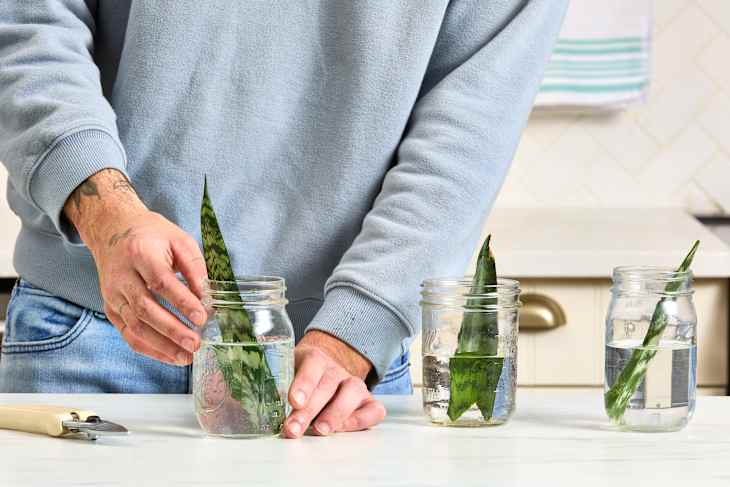
When you go to a propagation party ideally you’ll bring enough healthy cuttings so that each person can go home with one. Each cutting should be in water and labeled so that everyone can sort out what’s what and know exactly how to care for their brand-new cutting.
At our propagation party we had a variety of plants, including basil, lavender, clematis, and even some California poppy seeds.
When is the best time to host a propagation party of your own?
Gardening is all about timing, so if you want to host your own propagation party you may be wondering when the best time is to put it on the calendar. If you’re all swapping gorgeous houseplants that will help beautify your indoor space, then there really is no right or wrong time to start caring for a cutting that will be promptly put in some potting soil inside.
Though you can still have a propagation party for outdoor plants any time of the year, you and your fellow gardeners will need to pay attention to what types of plants are best to cut during the different seasons. Here are some guidelines to the types of cutting available during the different seasons (ahem, folks who live in tropical climates feel free to skip this section):
- Spring and early summer: softwood cuttings, which are the new and flexible growth from a plant.
- Late summer and early fall: semi-ripe cuttings, which are matured and slightly hardened growth on a plant. (In other words, you’ll hear a snap when you actually cut them.)
- Late fall and early winter: hardwood cuttings, which are taken from plants in dormancy after the leaves have fallen.
Every plant has a more favorable timeline of when they grow most successfully from a cutting, so if you’re unsure it’s always best to look it up to avoid bringing a bunch of duds to the party.