
This Oil I Bought 5 Bottles Of in India Has Changed My Life (I Never Go Anywhere Without It!)
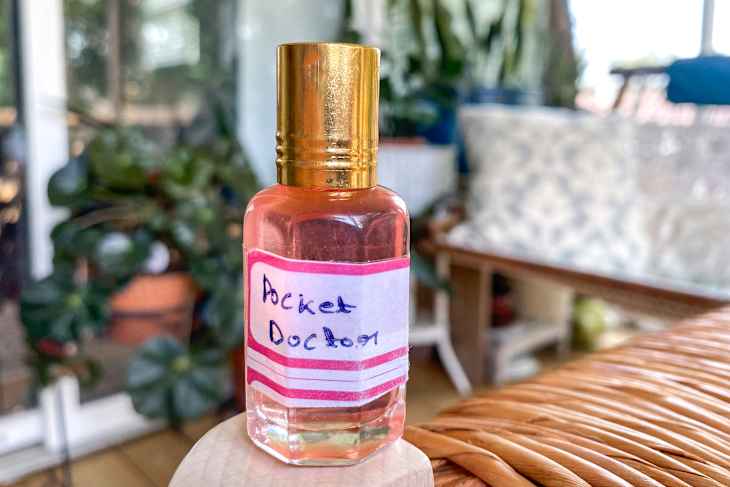
When I decided to go on a tour of India, I knew there would be many moments that would stick with me. I witnessed the centuries-old process of marble inlay, dined on traditional foods at an Indian family’s home, and welled up with emotion when I entered the grounds of the Taj Mahal. Those are all experiences I’ll never forget, but, surprisingly, a small bottle of oil I learned about on the trip had the most valuable, physical impact on me.
As I followed our tour guide through the twisting streets of Varanasi, he led us to a small shop selling heritage oil blends for topical use. When I entered, I was presented with a cup of tea and a guide to the oils lining the wall. When I scanned the list, the one nicknamed “Pocket Doctor” stood out to me in particular, as it promised to help with headaches, lessen coughing, and relieve muscle aches. I took a chance and purchased five roller-topped vials, intending to try one and give four away as souvenirs when I got home. Instead, I ended up keeping all five because of how incredible the pink-colored oil worked. The official name of the oil? Amritdhara.

What Is Ayurvedic Amritdhara Oil?
Amritdhara is an oil made of mint, camphor, ajowan, and clove. It has been used for centuries in Ayurvedic practices, which are millennia-old Indian wellness methods designed to balance mind, body, and spirit — including herbal remedies and medicinal oil recipes passed down for thousands of years.
“Ayurveda aims to keep the body in balance through personalized nutrition, lifestyle practices, and daily routines that support overall well-being,” says Mangala Rao-D’Sa, an Ayurvedic lifestyle practitioner and founder of the mindful skincare brand Chasma. As part of Ayurvedic practices, amritdhara oil has traditionally been used externally for sinus issues and headaches, and in small amounts internally to support digestion.

How I Use Amritdhara Oil
As an over 50-year-old woman in menopause, amritdhara oil has been helpful in loosening my back and hips when they get stiff. Topically, the treatment helps me manage muscle pain: I simply rub the oil into sore areas, much like applying a traditional pain gel. When I have a cold, I inhale the scent to open my sinuses. Additionally, I have found that it can alleviate inflammation and itching from pesky insect bites. Massaging it into my temples and forehead has staved off many a headache — but I use a tiny amount and avoid the eye area, as even the fumes can irritate.
I never know when discomfort will strike (or worse, when my back will lock up), so now this amritdhara oil goes with me everywhere. It doesn’t make the pain disappear completely, but, when combined with stretching, it offers more freedom of movement. And when I run out, I’ve found a backup option on Amazon, although I don’t think that will be any time soon because I kept all five bottles. It truly changed my life in a tangible way over the long term.

Other Uses for Amritdhara Oil
Amritdhara is also edible, and the tiny apothecary I purchased it at advised adding only a drop or two to a spoonful of sugar, a cup of tea, or a glass of water before ingesting to help avoid upsetting the stomach. The intent is to help with nausea and to ease bloating, gas, and diarrhea. Additionally, when experiencing a toothache, some find relief by adding a few drops of amritdhara to a cotton ball and pressing it against the gum. I haven’t found it necessary to try these methods (I’m more tempted to stick with my tried-and-true medicines when I have digestive issues).
Of course, before starting any supplementary health care regimen, it’s essential to talk to your doctor about proper treatment. Rao-D’Sa says you should “view the product as supportive care rather than a substitute for medical treatment.” As with any high-power oil, a little goes a long way. She also says that due to the “concentrated essential oils, always do a patch test, especially if you have sensitive skin, and never apply it in or around the eyes or on broken skin.”