
Does the $250 Hatch Sleep Clock Actually Track Your Z’s? Here’s My Honest Review
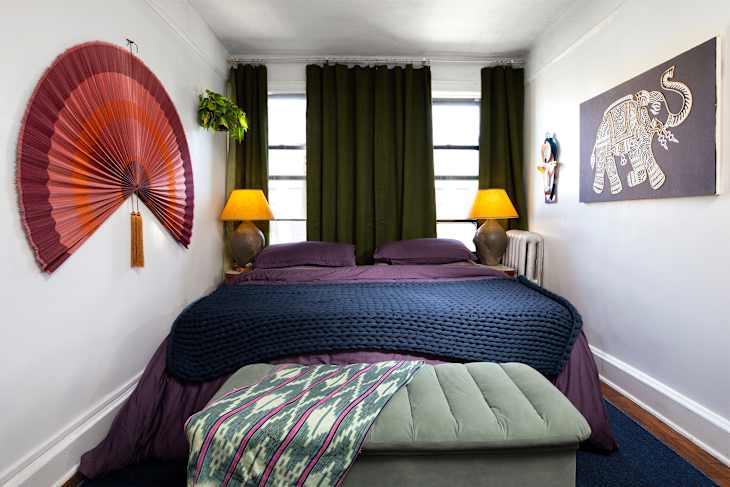
I’ve had a Hatch alarm clock for a few years. I am a big fan of the clock — I love that at 9:30 every night, it starts emitting calming sounds and lights to let me know it’s almost time for bed. I love that it keeps me off my phone first thing in the morning. I love the white noise options that I can change up every night, if I want to. It’s helped me sleep a bit better, and I appreciate it for that.
While I care about getting good-quality sleep in general, I’ve held off so far on investing in any intrusive wearable technology that tracks my sleep. I have an Apple Watch for fitness tracking, for example, but the battery life is pretty worn-down so I can’t wear it overnight. And in any case, there’s so much of my life that I’ve attempted to optimize: my fitness tracking, my steps, the amount of water I drink, screen time, etc. The last thing I want to do, really, is have my watch tell me that I had a bad night of sleep and deserve to be put in time out. That’s why I was so intrigued by Hatch’s newest offering, the Sleep Clock, a passive sleep monitor that tracks my sleep without providing a score, requiring me to wear anything on my wrist, or really changing anything I like about the old Restore.

What Is the Hatch Sleep Clock?
The Hatch Sleep Clock is the newest offering from Hatch. It has all the features of the Restore, which means that it still has the “routine” function, where you set up a stack of an approximate bedtime, a bedtime cue, meditative sounds and podcasts, the white noise of your choice, and your rise time and morning alarm. But now, it’s also a passive, contactless sleep tracker that tracks your sleep quality and stages and gives you a report every morning about how you slept the night before.
Like previous Hatch clocks, you need a Hatch subscription to access the benefits of this clock, and if you truly don’t want to use your phone anywhere near your bed, all you have to do is press the buttons on the top to turn your calming sounds up or down, start your evening routine, or adjust your morning alarm.

How the Hatch Sleep Clock Works
Setting up the Hatch Sleep Clock is simple. You plug in your clock, set up the app, and start answering questions about your bedtime routine and your life in bed. The app will ask what size bed you have, whether you share the bed with a partner or a dog, and what time you typically go to bed and wake up. From there, you pick out your evening routine (I kept the one I’ve had for a few years now) and when you’re ready to go to bed, you simply hit the top button on the clock. The next morning, you can turn off your alarm by pressing the top of the clock again or by opening the Hatch app and letting it know that you’re awake for the day. The Hatch app then generates an easy-to-read report of how you slept the night before. It tracks the time you got in bed and when you went to sleep, your “awake” time, your REM time, your deep and core sleep, and when you got up for the day. Then it gives you notes on how to better show up to sleep the next night.
That’s about it. It’s really simple. It doesn’t make you feel bad if you sleep like crap one night or don’t get enough of it, and it doesn’t congratulate you for a great night’s sleep, either. It just tells you the kind of sleep you got, while providing all of the other perks of the Hatch line, and you move on with your day. I will note that it’s not 100% perfect all of the time — it has occasionally mistaken my husband or my dog getting in and out of bed earlier or later as my own tossing and turning — but I can provide feedback every morning if something looks wrong in my sleep report and adjust it manually, too. It’ll even ask me if I napped if someone (usually my dog) is in bed for the middle of the day. It gets to know me better the more I use it, basically, and provides suggestions to help me get more sleep, should I want to follow them. Most importantly to me, the clock does all of this without a camera or a microphone built in. I am supremely not interested in having either of those things near me when I’m asleep and in such a vulnerable state. Instead, it uses a low-power sensor which detects your breathing patterns and movement throughout the night, and that’s how it determines your sleep stage.

What the Hatch Sleep Clock Taught Me About My Own Sleep Quality
I have long bragged that I was the type of person who got eight to nine hours of sleep a night. Imagine my surprise, then, when I learned that I was actually clocking more like seven to 7.5 hours, instead. I’ve also learned a lot more about how certain activities before bed (going out to dinner with friends, going to a bar on a Friday night, lying down at 8 p.m. and reading for three hours) change the quality of my sleep overall, but not in a way that makes me feel judged for when my sleep is worse or better. Ultimately, the clock’s UI is pretty understanding of the fact that it’s normal to have an active social life — and just provides tips or feedback when your sleep patterns don’t align with your overall sleep plan.
If you’re wondering how to improve your sleep quality, or you simply want a clock that does it all (white noise, bedtime routine, passive sleep tracking, etc.) then this clock really does do it, without demanding that you wake up to your phone alarm ever again. Plus, it’s taught me something new about myself: Apparently I really only need about 7-ish hours of sleep a night. So, it’s a win-win-win for me.
Buy: Hatch Sleep Clock, $249.99