
Stop Using 91% Isopropyl Alcohol — Try This Better Alternative Instead
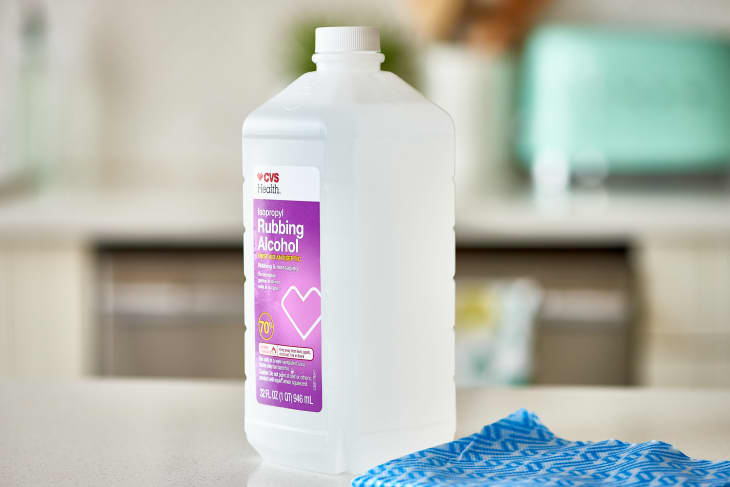
When you’re worried about getting sick, it’s natural to bring out the big guns, like bleach or rubbing alcohol. Both of these products are effective at disinfecting your surfaces, but did you know there’s a counter-intuitive rule of thumb to follow when cleaning with alcohol? It has to do with the percentage of alcohol by volume.
You would think alcohol solutions with a higher percentage would be more powerful at killing germs on high-touch items like phones and doorknobs, right? A lower percent alcohol means there’s more water diluting the mix in the bottle. But according to microbiology, 70% alcohol is probably more effective than 91% for disinfecting—depending on what kind of germs you’re trying to kill.
Why Lower-Percentage Alcohol Might Be Better Against Germs
According to Dr. Elizabeth Scott, professor emeritus of microbiology at Simmons Center for Hygiene and Health in Home and Community at Simmons University in Boston, higher-percentage alcohols are more concentrated. That means lower percentages, like 70%, have more water in them. Turns out, the water is actually an important ingredient here.
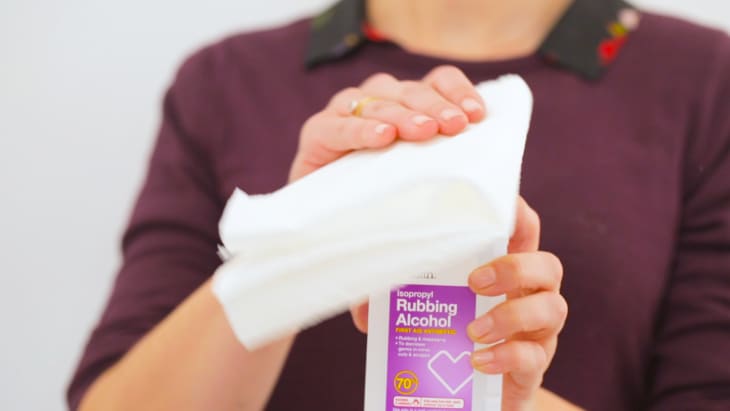
A 90% or 91% alcohol solution is too powerful in some cases: It fries the outside of the cell before it can get into the inside and kill the actual germ. Meanwhile, 70% alcohol is just the right proportion of water and alcohol to zap the entire cell. “70% alcohol has some water in it that allows it to cross a cell membrane, to really get into the bacteria to kill them,” Scott says.
Interestingly, Scott explains this rule of thumb only applies when you’re attempting to fend off bacteria. Alcohol’s effectiveness against viruses depends on the unique virus.
What to Know About Disinfecting with Alcohol
Viruses with an envelope structure — including the flu virus, the common cold, HIV, and SARS-CoV-2 — can be deactivated by alcohol solutions of 60% or more, like hand sanitizer, while others like norovirus won’t be effectively targeted by any concentration of alcohol. (Hand-washing helps to physically remove every type of virus and bacteria from your hands and is an important part of any hygiene routine.)
Practically, how does this rule of thumb apply to home hygiene? If you’re cutting raw chicken on the counter and want to disinfect the surface to prevent cross-contamination of E. coli and salmonella bacteria, you’d want to opt for 70% alcohol. But if you’re trying to disinfect a surface that might have viruses lingering on it — for example, if someone in your house has the flu — any dilution of alcohol will work as long as it’s above the recommended 60%.
In any case, it’s important to focus on hygiene practices like thorough hand washing (20 seconds of scrubbing every time!) and targeted hygiene (regularly disinfecting high-traffic hand-contact areas in your home, especially if someone sick has touched them).