
Match This One Detail to Make Open-Concept Homes Flow Better
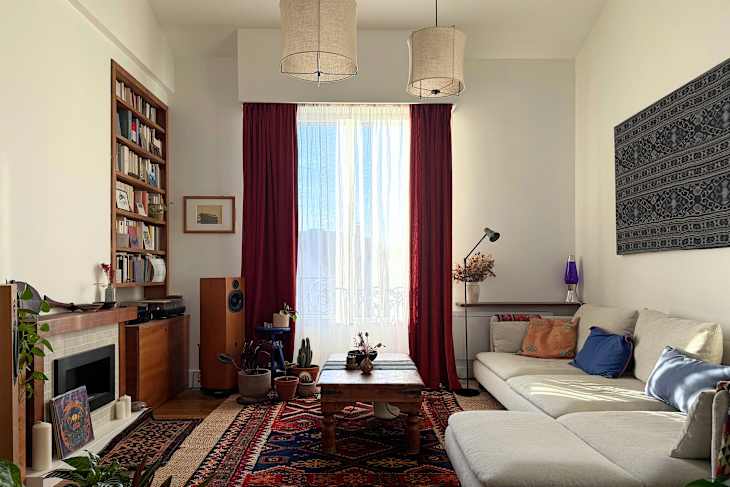
A long time ago, something that my friend Meghan (who is a professional interior designer) mentioned in passing really stuck with me — and I haven’t been able to let it go. While a mutual friend was decorating the first home they purchased, she said it’s important for rooms to be in conversation with one another.
“I’ve always felt that each room in a home should tell its own story, but, ultimately, they should all be part of the same book,” says interior designer Meghan Thigpen of Cheatham, Fletcher, Scott — Architects + Designers. “It’s not about making every room look the same, but, instead, creating continuity so that each room speaks to one another and, overall, the home feels thoughtfully designed.” Recently I stumbled upon an example that perfectly encapsulates this idea, and it’s in designer Cassandre Brana’s apartment in France.

Matching Wood Tones Help the Open Layout Flow Better
“We both love to cook, and so a very functional kitchen was indispensable,” Cassandre said during the House Tour. “Because it was going to be in the living room, I wanted it to look seamless — continuous with the rest of the room. We achieved that by making the cabinet fronts out of wood in the same tone as the bookshelves.”
The couple DIYed the wood panels in the kitchen to mirror the bookshelves in the living room, creating visual continuity between the two spaces. What Cassandre loves most about the kitchen panels is that the wood grain continues seamlessly between each door. “They sometimes look like waves or even a sunset,” she said during the House Tour. “They’re mesmerizing.”

Having Matching Wood Tones Helps Open-Concept Spaces Look Connected
In recent years, open-concept layouts have begun to lose popularity. Instead, designers, homeowners, and renters (especially those who live in studio apartments) alike have preferred to create distinct zones within their homes. However, if you’re renting or can’t change your home’s physical layout, subtle details — like matching wood tones — can help spaces flow better visually while still functioning differently from one another.
Beyond using matching wood tones, Meghan explains that you can do this in other ways. She says, for instance, if you have a traditional home but want to do a bold bathroom tile, then you can “incorporate classic details like a tile chair rail or decorative tile molding to maintain that traditional feel.” These small, seemingly subtle details make a huge difference to a home’s overall aesthetic and are a simple way to improve the connection from room to room.