
This Maximalist ’90s Pattern Is Back — And How It’s Made Leaves Every Piece Unique
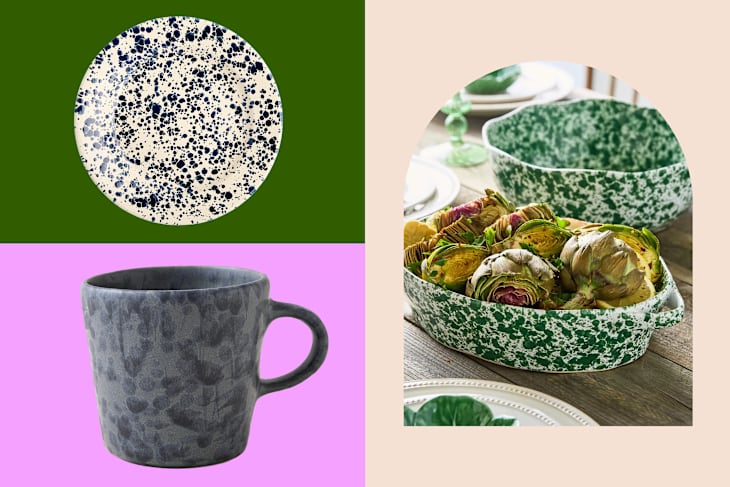
Whether it’s buzzy tortoiseshell or a simple speckled design, there’s just something so homey about a splatter motif that makes a table feel relaxed. It could be something you saw in your grandma’s house, a beloved platter at a summer family barbecue, or the kind of dishware your family actually used every night versus precious china in a hutch. This nostalgic quality is a big reason why splatterware is popping up everywhere, from dinnerware collections to trendy accessories in chic dining rooms — and at every price point, in high-end boutiques and budget-friendly chains. The playful, imperfect motif feels decidedly vintage (it was all the rage in the ’90s, after all!) but also beautifully maximalist for a modern home today.
Even modern splatterware pieces carry scattered dots and a signature hand-finished look that exudes a healthy dose of old-school charm. At a time when designers and homeowners are leaning into aesthetics that play up slow decorating — spaces that feel collected, personal, and less polished — the rise of splatterware fits right in. Charlotte Rice, founder and creative director of San Diego-based Rice Design & Build, says its appeal is rooted in nostalgia. “Splatterware inherently feels nostalgic because it’s casual, imperfect, and handmade,” she says, praising its versatility. “Depending on the colors and how it’s styled, splatterware can feel old-world and collected, or playful and retro, which is part of what makes it so timeless.” If you’re wondering how to bring that feeling into your own home, there are plenty of ways to cop this trend — regardless of the style you’ve already embraced.
We’re not gatekeeping — our Home Director covers the trendiest launches exclusively in our newsletter, Design Defined. Read it (for free!) on Substack now!

What Exactly Is Splatterware, and Why Does It Feel So Nostalgic?
As you may have guessed from the name, splatterware is characterized by a speckled motif (a “splattered” look!) created by applying paint or glaze over a solid base. It’s meant to look truly random, as if the maker deliberately flung color from a brush directly at the piece — giving splatterware its signature irregular, handmade look. Unlike more precise patterns, this style embraces unpredictability, and that’s a big part of its charm. This charming style is currently sweeping everything from dinner plates and bowls to glassware, servingware, and even tabletop accessories like candlesticks, often in cheeky patterns and eye-popping hues. “Bright colors, playful splatter patterns, and multicolored pieces have a fun, slightly nostalgic ’90s feel,” Rice says, adding that she often works the design into Mediterranean-inspired spaces.
While some modern pieces are dressed to look “splattered,” traditional enamel splatterware uses a metal base coated in enamel, which makes it super-durable. “Splatterware’s nostalgia comes from the fact that enamelware has true utilitarian roots, evoking wartime mess kits and camping equipment; hard-wearing, no-nonsense options made to last,” explains Katie Phillips, principal designer and founder of Fox & Philips, a Philadelphia-based residential interior design firm. “Splatterware doesn’t belong to just one design era; the pattern and color take an otherwise serious material and give it an entirely different personality … it feels much more postmodern than enamelware’s earlier industrial roots might suggest.”


Why Splatter Patterns Are More Versatile Than You’d Think
Another reason it’s more popular than ever? Splatterware is a true design chameleon — this pattern can lean rustic or vintage, sure, but it also blends masterfully into a wide array of interiors. A cobalt or green speckled bowl, for example, can look right at home alongside honed marble or quartzite and give a countertop a collected feel. More traditional enamel splatterware can easily skew cottagecore or country shabby chic when paired with rustic wood and other natural materials. “Splatterware can absolutely be incorporated into so many different decorating styles,” says Rice, who points to blue, green, brown, and terracotta pieces as particularly well-suited to old European villas, farmhouse tables, stone floors, and rustic cabinetry.
Ultimately, the color you choose can determine how splatterware reads in your space. Splatterware doesn’t have to belong to a specific era or style; it can bring a pop of eclecticism into any home regardless of nearby paint colors or the style of furniture you already own, Phillips explains. “It can serve as a pop of color against a more neutral palette, bring visual interest into a color-drenched kitchen, or feel right at home in a dining room that already embraces pattern,” she says. “If you choose a splatter that ties to something else in the space, it will read as intentional in almost any style.”


How to Incorporate Splatterware Pieces into Any Space Like a Pro
While splatterware definitely can lean maximalist, both design pros agree: Less is more. Rather than buying an entire set outright, Rice recommends starting with “a few pieces you love” and mixing them with things you already own or will collect over time (yes, clashing colors are fine!). “A splatter serving bowl or pitcher mixed with simple white dishes, vintage glassware, striped linens and an old silver serving spoon feels much more interesting and effortless,” she says. “The mix is what gives splatterware that nostalgic, collected quality in the first place.”
Don’t worry too much about the color story your splatterware tells, as attempting to “match” these pieces to the rest of the hues in a dining room, living room, or kitchen would be a mistake. “Instead of trying to match everything back to the splatterware, pull out one of its colors and let the rest evolve from there,” Rice recommends. “Cobalt looks beautiful with warm ivory, deep brown, olive, ochre, and natural wood, while green pairs really well with cream, burgundy, dusty blue, and terracotta.” She also suggests choosing “slightly muddier, imperfect colors” for a more collected look.

The One Splatterware Styling Tip You Shouldn’t Ignore
If you’re thinking about adding splatterware into your rotation at home, do it fully — without editing your servingware or accessories already dressed in different patterns. Introducing more patterns and textures on the same table as your splatterware pieces is what designers are doing intentionally, after all. Phillips loves splatterware “when it’s mixed with solid colors, linear patterns, and natural materials,” and advocates for everything from coordinating vintage enamelware to trendier rattan placemats.
“If you want to play with patterns, geometric linens or ribbed glassware can create some structure against the randomness of the splatter,” she advises. Just avoid layering too many busy patterns of the same scale. And the one thing to never forget? “The goal is to make everything feel like a fun collection that you’ve built over time, not an overly curated museum.”