
I Learned the Hidden Meaning of Each Birth Flower, and It’s Transformed How I Gift
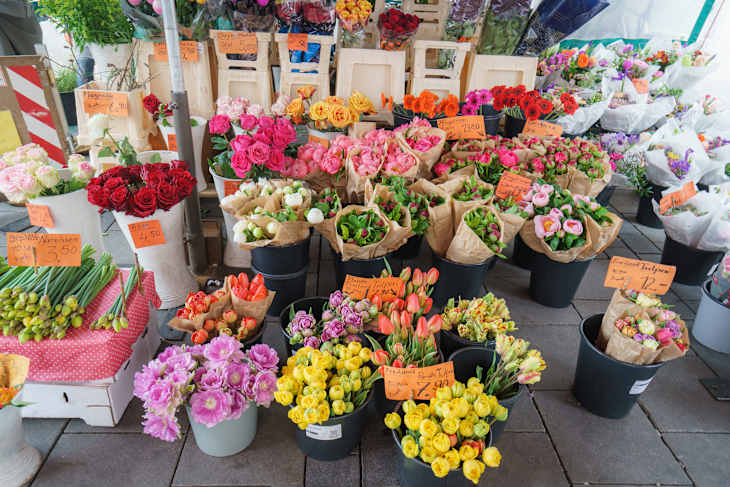
There’s nothing like giving someone (or being given!) a gorgeous and bright bouquet of flowers (and trying to make them last longer). A bouquet of flowers can serve as a gift for many different reasons — maybe it’s a friend’s birthday or Mother’s Day, or you are sending flowers after someone you love has suffered a devastating loss. While it’s easy to signify why you are sending the flowers, did you know that flowers have specific meanings as well? I started to dig into this when I was looking at a list of birth flowers for all months, and I made some interesting discoveries.
Curiosity led me to a flower expert, Morgan Westerberg-Jackson, an Oregon-based luxury wedding flower designer and floral storyteller. She started her company, Blomstra, in 2018 — and her mission as a florist is to have a “heavy focus on the language of flowers.”
“Each wedding that I do, I get to know the couple as well as possible, and then I choose flowers that have meanings that fit their stories and their personalities,” she says. “It helps keep everything from looking too similar, especially when [working with] trendy color palettes.”
She’s deeply steeped in the language of flowers — so there was no better person to walk me through the language of each birth flower — and I learned a lot along the way. I’m determined to make my next bouquet I buy for a friend more intentional than ever.
What is the language of flowers?
According to Westerberg-Jackson, the language of flowers — what each flower means and signifies — “really took off in the Victorian era. But even preceding that, humans have always assigned meaning and symbolism to lots of things, but especially to plants and animals,” she says. “In the plant world, [many] different botanical elements have been assigned different meanings [over the course of thousands of years] and those meanings shift based on the culture and the legends having to do with that culture.”
So it’s important to note that when Westerberg-Jackson is talking about flower meanings, by and large, she’s referencing the Western meanings because it’s most relevant for most of her clients. But she always takes into account the cultural background — and therefore the flower definitions of that culture — of the people she’s working for.
For this article I’ll be focused on the Victorian-era flower meanings, but there are so many different definitions that you should look into. Additionally, when it comes to birth months, some birth months have more than one flower!
Each Birth Month Flower and Their Meaning, Explained
Below, check out each birth month flower and their meanings.
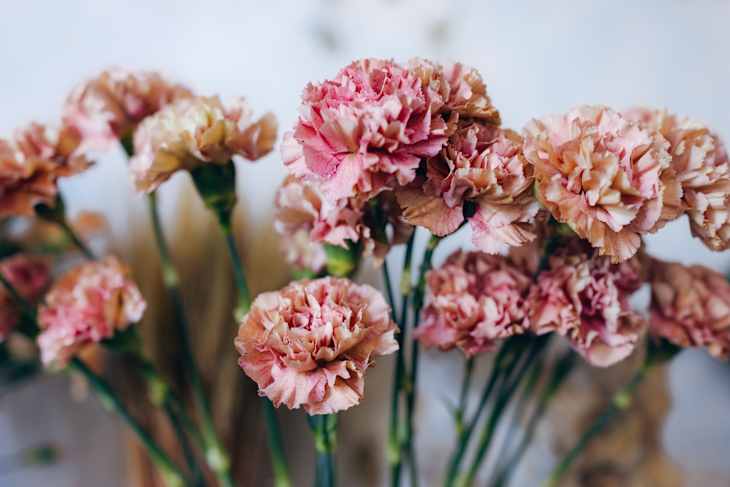
January: Carnation
“Carnations have a really interesting history,” Westerberg-Jackson shares. That’s because there’s a legend that the Virgin Mary, as Christ was being carried to the cross, was crying, and where she cried carnations sprung up. (Westerberg-Jackson notes that there are several flowers that have this same origin story.)
Carnations have different color meanings as well. A red carnation, she tells me, is more “love and admiration.” White has to do with “purity” (like all white flowers). Purple, for example, has to do with “being fickle or capricious.” Pink is common for “a mother’s love.”
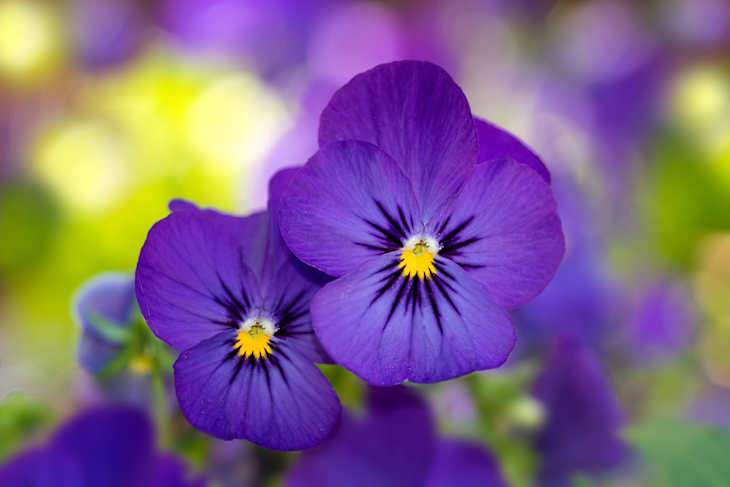
February: Violets
“There are different birth flowers on different calendars for different parts of the year,” Westerberg-Jackson says, but violets are most commonly associated with February.
“Most flowers, in some way, have to do with love,” she notes. But they are more defined by an “intense devotion,” and a “more fanciful and romantic thought process.” A hopeless romantic type of person might be more inclined towards violets, she says.
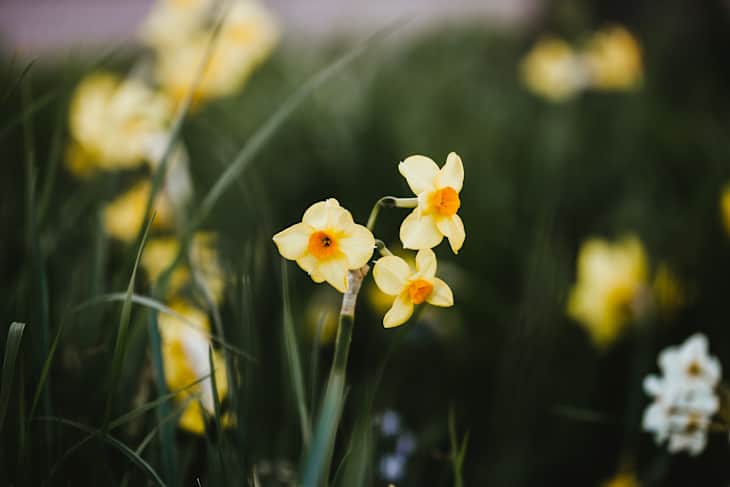
March: Daffodils
Although my first thought was that daffodils are a very friendly flower, they actually have a more complicated origin story and meaning. “The myth behind [daffodils], because their real name is Narcissus, had to do with self-obsession.” The daffodil, Westerberg-Jackson says, has taken on a meaning now that’s more about “resilience and maybe even unrequited love.” They also have to do with “hope,” “new beginnings,” and are seen as a “cheerful, happy, and positive flower.”
The unrequited part of it all would come from the myth of Narcissus — that Narcissus fell in love with his own reflection and could never be with himself romantically, because his reflection couldn’t love him back.
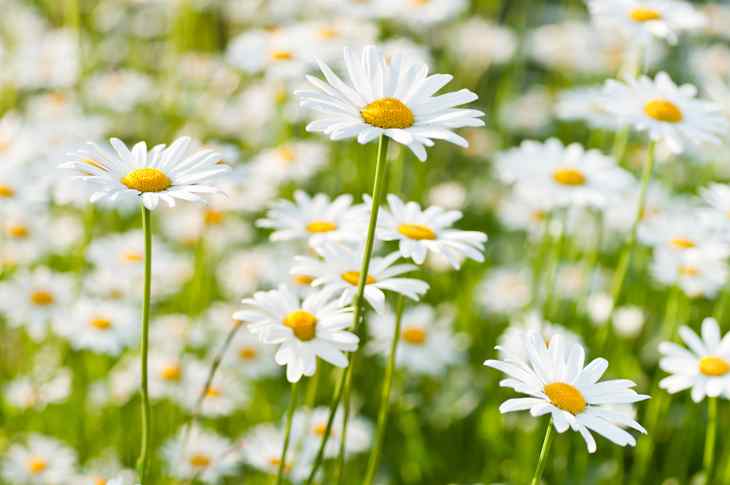
April: Daisies
Daisies mean “happiness, but almost like a [childlike] happiness and optimism,” Westerberg-Jackson says. She says they’re an optimistic flower — and for that reason she puts them in wedding bouquets a lot because they connote a sense of excitement in moving forward.
She notes that they have a feeling of being a “mother” flower as well, and are often given to new moms.
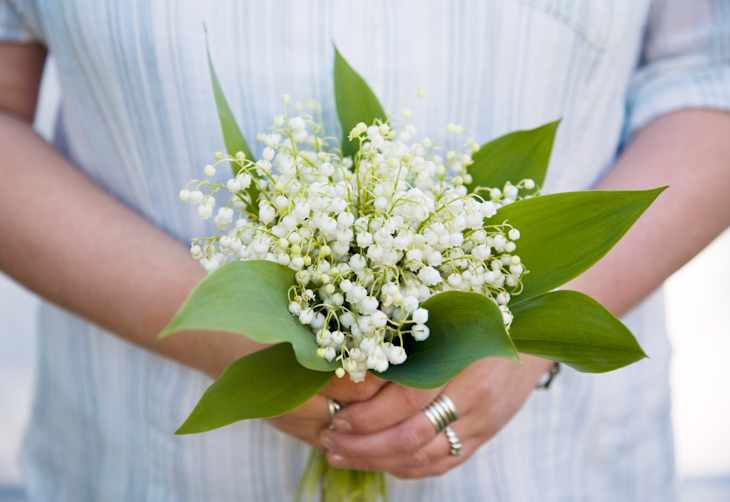
May: Lily of the Valley
“That’s my very favorite flower in the whole world,” Westerberg-Jackson tells me. These flowers mean “a return to happiness” and, like the carnation, have an association with the Virgin Mary, and are also known as “Our Lady’s Tears” and that fairies were said to live in the bells. They also have a sense of purity and innocence.
In the past, she says, people would carry lily of the valley because they believed these flowers brought them luck and they wanted to bring happiness back into their lives. “Because they are a spring flower, they really only come up at the beginning of spring,” she says.
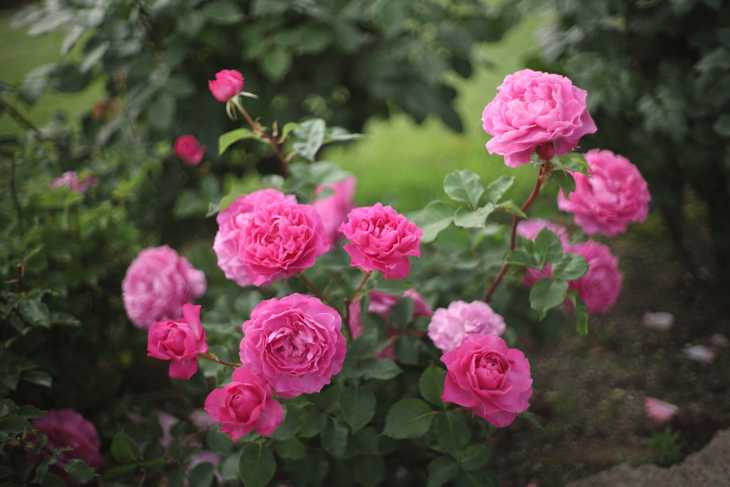
June: Roses
Roses are, of course, most known for meaning “love, which is why you see them in everything,” Westerberg-Jackson shares. But like carnations, these flowers mean slightly different things based on the color. Red roses are, of course, a flower that connotes romantic love. Pink has to do with grace and healing, so they’re often used in hospital arrangements. Orange roses have to do with a deep fascination — they mean something more along the lines of “you fascinate me.” Purple and lavender roses are a bit more “you enchant me.”
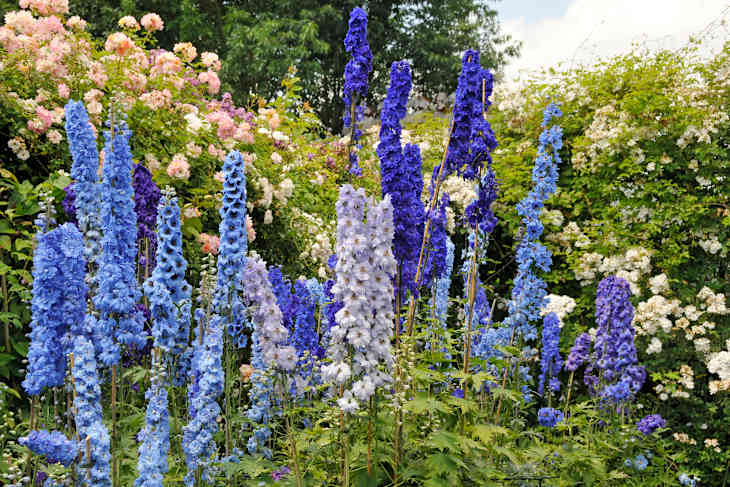
July: Delphinium or Water Lilies
“A lot of people will say July is water lilies,” Westerberg-Jackson says, but when she’s doing flowers, she tends to focus on delphinium. “Those are another version for July.”
She says there’s nothing wrong with a water lily, which means “really bonded love,” but it’s not exactly an arrangement that you can give someone. On the other hand, you can give them some delphiniums.
“They have the same meaning, actually, [of] bonded love and affection with a lighthearted joy,” and also a “peaceful inner joy.”
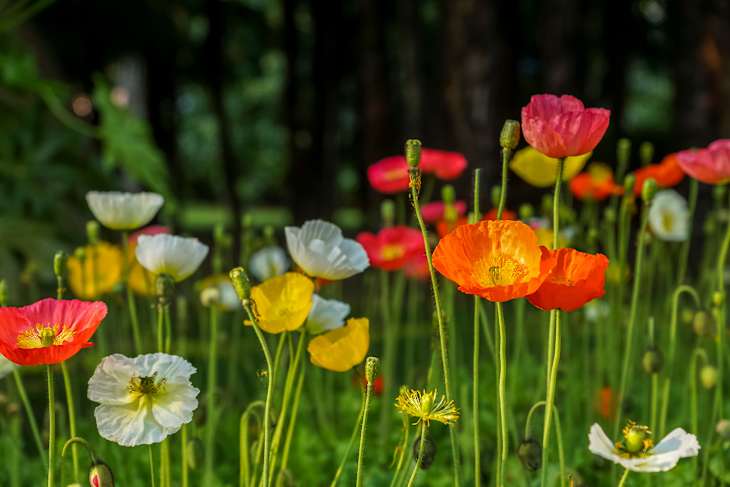
August: Poppy or Gladiolus
August is another month where calendars can differ, and for this month you can either give your loved one gladiolus flowers or poppy flowers. “Gladiolus are really good for sincerity and remembrance,” she says, but poppy connotes the same thing. “The meanings are so similar, which is why sometimes you end up with two on the same calendar.”
Poppies also have a sense of “a big imagination.”
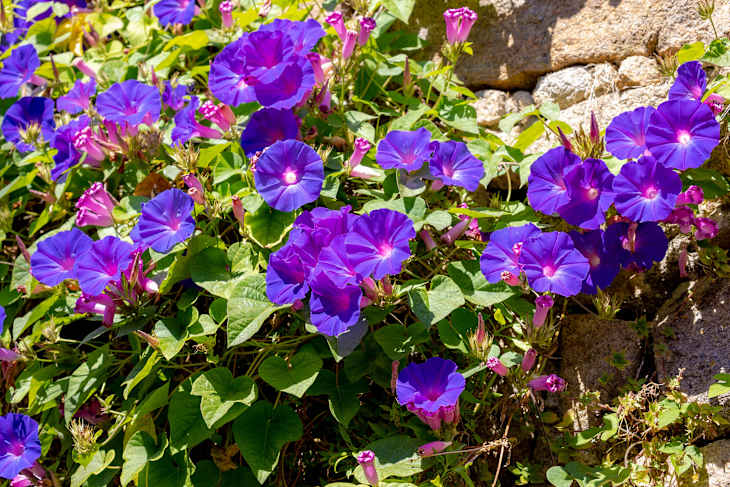
September: Morning Glory or Aster
In September, look to morning glories or aster. Aster “have a big connotation of patience or wisdom” and their meaning comes from the Greek word for “star.” They were historically used to ward off evil and demons, she shares, and are usually associated with wise people.
Morning glories, on the other hand, “because they close up at night and reopen, have a meaning of rebirth and starting over.” These connote “the beauty of a new beginning, a new day, and living in the moment.”
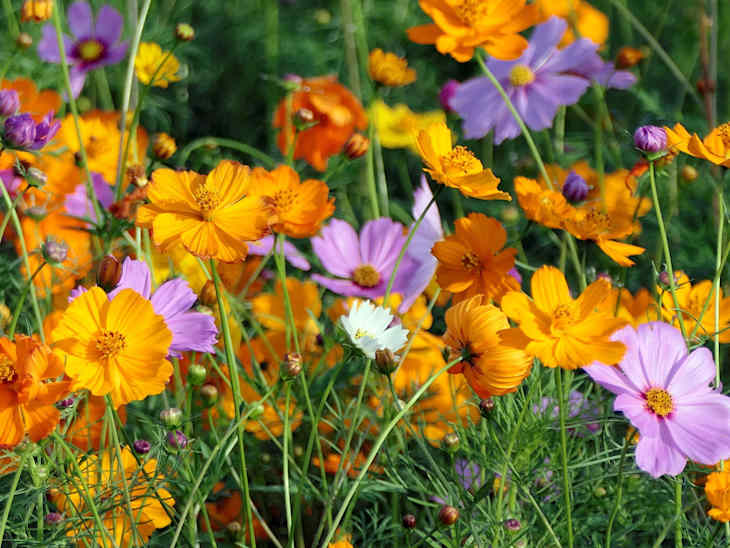
October: Cosmos or Marigold
Marigolds mean “creativity,” and the bright orange of marigolds connotes “strength and passion.” They’re often used in celebrations like graduation bouquets because “they are a wish for success,” she says.
Cosmos, the other October flower, is another flower that comes from a Greek word and means “world,” “order,” or “a harmonious arrangement.”
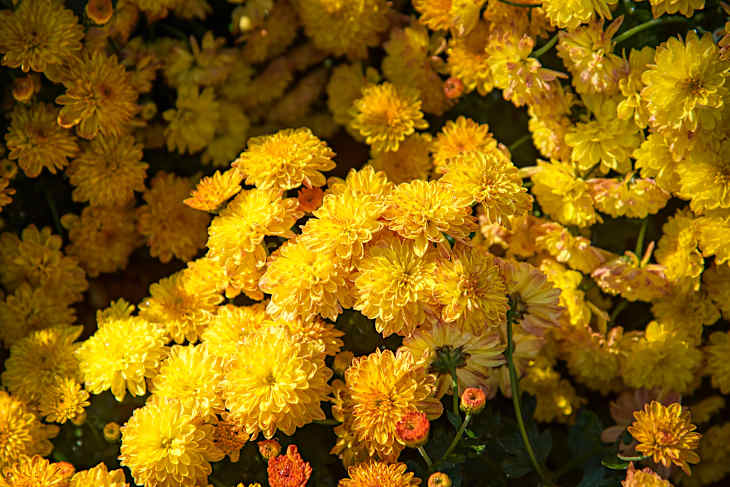
November: Chrysanthemum or Peonies
Chrysanthemums are a flower that have a totally different meaning depending on your culture. In fact, they’re used almost exclusively in far-Eastern culture as a funeral flower.
In Western culture, “they have to do with longevity, loyalty, and a deep friendship.” She thinks it’s because they last so long — “mums really take quite a while to die off.” They have a resilient nature that actually lends itself to the reason that they’re used as a funeral flower across the world, she posits.
Sometimes, Westerberg-Jackson shares, peonies can be seen as a secondary flower for November, but they mean “a deep honor.”
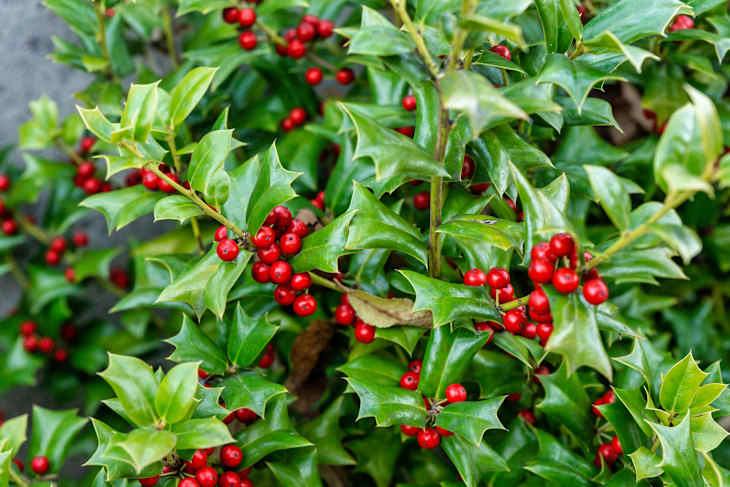
December: Holly or White Narcissus
Holly is the main flower for December, but Westerberg-Jackson notes that some cultures will also put white narcissus in as the December flower. “Hollies traditionally were [for] protection and good luck,” she says. They symbolize a sense of “safety, security, and home.” They were used to ward off evil spirits and people would bring them inside to decorate their home in the dark month of December.
“They’re resilient as well, because they withstand that cold, harsh temperature.”