
This Is the #1 Trick Designers Use to Make Vintage Pieces Feel Fresh
Earlier this week, Apartment Therapy released its annual design forecast report: the New/Next List. From highlighting the latest “it” color and hottest vintage finds, to coining new terms like “Soft Architecture” and “Shine-maxxing,” we covered it all. Plus, for the first time ever, we also profiled five of the year’s most innovative interior designers, who shared their personal style philosophies and decorating tips in exclusive interviews. It’s basically the ultimate mid-summer design crash course you didn’t know you needed!
For the latest episode of Apartment Therapy’s podcast series, Design Defined, Executive Home Director Danielle Blundell and Senior Home Editor Zee Krstic talked about all things New/Next, too. They’re breaking down the trends with expert eyes and sharing some of their own styling takeaways. Considering a few of the trends are vintage-based, talk also turned to the million-dollar design question: How do you keep a space feeling contemporary when using vintage pieces? It’s easier than you’d think — the key is to incorporate a few strategic modern elements. Danielle and Zee broke down a few easy ways to do just that.

This Year’s Hottest Trends Are Full of Vintage Charm
It’s 2026, and vintage has never been hotter. Many designers have even gone so far as to say that no room is complete without at least one vintage item (aka “the patina rule”). So it makes sense that several of the trends chosen for the New/Next List center around vintage or antique pieces. In the episode, Danielle and Zee addressed two of our favorite new vintage-inspired aesthetics: Modern Folklore and Eclectorian design.
The Modern Folklore aesthetic leans into old-school Americana and folk art influences, but with a fresh new twist. It’s quaint and lived-in (think: gingham fabrics, woven baskets, braided rugs, and bobbin-style furniture). Eclectorian, on the other hand, has a bit more flair. Equal parts Victorian and eclectic, this unique look is defined by bold patterns and colors — plus, period-accurate architecture paired with charming, contemporary accents. The result is a uniquely layered look with a little something for everyone.

How Designers Balance Vintage and Contemporary Elements in One Space
Both of these styles are defined not just by their vintage elements but also by their contemporary counterbalances. There’s a fine line between a touch of vintage charm and antiques overload. A space with too many vintage pieces will start to look more like a museum than a home. If that’s your thing, then go for it! But if you’re aiming for a more modern mix, you’re in luck: There are two super-simple, designer-approved ways to get the look.
Pair Old-Fashioned Portraits with Bright, Bold Paint Colors
“So how to keep things fresh?” asked Danielle. She suggests sticking to smaller, strategic “pops and touches” of vintage to keep things feeling light. “An example that comes to mind for me is maybe having a funky 18th-century portrait and pairing that with a bold colored wall,” she explains. “So it’s just like a mish-mash.” Pairing antique artwork with a playful pop of color is a surefire way to keep your home feeling more sophisticated than stuffy. Designer Rodney Alday mastered this trick in his London home, so check that out for an example.

Use Contemporary Light Fixtures to Offset Vintage Architecture
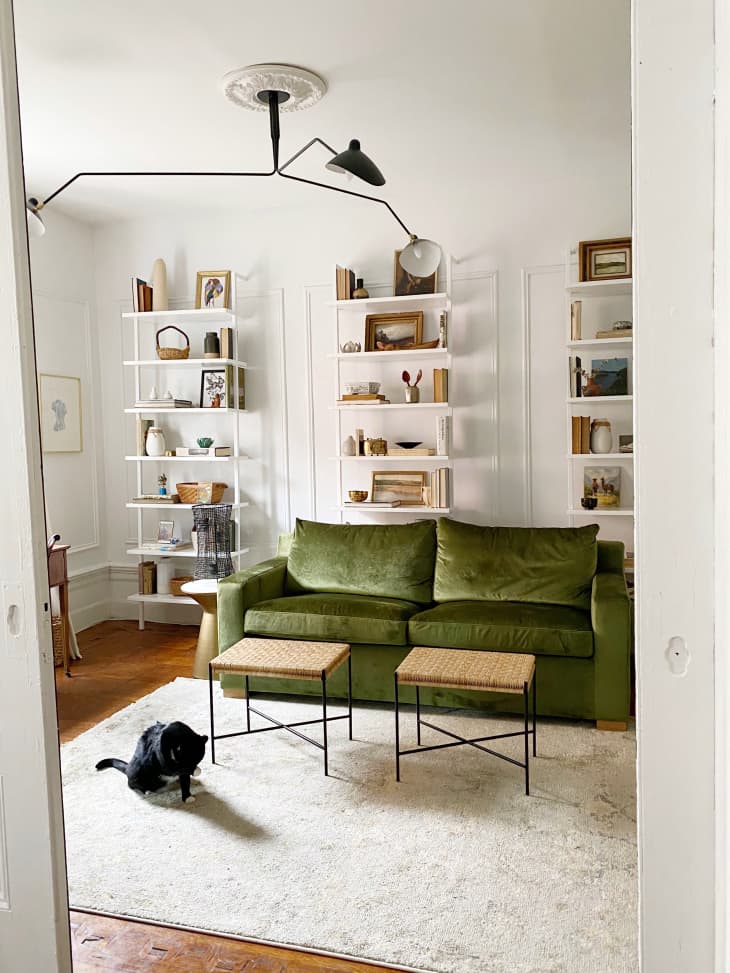
Another designer-favorite trick is to install more contemporary or mid-century modern light fixtures in spaces with older architectural details. Victorian homes, for example, are known for their dark woods and ornate, hand-crafted features, Danielle explains. “The Victorian era was definitely known for being a little bit more uptight, [but] that’s not what design is anymore,” she says.
By offsetting heavier, period-era elements or features with sleek, simple and modern fixtures (as opposed to the ornate chandeliers that were common at the time), the authentic architectural details that make a historic home so special will shine even brighter. You also don’t have to worry about rewiring or repairing new lighting, which can be a money- and time-saver.
Play Around with Mixing and Matching Eras Like a Designer
Whether it’s a quirky vintage “Pizza Hut” light from Goodwill or a precious Biedermeier antique, there’s nothing quite like the rush of finding a truly unique vintage piece. And nothing packs a greater punch of personality for your space. It’s never been easier to incorporate vintage and antique elements into your style, either: In today’s design world, “things are just so much more relaxed,” Danielle explained.
So if you want to style your vintage pieces like a designer, the key is to mix and match. “Take what you want from one period, put it next to something that doesn’t make a whole lot of sense … but then somehow, suddenly, it does,” said Danielle. Check out the rest of this episode of Design Defined for even more insider tips and tricks.
Design Defined
Never miss the style inspo and recommendations you crave with Design Defined. Follow along each week as our Home Director Danielle shares the best style advice, latest trends, and popular decor finds you just can't miss.