
The Best Cooling Sheets for Hot Sleepers
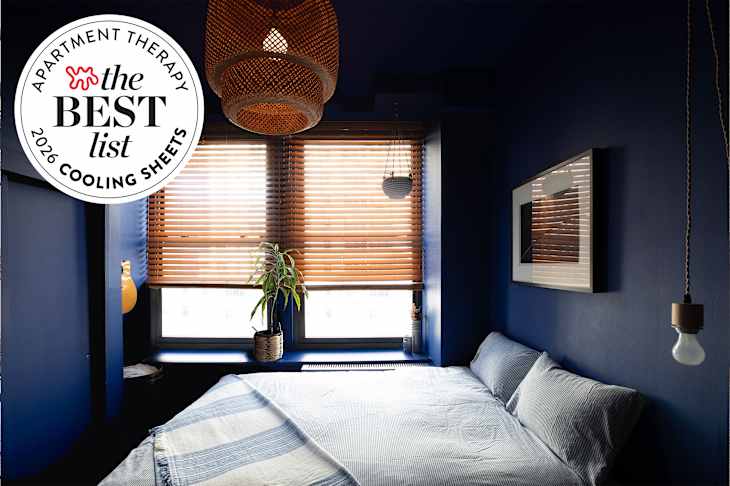
When it comes to keeping cool at night, my household does not play. My husband is a very hot sleeper, the kind who runs the air conditioning nightly nearly year-round. As for me, I’m a postmenopausal woman who still gets rudely awakened at night with hot flashes for no reason at all (OK, maybe because I had a glass of red at book club).
We’ve been using the cheap, no-brand bamboo sheets my husband buys for a few years, but we’re due for an upgrade. I don’t love the texture, plus when our dog was a puppy he chewed the corners off all of our pillow cases. So you’d better believe I volunteered fast when I heard Apartment Therapy needed someone to test cooling sheets. We spent weeks trying out about a dozen sets and doing loads of laundry to narrow the list to our favorites.
Best Overall: Parachute Linen Sheet Set
- Impressively breathable weave kept us both cool all night
- Soft from the start
- Matte finish and beautiful texture
- Sustainable manufacturing and minimal chemical processing
- Easy care
Best Cooling Sheets for Hot Sleepers at a Glance

What Causes Overheating at Night (And How Cooling Sheets Help)
Overheating at night can be caused by any number of factors, from fluctuating hormones (hello, perimenopause) to heavy bedding and lack of airflow in the room. Some medical conditions can affect your body temperature when you sleep, including hyperthyroidism and diabetes. People with a higher metabolism may feel warmer while sleeping. And high-carb foods and alcohol are believed to be linked to hotter sleep, although we don’t have a lot of reliable research to back that up.
What We Looked for in Cooling Sheets
First things first: Unless you store yours in the freezer, sheets do not have the power to actively lower your body temperature. When we say “cooling,” what we mean is sheets made with breathable fibers that allow heat from your body to flow away from you. Some textiles can also help remove moisture from sweating.
Cooling Materials
- Cotton percale: This is a specific cotton weave that gives fabric a cool, crisp, matte finish. Most people find its one-over-one-under weave the most breathable option.
- Cotton sateen: This is another cotton weave with a soft, silky feel and slight sheen. While less breathable than percale, sateen’s smoothness can read as cooler to some people.
- Lyocell: For an eco-friendly fabric, consider lyocell (which you may sometimes see as the brand name TENCEL), a material made from wood cellulose or pulp, typically from trees like bamboo or eucalyptus. It’s a super soft yet super strong fiber that is 50% more absorbent than cotton, thus great for moisture-wicking and especially well-suited for hot sleepers.
- Viscose: Very similar to lyocell, viscose is also made from plants like bamboo and eucalyptus. But it uses a chemical process that results in byproducts like carbon disulfide, so it’s considered less environmentally friendly than lyocell. And the fibers tend to be more delicate when wet, so these sheets require more careful handling and may not last as long as tencel.
- Linen: This textile is cultivated from flax plants rather than cotton. The threads are thicker and more loosely woven, so linen sheets tend to feel heavier (especially at first) and more textured than cotton. Linen gets softer the more you use it and wash it, and if cared for well, its quality lasts for years and years.
Materials to Avoid
- Microfiber: A super-thin, synthetic fiber usually made from polyester or nylon, microfiber is a versatile material that’s way less expensive than cotton or linen. Although microfiber sheets are lightweight, they’re not very breathable and tend to trap body heat, resulting in less-than-comfortable sleep conditions for hot sleepers.
- Jersey: This stretchy fabric is tightly knit and tends to retain heat. While it’s possible to find all-cotton jersey sheets, these days most jersey is made from cotton blended with synthetic fibers, which trap heat more than all-natural materials.
Thread Count
When shopping for sheets, you’ll notice most brands tout a thread count. All the thread count refers to is how many threads are woven into one square inch of fabric, the scale of which gives you an idea of quality. The more threads per square inch, the more flexibility the material has without having to be made of stretchy synthetics.
That said, sheets with a very high thread count tend to be very tightly woven, which results in a warmer experience for the sleeper. If you’re hoping for a cooling sheet, look for ones with a thread count of 200-300, maybe up to 400.
Certifications
- OEKO-TEX Standard 100 certified: Products are free of harmful synthetics and dyes.
- Made in Green by OEKO-TEX certified: Materials used in products are traceable and have been tested for and are free from harmful substances.
- Climate Neutral certified: Products created by a company that actually offsets more carbon emissions than they generate, making them carbon negative.
Adriana’s Priorities for Cooling Sheets
- Breathability: Fabrics that either keep me from heating up in the first place or that help the heat escape in the unfortunate event of a hot flash
- Moisture wicking: See above, re: hot flashes
- Softness: I look for textures with a soothing feel, though that doesn’t have to mean smooth
- Earth and human friendly: I like certifications like OEKO-TEX Standard 100 that let us know the sheets are free of harmful synthetics and dyes; I also prefer fibers from sustainably-grown plants like flax (for linen)
- Easy care: I don’t mind the occasional cold wash on delicate, but it’s a bonus when we can throw our sheets into a warm, regular cycle
- Cool Colors: This is super subjective, but cool colors like blue feel more cooling to me so I love having that option. Don’t underestimate the subliminal power of color.
How I Tested the Cooling Sheets
I did two rounds of testing. For the first round, we slept on each set for about five nights. We gave each set of sheets a numerical rating for how cool we felt using them. We also took notes on what made the sheets feel cooling, how we experienced the sheets’ texture, and anything else that we noticed.
Then we selected our favorites for a second round of testing to narrow down our list.
We washed all of the sheets according to the instructions on the respective labels before testing and again before the second round of testing.
Keep in mind, your cooling sheets are not going to be as effective if you’ve placed them over an all-foam mattress. Those will trap body heat and blast it right back at you. We recommend pairing with a cooling mattress like the Bear Elite Hybrid. If a mattress upgrade isn’t in your budget, consider investing in a cooling mattress cover.
Note: All prices listed are for Queen size sets that include a flat sheet.
The Best Cooling Sheets

The Best Cooling Sheets Overall: Parachute Linen
“These sheets blew my mind,” is how my husband put it. Linen sheets hadn’t been on our radar before, despite having a linen bedspread and pillow shams. In fact, we threw these in as a wild card pick. But we both found Parachute’s linen sheets the most cooling of all the options. Even though the sheets feel thick and substantive, there’s a breeziness to the weave and the nubby texture is softer than we expected. I wear a lot of linen in the summer so I know these sheets will get even softer with each wash.
In a happy coincidence, the “dusk” color we tested just happens to be a few shades darker than our upholstered headboard. If you’re intrigued by linen sheets, please see our editor-tested list of the best linen sheets. Note that Parachute also has a line of linen and Tencel blend sheets ($309) for the linen-curious.
What we love
- Very breathable and beautifully textured experience
- Wrinkle resistant and easy to care for
- Linen is relatively earth-friendly
- 3 options for pillow cases: side open, side envelope, and back envelope
- OEKO-TEX Standard 100 certified
Good to know
- At $359 these sheets are on the more expensive side
- If you have a strong preference for the silky feel of bamboo or eucalyptus these may not be for you

The Best Budget Cooling Sheets: Dōz Home Bamboo Viscose
Can I be honest? All of the bamboo sheets I tested felt nearly identical. It’s incredibly difficult to tell which ones are cooler as they’re all pretty darn cool. That’s why we have to give it to Doz for producing a solid performer at a very reasonable price. They’re delightfully soft and smooth. And at 145 GSM (grams per square meter), the sheets strike a balance between lightweight for breathability and medium weight for durability. These bamboo viscose sheets are more chemically processed than bamboo or eucalyptus lyocell, but they’re also less expensive.
What we love
- Comparable to lyocell in coolness and texture
- Choice of 13 solid colors and a grey/white stripe
- Way less expensive than most other options
- OEKO-TEX Class 1 certified
Good to know
- Extra care needs to be taken to preserve the quality; may pill
- More chemically processed than lyocell (Tencel) sheets
- You have the option between a set with or without a flat sheet; be careful when ordering
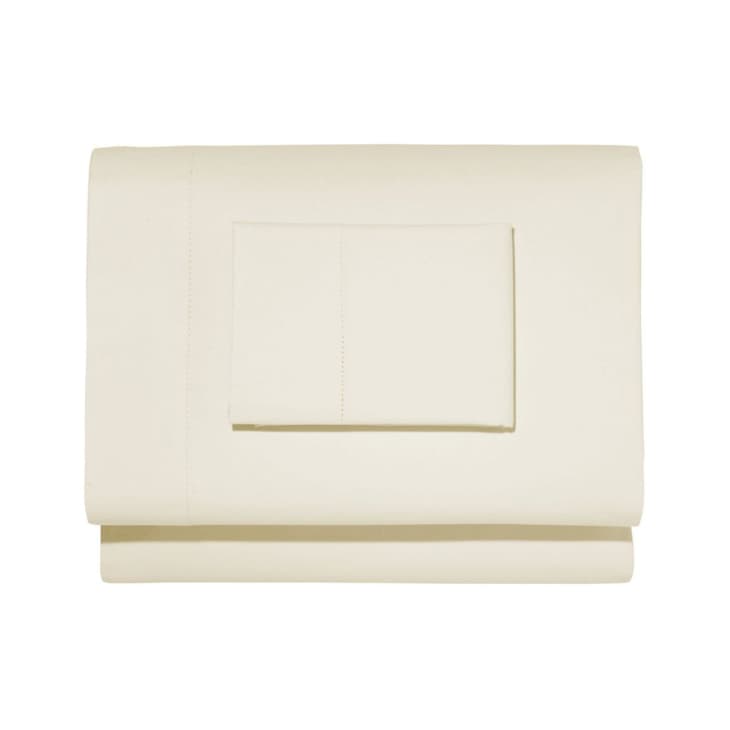
The Best Cotton Cooling Sheets: LL Bean 280-Thread Count Pima Cotton Percale
Percale is considered by many people to be the most cooling textile. And these sheets have a certain reputation for being both incredibly cooling and affordable, and we found they live up to the hype. The percale weave feels cool and crisp, and the flat sheet and pillowcases even have a subtle but attractive trim. We found them comparable in quality with The Company Store’s Legends Hotel Premium Cool Supima Percale sheets ($249); in fact we liked LL Bean’s a bit better.
The only downside for us is that my husband does not like the crispness of percale. I think the crispness probably softens after a year or more of use. I find it very refreshing, so this is very much a matter of personal preference.
What we love
- Excellent breathability and moisture wicking
- Cool, crisp texture
- Comes in 11 different colors including 4 shades of blue
- Great value for the price
Good to know
- Crispness may not appeal to people who prefer more silky textures

The Best Tencel Cooling Sheets: SIJO AiryWeight Eucalyptus
These sheets have a very familiar vibe to us; they feel like a higher-quality version of the bamboo sheets we’ve been using, even though these are eucalyptus. My husband loves the soft, silky feel and we both gave the sheets high marks for keeping us cool and for wicking away moisture.
Dōz’s bamboo sheets feel identical both in texture and coolness, but we prefer the more eco-friendly option of lyocell. We also tried another bamboo set priced nearly three times higher; the SIJO sheets were every bit as good as those more expensive sheets.
What we love
- Silky-smooth texture
- Highly breathable and moisture wicking
- Lyocell is earth-friendly and has a relatively low toxin load
- Made from FSC and PEFC-certified eucalyptus
- Choice of 13 solid colors and a grey/white stripe
- OEKO-TEX Class 1 certified
Good to know
- Brand notes that pilling may occur
- You have the option between a set with or without a flat sheet; be careful when ordering

The Softest Cooling Sheets: Brooklinen Luxe Sateen Core
I confess, the whipped-butter softness of Brooklinen’s Sateen Core sheets is hard to ignore. If we’re judging by texture alone I’d have to give it to these sheets — they are an absolute dream. But they’re also pretty darn cool for sateen. I was worried I would have to sacrifice texture for temperature, but I would put these up against most bamboo sheets. Yup. I said what I said.
What we love
- Heavenly soft texture without the sheen of lyocell or viscose
- Variety! Comes in 12 different colors plus 11 prints
- Remarkably breathable for a sateen weave
- OEKO-TEX Standard 100 certified
Good to know
- OK fine, these do not have the same level of coolness and moisture wicking as our top picks
Honorable Mention: Breescape
We dubbed these the Science Sheets. Made with what Breescape calls “BlendTek(™)” technology composed of 69% nylon, 20% polyester, and 11% spandex, these sheets defy what you’d expect from synthetic fibers. The claim is that these fibers excel at drawing away heat, maximizing surface area for moisture wicking, and enhancing airflow — and the claims held up.
We were actually split on these sheets. They were tied for my husband’s top pick for coolness and he was very impressed with the moisture-wicking. But they reminded me too much of workout clothes — the opposite vibe I’m after at bedtime. The feel reminds me of hot, sweaty, energetic sessions on the Peloton. Plus, I have a strong preference for plant-based textiles for sleeping.
What we love
- High-tech fibers deliver breathability and moisture wicking
- The fitted sheets have a cute little pocket on each side perfect for a phone (or maybe a snack?)
- Despite the synthetic composition the sheets do have OEKO-TEX STANDARD 100 certification
Good to know
- Textile may remind you of workout clothing
- Synthetics may not appeal to people who prefer natural fibers
How We Test Products
The Shopping Team at Apartment Therapy Media has one mission: to help you make smart and informed purchases. We know how hard online shopping can be — it’s literally our job! From trying to decipher confusing marketing lingo to sorting through scores of fake paid reviews in search of some truth, online shopping can be overwhelming. We’re dedicated to doing the hard work for you by reviewing these products firsthand and delivering all the information you need, both good and bad.
Our team is made up of a group of writers and editors who have years of experience in the home, kitchen, and parenting consumer product space, and who are always testing for new tried-and-true staples. Consider us your trusted source on everything home, whether it’s what to consider before buying a sofa or a mattress, the best places to shop for affordable rugs, or which cookware pieces are really worth the cabinet space.
Why You Should Trust Us as Product Testers
As experts in the home and design space, we put products to the test right where they matter: at home. Whether it’s the gadget on everyone’s wish list or the coolest-looking design finds, we bring these products into our personal spaces and test them for weeks and even months at a time to see how well they live up to their claims. Do those sheets still feel silky smooth after a couple of washes? Does that mattress remain firm or soften up too soon? Are those bath towels really quick drying or do they need an extra spin in the machine? We’ll let you know.
Within each of our reviews, we also break down the different ways that we critique products. In some cases, we’re testing products head-to-head on things like price, ease of use, and durability. In others, we’re comparing new products to personal favorites or ones we’ve tested in the past. No matter what, we’ll always break down the ins and outs of a product. At the end of the day, we’re consumers too, so we’ll provide you with all the information we’d want — and then some.